Powering Physical AI with Real-World Ego Datasets

AI Data Collection vs Traditional Methods for Robotics
Content Menu
● What Is AI Data Collection for Robotics?
● What Is Traditional Data Collection for Robotics?
● AI Data Collection vs Traditional Data Collection: Comparison Table
● Five Differences That Matter in Robotics Training
>> 1. Task Diversity vs Repetition
>> 2. Multimodal Context vs Isolated Recordings
>> 3. Human Demonstrations vs Robot Action Ground Truth
>> 4. Dataset Validation vs File Inspection
>> 5. Cost per Useful Episode vs Cost per Recording Hour
● What Published Robotics Datasets Actually Show
>> DROID: Diversity Requires Operational Discipline
>> Open X-Embodiment: Standardization Enables Reuse
>> EgoMimic: Human Data Needs a Transfer Mechanism
● When Traditional Data Collection Is the Better Choice
● When AI Data Collection Adds More Value
● A Practical Seven-Step Robotics Data Collection Workflow
>> 1. Define the Target Behavior
>> 2. Specify Required Signals
>> 5. Establish Acceptance Gates
>> 6. Separate Training and Evaluation Conditions
>> 7. Iterate from Observed Failures
● Real-World vs Synthetic Robotics Data
● How Virdyn Supports Robotics Data Collection
>> First-Person Capture with VDEgo-C2
>> Dataset Development and Delivery
● Build a Dataset Around Your Robot’s Requirements
>> Is AI data collection always better than traditional collection?
>> Can first-person video replace robot demonstrations?
>> How much robotics training data is enough?
>> What should a robotics dataset delivery include?
>> Can synthetic data eliminate real-world collection?
>> What should I request before committing to a supplier?
AI data collection vs traditional data collection for robotics is not simply a choice between new technology and old methods. It is a decision about what a robot must learn, which signals capture that knowledge, and how reliably those signals translate into physical action.
A robot sorting components on a fixed production line needs different training evidence from a service robot navigating unfamiliar rooms. Both require reliable data, but they may need different combinations of demonstrations, sensor streams, annotations, and real-world testing.
My recommendation is to prioritize fitness-for-purpose over recording volume. The strongest approach combines structured data production with robot-specific measurements rather than treating either method as a universal replacement.
This guide compares the approaches, explains their limitations, and provides a practical framework for building useful robotics training datasets.
What Is AI Data Collection for Robotics?
AI data collection for robotics is the planned capture and preparation of information used to train or evaluate perception, reasoning, and action models.
It can combine:
1. First-person and external-camera video.
2. Inertial measurement unit, or IMU, readings.
3. Camera calibration and pose information.
4. Human hand and body movements.
5. Robot joint positions and control commands.
6. Language instructions and task descriptions.
7. Simulated observations and actions.
The defining feature is not that every stage uses automation. It is that collection is organized around model requirements: synchronized signals, meaningful task coverage, documented provenance, and measurable acceptance criteria.
For vision-language-action models, this means connecting what the system sees and understands with actions. For world models, it means capturing sequences that reveal how environments change.
What Is Traditional Data Collection for Robotics?
Traditional data collection includes established methods such as fixed-camera recording, robot teach-pendant programming, sensor logging, manual annotation, controlled experiments, and operator demonstrations.
These methods remain valuable. A calibrated robot log can provide precise joint positions and commands that an ordinary human video cannot.
The distinction is therefore operational rather than absolute. Traditional collection often supports a specific machine, inspection task, or controlled experiment. A model-oriented workflow typically adds broader scenario coverage, multimodal alignment, reusable schemas, and systematic dataset validation.
Teleoperation illustrates the overlap: remotely guiding a robot is an established collection technique, but its recordings can also become part of a modern AI training pipeline.
AI Data Collection vs Traditional Data Collection: Comparison Table
The table compares typical implementations, not fixed limitations of either approach.
| Dimension | Model-oriented AI data collection | Traditional data collection |
|---|---|---|
| Primary objective | Build training and evaluation datasets | Record or program a defined operation |
| Typical environments | Multiple sites, layouts, and conditions | Often a controlled workstation |
| Data structure | Linked episodes with metadata and annotations | Device logs, recordings, or experiment files |
| Human demonstrations | Often captured across varied activities | Commonly task-specific |
| Robot action signals | Included when directly recorded or explicitly derived | Frequently available in controller logs |
| Quality control | Dataset-level coverage and integrity checks | Instrument accuracy and procedural consistency |
| Scalability | Designed for repeatable production across collectors | Depends on equipment and operator availability |
| Main risk | Large volumes of poorly aligned data | Narrow coverage of deployment conditions |
| Best fit | Generalization and multimodal learning | Precise, constrained operational requirements |
The practical lesson is to compare actual deliverables, not labels. A carefully instrumented conventional experiment may outperform a large collection campaign with weak calibration.
Five Differences That Matter in Robotics Training
1. Task Diversity vs Repetition
Repeating a successful movement helps establish consistency. It does not automatically teach a robot to handle a new object, lighting condition, or workspace.
A model-oriented collection plan varies relevant factors deliberately: object position, material, clutter, operator, viewpoint, and task sequence.
However, diversity should serve the deployment objective. Recording unrelated activities can increase processing costs without improving the target behavior.
2. Multimodal Context vs Isolated Recordings
Video shows appearance and motion. IMU readings describe inertial movement. Robot telemetry provides machine-state information.
These signals become more useful when they share documented timing and coordinate conventions.
A camera stream and a robot log recorded during the same session are not necessarily synchronized. Clock offsets, dropped frames, and inconsistent sampling can undermine the relationship between observation and action.
3. Human Demonstrations vs Robot Action Ground Truth
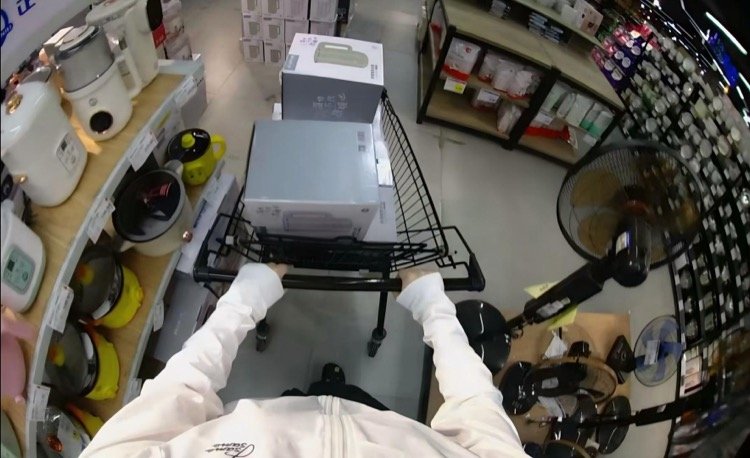
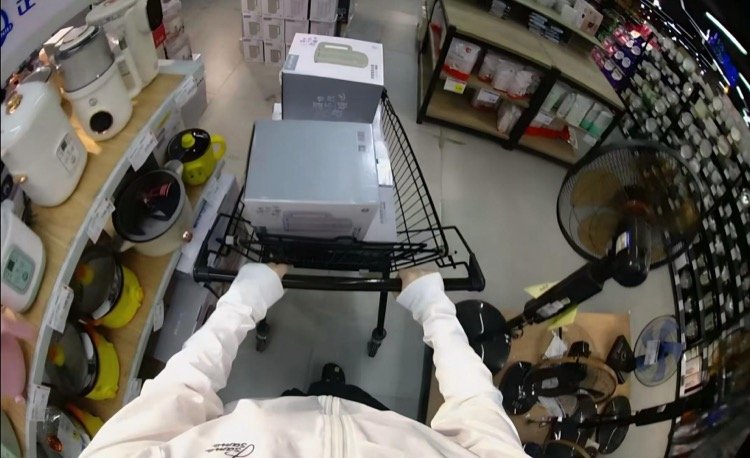
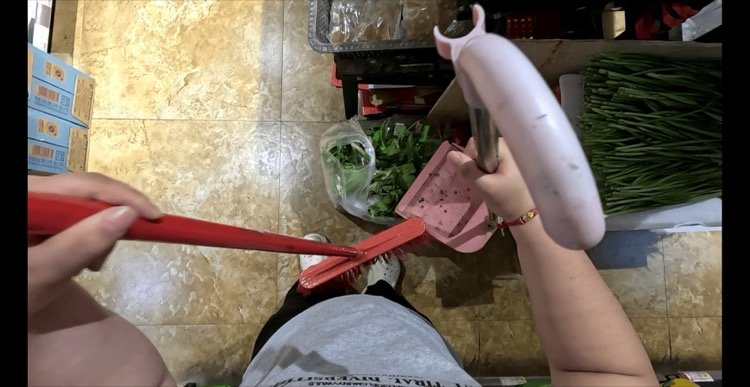
Egocentric data collection captures how people approach tasks from a first-person viewpoint. It can reveal hand-object interaction, task sequence, and visual context.
But human movements are not automatically executable robot commands.
Robots differ in reach, joint structure, gripper geometry, and sensing. EgoMimic research explicitly addresses gaps in coordinate frames, action distributions, and visual appearance when combining human and robot demonstrations.
Human demonstrations should therefore be treated as complementary learning evidence, not a guaranteed substitute for robot action data.
4. Dataset Validation vs File Inspection
Checking that videos open is necessary but insufficient.
A training dataset also needs checks for missing signals, annotation consistency, duplicated episodes, calibration validity, and adequate scenario coverage.
Evaluation splits matter, too. Randomly separating nearby clips from the same recording session can make performance appear stronger than it is on genuinely unfamiliar environments.
5. Cost per Useful Episode vs Cost per Recording Hour
A low recording price can conceal expensive cleanup.
A more meaningful procurement metric is:
Cost per accepted episode = total collection, processing, and validation cost ÷ episodes meeting the agreed specification.
An episode should have a defined beginning, end, task objective, and acceptance status. Otherwise, two suppliers may quote very different prices for fundamentally different deliverables.
What Published Robotics Datasets Actually Show
DROID: Diversity Requires Operational Discipline
The DROID project reports approximately 76,000 demonstration trajectories, 350 hours of interaction data, and 564 scenes collected over 12 months.
Its significance is not simply scale. It demonstrates that diverse real-world robot data requires coordinated collection across people and environments.
For buyers, this suggests asking how a supplier manages collector instructions, equipment consistency, task definitions, and site variation—not just how many hours it can deliver.
Open X-Embodiment: Standardization Enables Reuse
Open X-Embodiment brings together more than one million robot trajectories spanning 22 robot embodiments.
This illustrates the value of organizing data so researchers can work across different robot platforms.
It does not mean all recordings transfer equally well. Embodiment differences and dataset composition still matter. Standardized packaging enables experimentation; it does not eliminate the need to test applicability.
EgoMimic: Human Data Needs a Transfer Mechanism
EgoMimic combines egocentric human video with three-dimensional hand tracking and robot demonstrations.
Its approach highlights an important distinction: scaling human recordings is only part of the problem. A learning system must also connect those recordings to robot-relevant representations.
When evaluating an egocentric dataset, ask what links the human demonstration to the intended robot policy.
When Traditional Data Collection Is the Better Choice
Traditional methods remain a strong starting point when:
1. A robot repeats a narrow operation in a stable cell.
2. Exact controller states or contact measurements are essential.
3. The project involves troubleshooting a known mechanical process.
4. Deployment variation is limited and clearly bounded.
Consider an insertion task with tight tolerances. Human video can explain the workflow, but instrumented robot trials may be more informative about force, alignment, and controller behavior.
The right question is not whether traditional collection is outdated. It is whether the collected signals answer the engineering question.
When AI Data Collection Adds More Value
A broader collection pipeline becomes attractive when robots must operate across changing environments or interpret varied human instructions.
Relevant applications include warehouse handling, household assistance, retail replenishment, and industrial workflows involving many object configurations.
First-person collection can expand access to human demonstrations without requiring a robot for every recording session. Simulation can add controlled variations or scenarios that are difficult to stage.
Neither removes the need for deployment-relevant robot evaluation. More accessible collection is valuable only if the resulting evidence improves the target system.
A Practical Seven-Step Robotics Data Collection Workflow
1. Define the Target Behavior
Describe observable outcomes rather than broad ambitions.
“Place specified packages into assigned bins under defined workspace conditions” is more actionable than “improve warehouse intelligence.”
2. Specify Required Signals
Identify which streams are directly measured and which require additional processing.
For example, stereo video does not automatically constitute a validated three-dimensional reconstruction. Pose estimates need a stated method, coordinate frame, and quality criteria.
3. Build a Coverage Matrix
List required combinations of tasks, objects, environments, and operating conditions.
Use the matrix to identify missing coverage before production begins.
4. Run an End-to-End Pilot
Test capture, transfer, processing, annotation, ingestion, and evaluation on a small batch.
A successful recording session does not prove compatibility with the training pipeline.
5. Establish Acceptance Gates
Agree on measurable criteria for synchronization, image usability, annotation quality, completeness, and rejected episodes.
Specify how defects will be corrected or replaced.
6. Separate Training and Evaluation Conditions
Reserve meaningful differences for evaluation, such as unseen sites, objects, or collectors.
This provides a more informative test than holding out nearly identical clips.
7. Iterate from Observed Failures
Use robot evaluation results to guide the next collection round.
Target missing behaviors and failure conditions rather than repeatedly expanding already well-covered tasks.
Real-World vs Synthetic Robotics Data
Real-world data captures actual appearance, sensor behavior, and physical interactions. Synthetic data allows controlled variation and can provide labels that are difficult to obtain manually.
Each has limitations.
Real collection can be slow or constrained by access and safety. Simulation may represent friction, deformation, contact, or visual conditions imperfectly.
A practical hybrid strategy uses real recordings to define relevant scenarios, simulation to explore controlled variations, and physical robot tests to assess transfer.
High visual realism alone does not establish accurate physical behavior. Evaluate synthetic data against the task it is intended to support.
How Virdyn Supports Robotics Data Collection
Based on the supplied company information, Virdyn, also associated with VDEgo, offers services spanning requirements analysis, scenario design, task planning, collection, processing, annotation, quality inspection, and delivery.
Its proposed approach combines real-world human demonstrations with simulation-based generation.
First-Person Capture with VDEgo-C2
The supplied specification describes VDEgo-C2 as a self-developed binocular capture device supporting stereo RGB recording, synchronized IMU data, timestamps, camera pose tracking, local storage, and wireless remote control.
Before procurement, confirm project-specific performance through a pilot. Relevant questions include calibration procedures, timestamp behavior, pose-tracking limitations, and operation under the intended lighting and movement conditions.
Dataset Development and Delivery
Virdyn describes both off-the-shelf and custom datasets, including video, inertial measurements, spatial information, and human movement data.
Proposed formats include MP4, AVI, CSV, JSON, and PLY.
File formats are only the container. Buyers should also request a schema, units, coordinate conventions, calibration records, annotation definitions, and sample-loader documentation.
Build a Dataset Around Your Robot’s Requirements
The most useful collection strategy combines broad learning evidence with precise robot-specific validation.
To evaluate Virdyn for your project, share your target behaviors, robot platform, operating environments, required signals, and delivery schema. Request a scoped pilot with measurable acceptance criteria before scaling production.

Frequently Asked Questions
Is AI data collection always better than traditional collection?
No. Its value depends on the learning objective. Controlled robot logging may be preferable when precise machine-state measurements matter more than broad environmental coverage.
Can first-person video replace robot demonstrations?
Not universally. It provides useful human interaction evidence, but robot-specific action supervision or adaptation may still be necessary.
How much robotics training data is enough?
There is no universal threshold. Evaluate performance against defined tasks and unfamiliar conditions, then collect additional data where failures reveal gaps.
What should a robotics dataset delivery include?
Request documented episodes, signal schemas, calibration information, annotations, quality reports, usage rights, and clearly defined training and evaluation partitions.
Can synthetic data eliminate real-world collection?
Not reliably as a general rule. Its usefulness depends on how well the simulated conditions represent the target task and whether performance transfers to physical robots.
What should I request before committing to a supplier?
Request a representative sample, written acceptance criteria, a privacy and rights plan, and a pilot that runs through your actual ingestion and evaluation workflow.
References
1. DROID research team. “DROID: A Large-Scale In-the-Wild Robot Manipulation Dataset.” Project page describing dataset scale, collection, and research resources. Visit the project page.[droid-dataset.github]
2. Open X-Embodiment collaboration. “Open X-Embodiment: Robotic Learning Datasets and RT-X Models.” Project overview and research resources. Visit the project page.[robotics-transformer-x.github]
3. EgoMimic research team. “EgoMimic: Scaling Imitation Learning via Egocentric Video.” Research paper explaining human–robot alignment and training methodology. Read the paper.[arxiv]
4. Georgia Tech, Robotic Learning and Reasoning Lab. “Robot Learning from Embodied Human Data.” Technical presentation discussing sensing, action, and kinematic gaps. View the presentation.[faculty.cc.gatech]
Hot Tags: AI Data Collection, Robotics Data Collection, AI Training Data Services, Data Annotation Services, Egocentric Data Collection, Multimodal Datasets, Robotics Training Data, Custom AI Datasets, Synthetic Data Generation, Embodied AI Data Solutions
SHARE



