Powering Physical AI with Real-World Ego Datasets


Top 10 Video Data Collection Company In China
Content Menu
● Why Source Video Data Collection Services From China?
● How the Companies Were Selected
● Comparison Table: Capacity, MOQ, and Certification Evidence
● The Top 10 Video Data Collection Companies to Evaluate
>> 1. Virdyn (VDEgo): Egocentric Capture Hardware and Custom Data Programs
>> 2. Datatang: Broad Computer Vision and Egocentric Dataset Coverage
>> 3. Nexdata: Large Published Inventory and Physical Intelligence Services
>> 4. DataOcean AI, Formerly SpeechOcean: Established Multimodal Data Services
>> 5. BasicFinder: Managed Collection and Annotation Infrastructure
>> 6. Magic Data: Multimodal Interaction and Intelligent-Cockpit Projects
>> 7. Testin: Crowdsourcing Combined With Dedicated Collection Teams
>> 8. Graviti: Egocentric and Multiview Physical-Task Datasets
>> 9. Stardust AI: Annotation and Multimodal Data Operations
>> 10. Appen China: International Collection Programs With China Operations
● Technical Buyer’s Guide: What to Specify Before Requesting Quotes
>> Define the Data Product, Not Just the Video Format
>> Separate Hardware Compliance From Dataset Quality
>> Compare Accepted Output, Not Advertised Capacity
● Procurement Pitfalls and an Overlooked Insider Check
>> Pitfall 1: A Small Set of Repeated Tasks Masquerading as Scale
>> Pitfall 2: Estimated Outputs Presented as Ground Truth
>> Pitfall 3: “Synchronized” Files Without Defined Timestamp Semantics
>> Pitfall 4: Dataset Leakage Through Session Splitting
>> Pitfall 5: Real and Synthetic Data Blended Without Provenance
● A Practical Supplier Qualification and Delivery Process
>> Step 1: Verify the Business and Delivery Sites
>> Step 3: Freeze Acceptance Criteria
>> Step 4: Resolve Permissions and Cross-Border Delivery
>> Step 5: Plan Hardware and Data Logistics Separately
● Conclusion: Select a Partner Through Evidence and a Pilot
>> 1. How can a buyer verify whether a supplier’s ISO certificate has expired?
>> 2. Can first-person human video directly replace robot demonstration data?
>> 3. Does buying a custom dataset provide exclusive ownership?
>> 4. How should buyers compare suppliers quoting different hourly prices?
>> 5. Can a dataset leave China if faces have been blurred?
Selecting a video data collection partner in China requires more than comparing recording hours and headline prices. Professional buyers need to establish whether a supplier can deliver usable footage, reliable sensor synchronization, consistent annotations, clear licensing rights, and repeatable production quality.
This guide presents ten companies worth evaluating for video data collection, computer vision datasets, and multimodal training data. Virdyn (VDEgo) appears first because its combination of proprietary capture hardware and custom egocentric data services closely matches embodied intelligence projects—not because an independently audited market-share ranking places it above every alternative. Its published offering combines real-world capture, simulated environments, dataset delivery, and annotation services.
The selection is a procurement shortlist, not a claim that all ten suppliers operate equivalent factories. Some specialize in capture hardware and physical environments; others focus on collection networks, annotation platforms, or enterprise data services.
For buyers, the most useful comparison is traceability: can each delivered sequence be connected to its collection conditions, permissions, calibration records, processing history, and acceptance results?

Why Source Video Data Collection Services From China?
China offers a substantial industrial environment for collecting real-world training data. Its manufacturing, logistics, retail, and electronics sectors provide relevant settings for recording human activity and physical interactions.
The International Federation of Robotics’ World Robotics 2025 report recorded 295,045 industrial robot installations in China during 2024, representing 54% of global installations. China’s operational stock reached 2,027,190 industrial robots. These figures describe robotics adoption, not the size of the video data collection market, but they demonstrate the scale of the surrounding automation ecosystem.
Official reporting on China’s 2025 electronics manufacturing sector also shows its hardware supply-chain depth. Customs figures reproduced by the Fujian Department of Industry and Information Technology recorded exports of 133 million notebook computers, 751 million mobile phones, and 349.5 billion integrated circuits. These are electronics export figures, not exports of AI datasets.
Supplier location should nevertheless be assessed at company level. Virdyn operates from Guangzhou; BasicFinder and Magic Data have documented Beijing connections; Graviti has a Shanghai legal entity. These locations provide useful starting points for site visits, but a city address alone does not establish collection capacity or technical competence.
How the Companies Were Selected
The shortlist uses six practical screening criteria:
-
Relevant services: video collection, video annotation, multimodal data engineering, or closely related capabilities.
-
Technical suitability: evidence of support for temporal data, physical interactions, computer vision, or sensor-rich workflows.
-
Customization: the ability to adapt collection requirements, annotations, or delivery structures.
-
Quality management: documented processes or certifications that buyers can investigate.
-
Commercial relevance: suitability for research teams, robotics developers, or enterprise procurement.
-
Evidence transparency: a distinction between published supplier claims and independently verified performance.
This review is based on public company information, official reporting, and industry sources. It does not include factory inspections, undisclosed customer references, comparative model-training tests, or independently verified delivery performance.
Founding dates refer to the business or brand history unless otherwise stated. Where public records conflict, the discrepancy is disclosed.
Comparison Table: Capacity, MOQ, and Certification Evidence
Published dataset inventory is not the same as monthly production capacity. Similarly, a registered contributor network does not establish how many trained operators are available for a particular project.
For data services, minimum engagement is more meaningful than a conventional product MOQ.
| Company | Primary procurement fit | Published scale or operating indicator | MOQ or minimum engagement | Certification evidence reviewed |
|---|---|---|---|---|
| Virdyn (VDEgo) | Egocentric video, capture hardware, embodied intelligence | Claims a collection facility exceeding 1,000 m² and thousands of validated data hours; not audited throughput. | Not verified; request separate hardware and data quotations | No current certificate verified in this review |
| Datatang | Off-the-shelf and custom computer vision datasets | Lists a 3,500-hour egocentric video dataset; inventory is not monthly output. | Not verified | Publishes ISO 9001, ISO/IEC 27001, and ISO/IEC 27701 claims. |
| Nexdata | Multimodal and physical intelligence datasets | Lists a 20,000-hour egocentric dataset and a broad annotation network; supplier-reported figures. | Not verified | Published ISO 9001, ISO/IEC 27001, and ISO/IEC 27701 claims. |
| DataOcean AI / SpeechOcean | Multimodal enterprise training data | Company profile reports 10,000+ projects across 70+ countries; not video-specific capacity. | Not verified | Request current certificates and scope |
| BasicFinder | Collection, annotation platforms, managed workflows | Describes capacity allocation through internal operations and partner teams; no comparable monthly video output verified. | Not verified | Request current certificates and scope |
| Magic Data | Multimodal interaction and intelligent-cockpit projects | Public profile describes 400+ datasets across 60+ languages; not video production capacity. | Not verified | Request current certificates and scope |
| Testin | Crowdsourced and dedicated-team collection | Publishes a network of two million registered crowdsourcing users; active project availability must be checked. | Not verified | Request AI-data-service-specific evidence |
| Graviti | Egocentric and synchronized multiview physical-task data | Describes head-mounted capture synchronized with three fixed cameras. | Not verified | Request current certificates and scope |
| Stardust AI | Video annotation and multimodal data operations | Huawei Cloud describes automated image, video, and point-cloud workflows; no collection throughput verified. | Not verified | Request current certificates and scope |
| Appen China | Diverse collection and international data programs | Beijing office opened in 2017; global organization has broader collection infrastructure. | Not verified | Confirm the contracting entity and covered delivery sites |
“Not verified” does not mean unavailable. It means the information should not be presented as an established procurement fact without a current quotation or supporting document.
The Top 10 Video Data Collection Companies to Evaluate
1. Virdyn (VDEgo): Egocentric Capture Hardware and Custom Data Programs
Founded: Virdyn dates its business history to 2016. This should not be interpreted as the launch date of every VDEgo product or service.
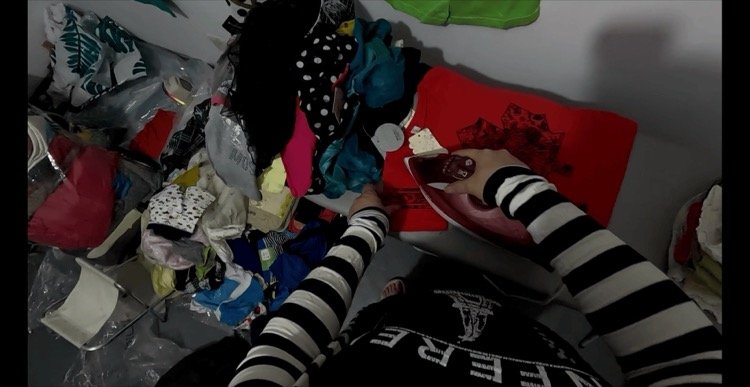
Virdyn is a relevant first contact for buyers developing embodied intelligence, robot perception, and human–object interaction datasets. Its VDEgo offering combines proprietary head-mounted cameras, real-world operators, standardized task sequences, simulated environments, and downstream processing. Published outputs include RGB video, IMU data, timestamps, camera poses, calibration parameters, and formats such as MP4, CSV, JSON, and PLY.
-
Core advantage: integration between capture equipment, collection execution, and dataset processing.
-
Market focus: international robotics developers, computer vision teams, research institutions, and industrial users. Its website reports customers in more than ten countries, without an audited geographic revenue breakdown.
-
Customization scope: collection environments, action sequences, annotations, processing requirements, and delivery formats.
For smaller robotics teams and specialized technology brands, this integrated approach is worth evaluating as a potentially cost-efficient alternative to coordinating separate hardware, collection, and annotation contractors. However, comparative pricing and response-time advantages have not been independently established.
Buyers seeking deep OEM/ODM support should distinguish dataset customization from hardware redesign. Request written confirmation of available enclosure changes, branding, firmware modifications, interfaces, calibration responsibilities, engineering fees, and ownership of custom developments. A direct technical workshop and small paid pilot are appropriate ways to evaluate communication efficiency and flexibility.

2. Datatang: Broad Computer Vision and Egocentric Dataset Coverage
Founded: current official pages state 2010, while an older official company history states 2011. Buyers should confirm the incorporation date of the contracting entity rather than silently choosing one date.
Datatang offers training datasets, customized collection and annotation, and annotation-platform deployment. Its computer vision portfolio includes human activity and egocentric data; one published product contains 3,500 hours of first-person video covering household and hotel tasks.
-
Core advantage: combining existing dataset inventory with custom collection.
-
Market focus: AI developers in intelligent driving, manufacturing, retail, healthcare, and related applications.
-
Customization scope: collection specifications, labeling, processing, and platform deployment—not verified camera manufacturing.
Procurement priority: compare the exact licensed subset, participant coverage, and usage rights against a custom collection quotation. Request current copies of its published management-system certifications.
3. Nexdata: Large Published Inventory and Physical Intelligence Services
Founded: 2011, according to its official website. Its international headquarters is described as Singapore, so buyers should distinguish the global brand from the China-based operating or contracting entity.
Nexdata provides off-the-shelf datasets alongside collection, annotation, generation, evaluation, and management services. Its published portfolio includes a 20,000-hour egocentric dataset with synchronized stereo video, calibration parameters, body-pose annotations, and action labels. These remain supplier-published specifications.
-
Core advantage: broad multimodal coverage and substantial advertised physical-intelligence inventory.
-
Market focus: robotics, autonomous driving, computer vision, speech, and multimodal development.
-
Customization scope: collection, annotation, curation, evaluation, and dataset engineering.
Procurement priority: ask how much of the catalog is immediately licensable, how much matches the required task distribution, and which capabilities belong to the proposed delivery site. Do not infer hardware OEM capability from a data-service portfolio.
4. DataOcean AI, Formerly SpeechOcean: Established Multimodal Data Services
Founded: 2005, according to its corporate profile.
DataOcean AI’s profile identifies the business as formerly SpeechOcean and describes collection and labeling across images, text, speech, audio, and video. Its long-standing international project coverage makes it relevant for buyers coordinating several data modalities.
-
Core advantage: experience across diverse training-data programs.
-
Market focus: international technology and enterprise customers; its profile reports projects in more than 70 countries.
-
Customization scope: project design, collection, transcription, annotation, and validation, including computer vision applications.
Procurement priority: request video-specific examples. An extensive speech portfolio does not by itself establish expertise in calibrated stereo capture, continuous object tracking, or robot manipulation data.
5. BasicFinder: Managed Collection and Annotation Infrastructure
Founded: a government-hosted account dates the company’s origins to 2014; a separate business report identifies registration of Beijing Deep Search Technology in September 2015. Clarify the legal entity before contracting.
BasicFinder provides collection and annotation services supported by its own software. Its tools cover images, video, text, audio, and point clouds, while its service model combines internal operations with partner-team capacity.
-
Core advantage: configurable workflows and platform-supported quality management.
-
Market focus: enterprise AI development and research; documented clients include research institutions and technology businesses.
-
Customization scope: collection tasks, annotation workflows, tools, and data-management processes.
Procurement priority: identify which operations are internal and which are subcontracted. Require consistent permissions, quality thresholds, and audit access across every participating team.
6. Magic Data: Multimodal Interaction and Intelligent-Cockpit Projects
Founded: 2016, with headquarters in Beijing, according to published company profiles.
Magic Data is associated with conversational intelligence, intelligent cockpits, autonomous driving, and multimodal annotation. Its reported annotation platform supports audio, text, image, and video workflows.
-
Core advantage: relevance to projects connecting visual activity with speech or human–machine interaction.
-
Market focus: automotive, financial services, social platforms, and smart-device customers, including international markets.
-
Customization scope: training and testing datasets and multimodal annotation requirements.
Procurement priority: validate raw-video collection capabilities separately from annotation capabilities. Ask for examples matching the intended camera arrangement, lighting, participant behavior, and synchronization requirements.
7. Testin: Crowdsourcing Combined With Dedicated Collection Teams
Founded: 2011, according to its AI data service page.
Testin describes a collection model combining registered crowdsourcing participants, dedicated collection teams, engineers, and proprietary annotation tools. This makes it worth investigating when participant diversity is more important than collection within a single controlled facility.
-
Core advantage: multiple participant-sourcing and execution models.
-
Market focus: enterprise AI teams and developers worldwide.
-
Customization scope: collection scenarios, participant requirements, labeling, and tool-supported delivery.
Procurement priority: do not treat registered-user totals as active collection capacity. Request project-specific recruitment forecasts, screening methods, expected rejection rates, and device-control procedures.
8. Graviti: Egocentric and Multiview Physical-Task Datasets
Founded: 2019, supported by its company profile and the registration record of its Shanghai entity.
Graviti describes recording real workers performing assembly, packaging, housekeeping, and office tasks. Its published capture setup combines a head-mounted camera with three fixed cameras, with synchronized and calibrated sessions.
-
Core advantage: connecting first-person observations with external views of physical work.
-
Market focus: physical intelligence, humanoid robotics, robot learning, and custom data programs.
-
Customization scope: dataset licensing, annotations, raw footage access, and custom collection programs.
Procurement priority: distinguish measured signals from model-estimated outputs. Graviti states that a pose model estimates body keypoints; buyers should not automatically treat these as instrument-measured ground truth.
9. Stardust AI: Annotation and Multimodal Data Operations
Founded: 2017. Its international corporate presentation includes a Singapore entity, while public profiles also document Beijing operations. Confirm the actual delivery and contracting locations.
Stardust AI is more directly relevant to annotation and data operations than to proprietary camera manufacturing. Huawei Cloud describes its support for image, video, point-cloud visualization, automated labeling, and multimodal data ingestion.
-
Core advantage: processing and managing complex visual datasets.
-
Market focus: enterprise AI, autonomous driving, and industrial data applications.
-
Customization scope: annotation pipelines, visualization, data integration, and workflow configuration.
Procurement priority: if the project requires new footage, establish whether collection is performed internally, through partners, or supplied by the buyer. Do not assume that annotation expertise includes physical capture capacity.
10. Appen China: International Collection Programs With China Operations
China operation established: Appen opened its Beijing office in 2017. Appen is an international company, not a China-founded manufacturer.
Appen’s China announcement describes collection and annotation across images, audio, speech, video, and text. Its broader current offering includes video action labeling, sensor fusion, robot demonstration trajectories, and embodied interaction logs.
-
Core advantage: coordinating broad, international human-data programs.
-
Market focus: enterprise AI developers and multinational technology teams.
-
Customization scope: collection, annotation, evaluation, and multimodal data programs.
Procurement priority: verify which services are currently available through the China operation. Establish where contributors, subcontractors, storage systems, and project management will be located.
Technical Buyer’s Guide: What to Specify Before Requesting Quotes
Define the Data Product, Not Just the Video Format
An MP4 file is a container, not a complete training-data specification. Virdyn, for example, lists multiple delivery formats and sensor-derived outputs; procurement documents still need to define how those components relate to one another.
A practical request for quotation should specify:
| Requirement | Questions to resolve |
|---|---|
| Video | Resolution, frame rate, codec, bitrate, exposure behavior, shutter type, and dropped-frame reporting |
| Stereo capture | Baseline, intrinsic and extrinsic calibration, rectification, and recalibration procedure |
| Timing | Timestamp meaning, clock source, drift measurement, missing samples, and synchronization method |
| Motion data | IMU axes, units, coordinate frames, sampling behavior, and bias treatment |
| Pose and geometry | Measured versus estimated outputs, reference frames, uncertainty, and scale |
| Annotation | Ontology, temporal boundaries, occlusion rules, tracking identity, and review procedures |
| Packaging | Folder structure, schema version, metadata dictionary, checksums, and validation scripts |
Treat these as contractual design questions rather than assuming every supplier supports every feature.
Separate Hardware Compliance From Dataset Quality
CE and RoHS questions belong primarily to the relevant hardware procurement package; they do not establish that a dataset has accurate labels, valid permissions, or suitable task coverage.
For capture equipment, request applicable conformity documentation and supporting reports for the exact model and configuration. For data services, investigate quality, information-security, and privacy-management controls. ISO 9001 and ISO/IEC 27001 address management systems, and certificate validity and scope should be checked rather than inferred from a website logo.
Where enclosure materials, straps, connectors, or batteries matter, specify the exact components and substitution-approval process. Generic “industrial-grade” descriptions are not an adequate acceptance standard.
Compare Accepted Output, Not Advertised Capacity
Ask suppliers to quote against the same acceptance conditions:
-
Accepted usable hours, not merely recorded hours.
-
Required task and environment coverage.
-
Unique operators and sessions.
-
Maximum permitted duplicates and corrupted sequences.
-
Annotation review and rework.
-
Calibration and metadata completeness.
-
Delivery schedule and replacement obligations.
A proposed commercial comparison is:
Cost per accepted usable hour=(Collection + processing + annotation + transfer + rework costs)/Accepted usable hours
Use this as a procurement framework, not as a published industry benchmark.
Procurement Pitfalls and an Overlooked Insider Check
Pitfall 1: A Small Set of Repeated Tasks Masquerading as Scale
Thousands of clips may represent repeated actions by a few operators in nearly identical settings.
Request a distribution report showing operators, locations, objects, tasks, sessions, lighting conditions, and repetition counts. Set minimum diversity requirements before production.
Pitfall 2: Estimated Outputs Presented as Ground Truth
Pose, depth, trajectories, and hand keypoints may be reconstructed or inferred. Graviti’s explicit description of model-estimated body keypoints illustrates why provenance matters.
Require an origin field for each output: directly measured, reconstructed, model-generated, or manually annotated. Evaluate each category against the intended training use.
Pitfall 3: “Synchronized” Files Without Defined Timestamp Semantics
An overlooked procurement check is to ask what each timestamp actually represents.
A supplier may provide timestamps without demonstrating whether they refer to exposure, device processing, or file writing. Ask for a documented timing model and a raw sample showing video–sensor alignment across a complete recording session.
Include a practical synchronization validation in the pilot. Agree on the test method and tolerance with the engineering team rather than accepting the word “synchronized” as a specification.
Pitfall 4: Dataset Leakage Through Session Splitting
Ask suppliers to preserve operator, location, and recording-session identifiers.
Then agree on split rules before delivery. If closely related clips from one recording session appear in both training and evaluation sets, the evaluation may not represent performance on genuinely new environments.
Pitfall 5: Real and Synthetic Data Blended Without Provenance
Virdyn explicitly offers both real-world capture and simulated data. Buyers should therefore specify source labels, simulation metadata, and separate evaluation requirements instead of assuming that all delivered hours are real-world footage.
Synthetic material should be identified at sequence level, with its permitted role in training and evaluation agreed in advance.
A Practical Supplier Qualification and Delivery Process
Step 1: Verify the Business and Delivery Sites
Request the business license, contracting entity, registered address, collection-site addresses, subcontractor list, and bank-account beneficiary details.
Arrange a live site walkthrough and a technical meeting with the people responsible for capture and quality control—not only the sales team.
Step 2: Run a Paid Pilot
A proposed pilot might contain 20–50 representative task sequences. This is a suggested purchasing approach, not a standard industry MOQ.
Include difficult conditions: occlusion, reflective objects, rapid hand motion, long sessions, failed actions, and realistic background activity.
Evaluate raw files before approving large-scale processing.
Step 3: Freeze Acceptance Criteria
Document:
-
Required metadata and calibration files.
-
Timing validation procedures.
-
Annotation rules and error categories.
-
Diversity and duplication limits.
-
Sampling and rejection procedures.
-
Rework deadlines.
-
Milestone acceptance and payment conditions.
Step 4: Resolve Permissions and Cross-Border Delivery
China’s data-transfer rules distinguish between different data categories and transfer circumstances. The Cyberspace Administration of China’s provisions include exemptions for certain transfers without personal information or important data, alongside requirements for other categories of personal-information transfers.
Do not assume participant consent alone resolves every transfer issue. Obtain project-specific legal review covering collection, sensitive information, transfer mechanisms, retention, and downstream use. Official guidance also notes that overseas access to data can constitute cross-border processing even when the data remains stored domestically.
Step 5: Plan Hardware and Data Logistics Separately
For hardware, agree on shipping terms, importer responsibilities, warranty returns, spare parts, and battery-related carrier requirements where applicable.
For datasets, specify storage region, encryption, access controls, transfer costs, checksums, retry procedures, and deletion evidence.
Conclusion: Select a Partner Through Evidence and a Pilot
The most suitable video data collection company depends on the training objective and operating model.
Virdyn is a relevant starting point for integrated egocentric hardware and custom collection; Datatang and Nexdata offer substantial published dataset portfolios; BasicFinder and Stardust merit consideration for platform-supported data operations; Graviti emphasizes real physical-task capture; and Appen provides an international collection alternative with documented China operations.
Before committing to volume, send shortlisted suppliers the same technical brief and require comparable pilot deliverables.
For an embodied intelligence project, approach Virdyn with your task list, environments, sensor requirements, annotation schema, intended data rights, and delivery milestones. Request a sample package and a scoped pilot quotation, with hardware customization and dataset services priced separately.
Frequently Asked Questions
1. How can a buyer verify whether a supplier’s ISO certificate has expired?
Search the exact company name or certificate number through IAF CertSearch. Check status, standard, scope, issuing body, and covered locations—not only the date printed on a PDF. IAF CertSearch identifies active, suspended, withdrawn, and expired certificates.
If a record cannot be found, contact the issuing certification body before concluding that the certificate is invalid. Ensure the certified entity is the same business responsible for the contracted work.
2. Can first-person human video directly replace robot demonstration data?
Do not assume equivalence. First-person video can document human observations and actions, but the procurement package must establish whether the required robot-side signals are present.
Ask separately about joint states, control commands, end-effector poses, force or tactile information, and retargeting requirements. Nexdata’s published embodied-data facility description, for example, distinguishes vision from motion, force, tactile, and other sensor modalities.
3. Does buying a custom dataset provide exclusive ownership?
Treat exclusivity as a contract term, not an automatic feature of customization.
Specify rights to raw footage, annotations, derivatives, sublicensing, model training, publication, and supplier reuse. Ask whether the same recordings or related sequences may be licensed to competitors.
4. How should buyers compare suppliers quoting different hourly prices?
Normalize the quotations against identical specifications and accepted usable output.
Include participant recruitment, rejected recordings, processing, annotations, quality review, storage, transfer, and replacement work. Request a pilot-based yield estimate before comparing full-project totals.
5. Can a dataset leave China if faces have been blurred?
Face blurring alone should not be treated as proof of anonymization. Official guidance distinguishes personal information from anonymized information and defines anonymization in terms of preventing identification and restoration.
Review whether voices, badges, screens, location details, or other contextual information can identify individuals. Have qualified advisers assess the actual dataset and proposed transfer.
References
1. Virdyn / VDEgo: company overview and data collection capabilities
2. International Federation of Robotics: World Robotics 2025 executive summary
4. Cyberspace Administration of China: Provisions on Promoting and Regulating Cross-Border Data Flows
5. Cyberspace Administration of China: 2025 cross-border data policy questions and answers
6. IAF CertSearch: accredited certificate verification
Hot Tags: Video Data Collection, AI Data Collection Services, Video Annotation Services, AI Training Data, Egocentric Data Collection, Multimodal Datasets, Custom Dataset Collection, Computer Vision Datasets, Robotics Training Data, Embodied AI Datasets
SHARE