Powering Physical AI with Real-World Ego Datasets

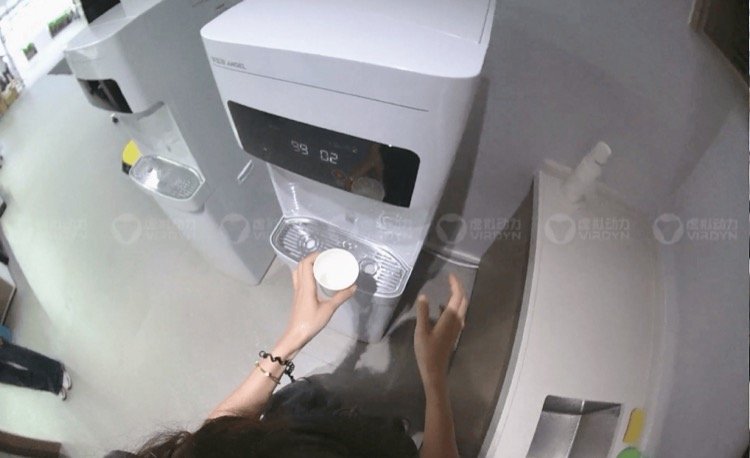
Physical AI vs Vision-Language Datasets for Robot Learning
Content Menu
● What Is a Physical AI Dataset?
>> Human Demonstrations Are Not Automatically Robot Actions
● What Is a Vision-Language Dataset?
>> Understanding an Instruction Is Different From Executing It
● Physical AI Dataset vs Vision-Language Dataset: Key Differences
● Which Dataset Is Better for Different Robot Learning Goals?
>> Choose Physical AI Data for Manipulation and Control
>> Choose Vision-Language Data for Semantic Understanding
>> Combine Both for Vision-Language-Action Models
● What Published Dataset Projects Actually Tell Us
>> DROID: Environment Diversity Deserves Attention
>> Ego4D: First-Person Scale Does Not Equal Robot Control Labels
>> Cross-Robot Transfer Is Promising, Not Automatic
● A Practical Dataset Selection Framework
>> 1. Identify the Failure Before Buying More Data
>> 2. Specify the Required Learning Signals
>> 3. Audit Synchronization and Calibration
>> 4. Run a Pilot Before Scaling
● An Often-Missed Buying Metric: Cost per Usable Episode
● Where Egocentric Collection and Simulation Fit
● How Virdyn Can Support a Robot Learning Data Pipeline
>> Match the Deliverable to the Training Objective
● Build Around the Capability Your Robot Needs
>> Can a vision-language dataset alone train a robot to manipulate objects?
>> Are physical AI datasets always collected from robots?
>> Can first-person human video replace robot demonstrations?
>> Is synthetic data better than real-world data?
>> How much data is enough for robot learning?
>> What should a dataset pilot include?
A physical AI dataset is generally the better choice for teaching robots how to act, while a vision-language dataset is better suited to teaching them what they see and what instructions mean. For practical robot learning, the strongest approach is often integration: combine visual and linguistic understanding with action-grounded demonstrations.
The physical AI dataset vs vision-language dataset comparison is not a contest between interchangeable products. These categories overlap, but they provide different learning signals. Selecting the right combination depends on your robot, target tasks, training architecture, and deployment environment.
My recommendation is to start with the capability your robot lacks—not the dataset with the most impressive volume.
What Is a Physical AI Dataset?
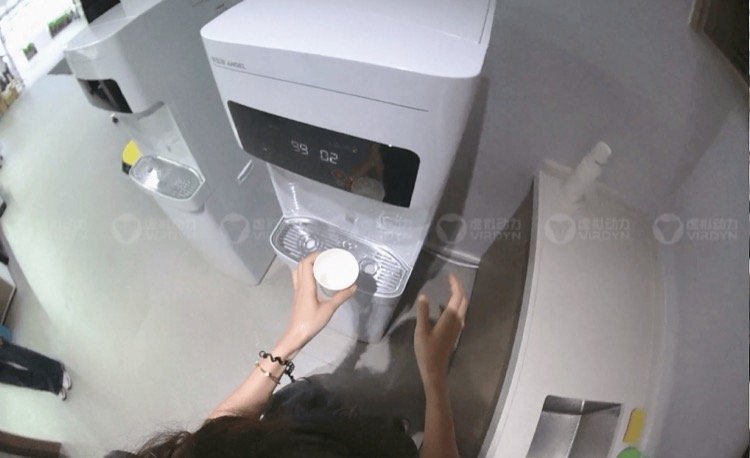
“Physical AI dataset” is a broad industry term, not a single standardized dataset specification. In this article, it means data representing physical environments, embodied observations, actions, or changes caused by interaction.
Depending on the collection setup, it may contain:
-
RGB or stereo video.
-
Depth, point clouds, or camera poses.
-
IMU measurements and synchronized timestamps.
-
Human body motion and hand trajectories.
-
Robot joint states and end-effector commands.
-
Task instructions, outcomes, and failure annotations.
The important distinction is action grounding. A recording that shows someone opening a drawer provides useful behavioral information. A robot demonstration that also records observations, commands, and resulting states provides more direct supervision for learning control.
Open X-Embodiment illustrates this action-grounded approach. Its published collection includes more than one million real robot trajectories across 22 robot embodiments, supporting research into transferring experience between platforms.
Human Demonstrations Are Not Automatically Robot Actions
First-person human video can reveal task order, object relationships, and hand-object interactions. However, a human wrist trajectory is not automatically a valid command for a robot gripper.
Differences in reach, joints, camera placement, contact mechanics, and available sensors create an embodiment gap. Depending on the training method, teams may need pose estimation, retargeting, robot demonstrations, or other alignment techniques.
This distinction matters when purchasing “robot training data.” Buyers should establish whether they are receiving observational footage, estimated motion, or executable robot action labels.
What Is a Vision-Language Dataset?
A vision-language dataset connects visual content with language. Typical examples include image-caption pairs, video descriptions, visual questions and answers, and referring expressions identifying objects or regions.
These datasets support capabilities such as:
-
Recognizing objects from natural-language descriptions.
-
Connecting instructions with visible objects.
-
Understanding attributes and spatial relationships.
-
Describing scenes and activities.
-
Retrieving relevant visual examples.
CLIP provides a foundational example. Its researchers trained visual representations using 400 million image-text pairs and demonstrated transfer to multiple visual recognition tasks. That research established the value of language supervision for visual understanding; it did not establish that image-caption training alone teaches physical manipulation.
Understanding an Instruction Is Different From Executing It
Consider the instruction, “Place the fragile glass beside the plate.”
A vision-language model may identify the glass, understand “beside,” and recognize the plate. Successful execution still requires grasp selection, motion control, collision avoidance, and appropriate contact.
Language grounding helps define the goal. Action-grounded experience helps a robot reach it.
Physical AI Dataset vs Vision-Language Dataset: Key Differences
| Comparison factor | Physical AI dataset | Vision-language dataset |
|---|---|---|
| Primary learning signal | Physical observations, behavior, actions, and outcomes | Relationships between visual content and language |
| Typical unit | Time-ordered episode or trajectory | Image-text pair, video-text segment, or visual question |
| Action supervision | Available when explicitly captured or derived | Usually absent unless action labels are added |
| Temporal information | Often central to the dataset | Varies; image collections have none |
| Physical measurements | May include pose, depth, joints, or force | Not inherently required |
| Collection burden | Synchronization, calibration, hardware, and task execution | Pairing, annotation, licensing, and semantic quality |
| Main limitation | Embodiment mismatch and collection complexity | Limited direct evidence for physical control |
| Strongest role | Learning interaction and task execution | Learning visual concepts and language grounding |
Neither label guarantees quality. A poorly synchronized physical dataset can be less useful than a carefully curated visual collection for perception. Conversely, excellent captions cannot replace missing control signals.
Which Dataset Is Better for Different Robot Learning Goals?
Choose Physical AI Data for Manipulation and Control
For grasping, insertion, sorting, opening containers, or manipulating tools, prioritize data that captures the relevant interaction.
Useful training signals may include:
-
Observations immediately before and after actions.
-
Robot commands with documented units.
-
Gripper state and end-effector pose.
-
Contact events where available.
-
Clear success and failure criteria.
The required detail depends on the task. Moving a rigid box and inserting a flexible cable present different sensing and annotation requirements.
Choose Vision-Language Data for Semantic Understanding
For instruction interpretation, object identification, and scene description, vision-language data is a logical starting point.
A service robot that repeatedly confuses “the blue container” with “the transparent container” may need better semantic grounding before additional motion demonstrations will help.
However, perception performance and physical task completion should be evaluated separately. Correct object identification does not prove reliable manipulation.
Combine Both for Vision-Language-Action Models
Vision-Language-Action models connect visual observations and instructions to robot actions.
OpenVLA demonstrates this combined direction. Its published model builds on pretrained visual and language components and was trained on 970,000 real-world robot demonstrations. The key lesson is architectural complementarity: semantic representations and robot experience contribute different information.
There is no universally correct data ratio. The appropriate mixture depends on the pretrained model, action representation, robot hardware, and target tasks.
What Published Dataset Projects Actually Tell Us
DROID: Environment Diversity Deserves Attention
DROID reports 76,000 demonstration trajectories, approximately 350 hours of interaction, 564 scenes, and 86 tasks. Its research evaluates how diverse real-world collection supports policy performance and generalization.
For buyers, the practical lesson is to examine coverage—not just hours.
Ask whether a dataset includes different object instances, backgrounds, viewpoints, and operating conditions. Thousands of near-identical repetitions may provide less useful coverage than a smaller collection designed around deployment variation.
Ego4D: First-Person Scale Does Not Equal Robot Control Labels
Ego4D reports 3,670 hours of daily-life video from 923 participants across 74 locations in nine countries. It demonstrates the scale and diversity achievable through egocentric collection.
However, large-scale human activity video and robot control trajectories are different assets. Comparing them only by recording hours obscures what each collection actually supervises.
Cross-Robot Transfer Is Promising, Not Automatic
Open X-Embodiment reports positive transfer in its evaluated systems. That supports learning from multiple robot platforms, but it does not guarantee that arbitrary action spaces, sensors, and embodiments are immediately compatible.
A dataset’s research value and its readiness for your production stack are separate questions.
A Practical Dataset Selection Framework
1. Identify the Failure Before Buying More Data
Classify the robot’s main problem:
-
Perception: it selects the wrong object.
-
Language grounding: it misinterprets the instruction.
-
Control: it approaches or grasps incorrectly.
-
Generalization: it fails in unfamiliar settings.
-
Recovery: it cannot respond after an unsuccessful attempt.
This makes dataset requirements more precise than a general request for “more multimodal data.”
2. Specify the Required Learning Signals
Document what the model consumes and predicts.
For action learning, request the action schema, coordinate frames, units, sampling rates, and normalization rules. For egocentric video, clarify which signals are measured directly and which are estimated.
Do not treat “3D data” or “hand tracking” as complete specifications.
3. Audit Synchronization and Calibration
Ask for evidence of:
-
Timestamp alignment between sensors.
-
Missing-frame detection.
-
Camera calibration procedures.
-
Coordinate-frame definitions.
-
Sensor drift checks.
-
Consistent episode boundaries.
A visually sharp video can still be unsuitable for temporal learning if associated measurements are misaligned.
4. Run a Pilot Before Scaling
Use a representative sample and evaluate it against a baseline.
Hold out environments, operators, or object instances when appropriate. Report task success, intervention frequency, recovery behavior, and performance under unfamiliar conditions.
The purpose is not to prove that one dataset category always wins. It is to determine which additional signal improves your system.
An Often-Missed Buying Metric: Cost per Usable Episode
Price per recording hour is easy to compare but can be misleading.
A more useful procurement metric is:
Cost per usable episode=Collection, processing, annotation, and integration costs/Episodes that pass agreed acceptance criteria
This is a proposed buying framework, not a published industry benchmark.
Define “usable” before signing a contract. Criteria might include complete task execution, synchronized sensors, valid metadata, approved rights, and compatibility with the training pipeline.
A cheaper collection can become expensive if engineering teams must repair timestamps, reconstruct metadata, or reject incomplete demonstrations.
Also distinguish acquisition cost from learning value. An episode that passes technical checks may still add little if it duplicates existing coverage.
Where Egocentric Collection and Simulation Fit
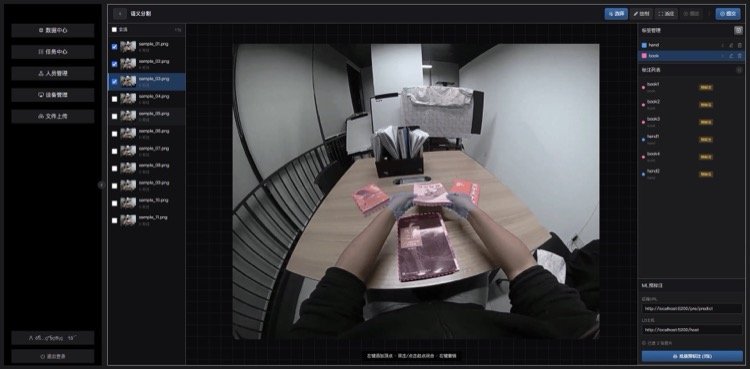
Egocentric data offers a close view of human activity, including task sequencing and hand-object relationships. It can be especially relevant when collecting demonstrations in homes, warehouses, factories, or laboratories.
Simulation offers a different contribution: controlled variation in environments, objects, viewpoints, and physical parameters.
Combining real and simulated data is a strategy to test, not a guarantee of transfer. Teams should validate whether simulated behavior reflects relevant real-world conditions.
For a world model, the requirements may also differ from those of an action policy. Predicting future observations does not necessarily require the same labels as generating robot commands. Dataset specifications should follow the actual training objective.
How Virdyn Can Support a Robot Learning Data Pipeline
Based on the company information supplied for this article, Virdyn, through its VDEgo offering, provides egocentric collection, multimodal dataset development, annotation, processing, and collection hardware.
Its stated workflow covers requirements analysis, scenario design, task planning, collection, cleaning, annotation, quality inspection, and delivery.
The supplied description identifies VDEgo-C2 as a binocular first-person collection device supporting stereo RGB capture, synchronized IMU data, timestamps, camera pose tracking, local storage, and wireless control.
These are company-supplied capabilities, not independently verified performance results. Buyers should confirm configuration-specific specifications and sample outputs.
Match the Deliverable to the Training Objective
Virdyn lists formats including MP4, AVI, CSV, JSON, and PLY. These formats describe containers or file structures—not automatic training readiness.
A useful delivery agreement should additionally specify:
-
Episode structure and file relationships.
-
Calibration and synchronization metadata.
-
Annotation definitions and confidence fields.
-
Data provenance and permitted uses.
-
Quality thresholds and rejection handling.
-
A sample loader or integration example.
For VLA development, explicitly establish whether robot actions are captured, derived, or outside the project scope.
Build Around the Capability Your Robot Needs
Choose vision-language data when the priority is understanding objects and instructions. Choose action-grounded physical AI data when the priority is learning physical execution. Combine them when developing a system that must do both.
For a Virdyn dataset consultation, prepare your target task list, robot configuration, required modalities, and acceptance criteria. Request a representative sample episode and a pilot collection plan before committing to full-scale production.

Frequently Asked Questions
Can a vision-language dataset alone train a robot to manipulate objects?
It can support perception and instruction grounding, but image-text supervision alone does not supply the robot action labels typically required for supervised control learning.
Are physical AI datasets always collected from robots?
No. The term can include human demonstrations, egocentric recordings, simulated interactions, and robot trajectories. Buyers should inspect the actual signals rather than rely on the label.
Can first-person human video replace robot demonstrations?
Not automatically. It provides useful behavioral observations, but human-to-robot transfer requires an appropriate learning method and validation on the target hardware.
Is synthetic data better than real-world data?
Neither is universally better. Simulation supports controlled variation; real-world collection captures deployment conditions. Their relative value must be tested for the intended task.
How much data is enough for robot learning?
There is no universal minimum. Requirements depend on task difficulty, model initialization, data diversity, sensing, and the performance target.
What should a dataset pilot include?
Representative tasks, documented schemas, quality checks, deployment-relevant variation, and evaluation on held-out conditions. Establish acceptance criteria before collection begins.
References
1. Radford, A., et al. “Learning Transferable Visual Models From Natural Language Supervision.” 2021. Foundational research on learning visual representations from image-text pairs. https://arxiv.org/abs/2103.00020
2. Open X-Embodiment Collaboration. “Open X-Embodiment: Robotic Learning Datasets and RT-X Models.” Dataset scope, cross-embodiment training, and experimental findings. https://robotics-transformer-x.github.io/
3. Khazatsky, A., et al. “DROID: A Large-Scale In-the-Wild Robot Manipulation Dataset.” 2024. Dataset composition and policy evaluation. https://droid-dataset.github.io/
4. Ego4D Consortium. “Ego4D: Egocentric 4D Perception.” Official project overview and collection statistics. https://ego4d-data.org/
5. Kim, M. J., et al. “OpenVLA: An Open-Source Vision-Language-Action Model.” 2024. Model architecture and robot demonstration training. https://arxiv.org/abs/2406.09246
Hot Tags: Physical AI Datasets, Vision-Language Datasets, Robot Training Data, AI Data Collection Services, Egocentric Data Collection, Multimodal AI Datasets, AI Data Annotation Services, Custom AI Datasets, Robotics Data Collection, Synthetic Data Generation
SHARE



