Powering Physical AI with Real-World Ego Datasets

Real-World vs Simulation Data for Embodied AI: A Practical Guide
Content Menu
● Real-World Data Collection vs Simulation Data: Key Differences
● What Real-World Data Collection Contributes to Embodied AI
>> Capturing the Complexity of Physical Environments
>> Learning from Egocentric Human Demonstrations
>> Recognizing Collection Constraints
● What Simulation Data Contributes to Embodied AI
>> Controlled Variation and Repeatable Experiments
>> Scaling Demonstrations from Limited Examples
>> Separating Physics Simulation from Generated Video
● The Sim-to-Real Gap: Where Comparisons Become Practical
>> Sensor and Control Mismatch
● Three Research Examples—and What Buyers Should Learn
● How to Compare the True Cost of Embodied AI Data
● A Six-Step Hybrid Data Workflow
>> 1. Define the Deployment Task and Success Criteria
>> 2. Collect a Representative Physical Baseline
>> 3. Build Simulations Around Identified Gaps
>> 4. Align Data Across Sources
>> 5. Compare Real-Only, Simulation-Only, and Hybrid Training
>> 6. Expand According to Observed Failure Modes
● Where Virdyn Fits into a Hybrid Data Strategy
● Build the Dataset Around the Deployment Decision
>> Is Real-World Data Better Than Simulation Data for Embodied AI?
>> Can Simulation Replace Physical Robot Testing?
>> Can Egocentric Video Train a VLA Model Directly?
>> What Is the Best Real-to-Simulation Data Ratio?
>> Which Files Should a Data Supplier Deliver?
Real-world data collection vs simulation data for embodied AI is not a choice between authenticity and scale. It is a decision about which evidence a robot needs, which variations a simulator can reproduce, and how to verify that training improves physical performance. Real-world recordings expose models to actual environments. Simulation provides controlled, repeatable opportunities to explore alternatives.
My recommendation is to treat them as complementary resources, not interchangeable datasets. Start with the deployment task, identify the failures that matter, and build a hybrid data strategy around measurable outcomes.
For teams developing robotics policies, vision-language-action models, or world models, understanding this distinction helps prevent a costly mistake: collecting more data without improving what the system can actually do.

Real-World Data Collection vs Simulation Data: Key Differences
Real-world data collection records physical environments through cameras, sensors, human demonstrations, or robot operation. Simulation data comes from computational environments that reproduce selected aspects of appearance, geometry, sensing, and interaction.
| Comparison factor | Real-world data collection | Simulation data |
|---|---|---|
| Main strength | Captures actual operating conditions | Enables controlled variation and repetition |
| Main limitation | Requires physical access and collection resources | Depends on assumptions and simulator fidelity |
| Visual information | Includes real lighting, clutter, and occlusion | Offers configurable appearance and viewpoints |
| Interaction dynamics | Records actual contact and object behavior | Approximates behavior through physics models |
| Annotation | Often requires processing and review | Can expose simulator-defined labels directly |
| Safety | Requires safeguards during collection | Supports virtual exploration of hazardous situations |
| Reproducibility | Physical conditions vary between attempts | Initial conditions can be reset consistently |
| Evaluation role | Measures performance in deployment conditions | Supports controlled testing and debugging |
Neither column represents a universal winner. Their value depends on the task, sensor configuration, action representation, and intended deployment environment.
What Real-World Data Collection Contributes to Embodied AI
Capturing the Complexity of Physical Environments
A warehouse picking task involves more than recognizing a carton. The system must handle changing illumination, partially hidden objects, imperfect packaging, and unexpected contact.
Physical recordings preserve these conditions without requiring developers to anticipate every detail.
DROID illustrates the value of collecting across varied environments. Its project reports approximately 76,000 demonstration trajectories, 350 hours of interaction, 564 scenes, and 86 tasks. These figures describe dataset coverage—not a guarantee that a model trained on it will succeed in another application.
The practical lesson is to measure diversity across meaningful dimensions. Ten thousand nearly identical demonstrations may leave important deployment conditions uncovered.
Learning from Egocentric Human Demonstrations
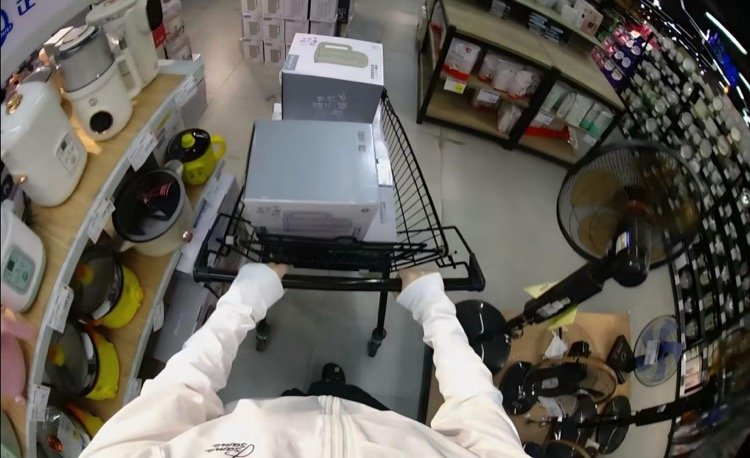
Egocentric data collection records activity from the operator’s perspective. This viewpoint can reveal hand–object relationships, task sequence, workspace visibility, and the visual consequences of manipulation.
However, human demonstrations are not automatically robot-action labels. Human hands and robot grippers differ in geometry, reach, degrees of freedom, and contact behavior.
EgoMimic addresses this distinction through a framework combining human egocentric demonstrations with robot data, cross-domain alignment, and shared policy learning. Its relevance is the alignment approach, not a claim that any first-person video can directly train any robot.
For procurement, distinguish among video suitable for visual understanding, reconstructed human motion, and calibrated demonstrations suitable for action learning.
Recognizing Collection Constraints
Real-world collection requires more than recording time. Budget for:
-
Site access, permissions, and operator preparation.
-
Sensor calibration and synchronization.
-
Task instructions and coverage monitoring.
-
Annotation, review, and recollection.
-
Privacy controls and secure data handling.
The important purchasing question is not simply “How many hours are included?” It is “How much accepted, task-relevant training data will those hours produce?”
What Simulation Data Contributes to Embodied AI
Controlled Variation and Repeatable Experiments
Simulation allows teams to change selected variables while holding others constant. Developers can vary object placement, lighting, camera position, or physical parameters and examine how a policy responds.
Domain randomization deliberately varies simulation parameters during training. The objective is to encourage robustness across a range of conditions rather than dependence on one narrowly configured virtual environment.
This is especially useful when teams need to isolate a failure. A repeatable scene makes it easier to compare policies under equivalent starting conditions.
Scaling Demonstrations from Limited Examples
Simulation can also expand existing demonstrations into additional task configurations.
MimicGen reports generating more than 50,000 demonstrations across 18 tasks from approximately 200 human demonstrations. Its results demonstrate a specific data-generation method, not a universal multiplication factor for every robotics workflow.
The commercial implication is important: a carefully selected seed dataset may support substantial expansion when tasks, object representations, and generation methods are compatible.
The prerequisite is still validation. A generated trajectory must remain feasible and useful for the intended learning objective.
Separating Physics Simulation from Generated Video
“Synthetic data” covers different products.
A physics simulator may provide object states, contact information, and robot control signals. A generative world model may produce plausible visual sequences without offering equivalent action or contact guarantees.
Current physical-AI platforms increasingly connect world modeling, simulation, and synthetic augmentation. NVIDIA’s Cosmos platform describes workflows involving world prediction, simulation, and synthetic data generation. These capabilities should still be evaluated against task-specific requirements.
A realistic-looking video is not sufficient evidence that the underlying interaction is physically correct.
The Sim-to-Real Gap: Where Comparisons Become Practical
The sim-to-real gap is the mismatch between training conditions in simulation and conditions encountered during physical deployment. Domain randomization addresses part of this problem by varying parameters, but its usefulness depends on whether those variations cover relevant real conditions.
For project planning, I would separate the gap into three diagnostic categories.
Visual Mismatch
Check whether simulated and physical observations differ in reflections, transparency, shadows, motion blur, texture, or camera characteristics.
Do not assume that visually attractive rendering produces the most useful training distribution.
Interaction Mismatch
Examine friction, compliance, object mass, grasp stability, and contact transitions.
For example, accurately rendering a flexible package does not establish that its deformation during grasping is modeled correctly.
Sensor and Control Mismatch
Compare timestamps, frame rates, calibration, latency, coordinate systems, and action definitions.
A policy can appear strong in simulation while relying on timing or state information unavailable on the physical robot. Evaluation should therefore examine the complete observation-to-action pipeline.
Three Research Examples—and What Buyers Should Learn
| Research example | Reported contribution | Practical interpretation |
|---|---|---|
| DROID | Large-scale robot demonstrations across hundreds of physical scenes | Evaluate environmental coverage, not recording duration alone |
| MimicGen | Demonstration expansion across multiple tasks and configurations | Consider whether a small seed dataset can support structured generation |
| EgoMimic | Joint learning from aligned human and robot demonstrations | Budget for embodiment alignment when using human activity data |
These projects address different problems: real-world diversity, generated-data scale, and cross-embodiment learning. They should inform data strategy rather than be treated as directly comparable supplier benchmarks.
The broader lesson is that “real versus synthetic” is often too coarse a procurement category. Data provenance, task coverage, alignment, and evaluation design deserve separate consideration.
How to Compare the True Cost of Embodied AI Data
A useful commercial comparison separates acquisition expense from downstream usefulness.
For real-world collection, include equipment, labor, site preparation, annotation, quality assurance, and rejected recordings.
For simulation, include asset creation, environment engineering, parameter calibration, compute, generated-data filtering, and physical validation.
I recommend tracking two operational metrics:
-
Cost per accepted episode: total relevant expenditure divided by episodes passing the agreed acceptance criteria.
-
Cost per measured improvement: incremental expenditure compared with improvement on a fixed physical evaluation.
The second metric requires care. Use equivalent evaluation tasks and repeated trials, and avoid attributing improvement to data alone when model architecture or training settings also change.
Cheap frames are not necessarily cheap progress.
A Six-Step Hybrid Data Workflow
1. Define the Deployment Task and Success Criteria
Replace “warehouse automation” with a testable specification.
For example: pick designated cartons from a specified rack, transfer them to a conveyor, and remain within agreed limits for drops, completion time, and interventions.
Record environmental boundaries and exclusions.
2. Collect a Representative Physical Baseline
Capture common task variations, recovery behavior, and relevant failures.
For egocentric collection, document what each sensor measures directly and what later processing estimates. Camera pose, hand trajectories, and reconstructed geometry should not be presented as equivalent to raw sensor measurements.
3. Build Simulations Around Identified Gaps
Use baseline observations to decide what needs variation.
Prioritize factors connected to actual failures rather than generating arbitrary scene diversity. Define valid parameter ranges and reject impossible configurations.
4. Align Data Across Sources
Standardize:
-
Units and coordinate frames.
-
Camera calibration and timestamps.
-
Task names and episode boundaries.
-
Action definitions and sampling rates.
-
Provenance and processing versions.
Container formats alone do not establish compatibility.
5. Compare Real-Only, Simulation-Only, and Hybrid Training
Keep the model, training budget, and evaluation protocol as consistent as practical.
Reserve physical evaluation environments that were not used to guide training. Avoid placing near-duplicate recordings or closely related generated variants across training and test partitions.
This comparison reveals whether simulation adds useful coverage rather than merely more samples.
6. Expand According to Observed Failure Modes
Collect more physical evidence when the model misunderstands real interaction. Expand simulation when controlled variations address a demonstrated weakness.
There is no defensible universal real-to-simulation ratio. Choose the next data investment from measured results.
Where Virdyn Fits into a Hybrid Data Strategy
According to the supplied company information, Virdyn combines egocentric collection, multimodal dataset development, processing, annotation, and simulation-related capabilities.
Its VDEgo-C2 is described as a self-developed binocular collection device supporting stereo RGB capture, synchronized IMU information, timestamps, local storage, and remote control. These are company-provided descriptions rather than independently verified performance specifications.
For a prospective project, translate those capabilities into a written delivery specification.
| Delivery area | Questions to resolve before collection |
|---|---|
| Sensor streams | Which measurements are captured directly, and at what settings? |
| Synchronization | What tolerance is guaranteed, and how is it checked? |
| Derived outputs | How are pose, hand motion, or spatial information estimated? |
| Data packaging | What schemas, metadata, and directory structures accompany files? |
| Quality assurance | What thresholds trigger rejection or recollection? |
| Governance | Who owns the recordings, and which uses are permitted? |
MP4, AVI, CSV, JSON, and PLY can package different data types, but filenames and extensions do not establish training readiness.
Request a sample package before scaling. It should include representative recordings, metadata, annotations, provenance, and a quality report.
Build the Dataset Around the Deployment Decision
Real-world collection establishes what the operating environment demands. Simulation explores selected variations at scale. A disciplined evaluation connects both to robot performance.
Ask Virdyn to scope a pilot around one deployment task, an agreed sample package, explicit acceptance criteria, and a held-out physical evaluation. Use that pilot to decide what to collect, what to simulate, and what deserves further investment.

Frequently Asked Questions
Is Real-World Data Better Than Simulation Data for Embodied AI?
Neither is universally better. Real-world data captures actual operating conditions, while simulation supports controlled variation. Compare them against the same deployment task and physical evaluation protocol rather than assuming one source always wins.
Can Simulation Replace Physical Robot Testing?
Do not treat simulator performance as proof of deployment readiness. Simulation is valuable for development and controlled comparison, but the intended physical system still needs task-specific validation under appropriate safeguards.
Can Egocentric Video Train a VLA Model Directly?
It depends on the learning objective. Video can support visual and task understanding, but action learning requires suitable action representations and alignment. EgoMimic demonstrates an approach that combines aligned human and robot demonstrations.
What Is the Best Real-to-Simulation Data Ratio?
There is no universal ratio. Compare real-only, simulation-only, and hybrid baselines, then allocate collection and generation resources according to measured improvements and remaining failures.
Which Files Should a Data Supplier Deliver?
Specify the training interface first. Beyond videos or structured files, request calibration, synchronization information, episode boundaries, action definitions where applicable, annotation schemas, quality metrics, and provenance.
References
1. DROID research team. “DROID: A Large-Scale In-the-Wild Robot Manipulation Dataset.” Official project page describing dataset scale, collection diversity, and research materials. https://droid-dataset.github.io/
2. NVIDIA. “Sim-to-Real Strategy 1: Domain Randomization.” Technical documentation explaining parameter variation as a transfer strategy. https://docs.nvidia.com/learning/physical-ai/sim-to-real-so-101/latest/09-strategy1-dr-teleop.html
3. MimicGen research team. “MimicGen: A Data Generation System for Scalable Robot Learning Using Human Demonstrations.” Research paper describing demonstration generation and evaluation across 18 tasks. https://arxiv.org/abs/2310.17596
4. EgoMimic research team. “EgoMimic: Scaling Imitation Learning via Egocentric Video.” Official project page explaining human–robot alignment and joint learning. https://egomimic.github.io/
5. NVIDIA. “NVIDIA Cosmos.” Official overview of world-model and physical-AI development capabilities. https://www.nvidia.com/en-us/ai/cosmos/
Hot Tags: Embodied AI, AI Data Collection, Synthetic Data Generation, Robotics Training Data, Egocentric Data Collection, AI Data Annotation Services, Multimodal Datasets, Simulation Data, Custom AI Datasets, Sim-to-Real Transfer
SHARE



