Powering Physical AI with Real-World Ego Datasets

FPV Head Tracking vs Fixed Cameras for Egocentric AI Data
Content Menu
● What Does FPV Camera Head Tracking Mean in AI Data Collection?
>> Head Tracking Is Not Eye Tracking
● What Is Fixed Camera Recording?
● FPV Camera Head Tracking vs Fixed Camera Recording: Comparison Table
● How Each Approach Changes Training Data Quality
>> Hand–Object Interaction and Occlusion
>> Camera Motion and Spatial Reasoning
>> Annotation and Dataset Consistency
● What Public Datasets Reveal About Camera Strategy
>> Ego4D: Diversity Beyond a Single Workstation
>> DROID: Robot Learning Benefits from Multiple Viewpoints
● Match Camera Placement to the Learning Objective
>> Human Activity Understanding and World Models
>> VLA Models and Robot Manipulation
● A Practical Pilot for Comparing Both Recording Methods
>> 1. Define Acceptance Criteria
>> 2. Record the Same Episodes Simultaneously
>> 3. Evaluate Useful Data, Not Raw Hours
>> 4. Compare Total Cost per Accepted Episode
● Synchronization, Calibration, and Delivery Requirements
>> Synchronization Must Be Measured
>> Calibration Must Accompany the Recordings
>> File Formats Are Only Containers
● Where Virdyn’s VDEgo Approach Fits
● Build the Dataset Around the Task
>> Is a fixed camera suitable for egocentric AI data?
>> Does head-mounted FPV video include accurate head tracking?
>> Can head tracking replace eye tracking?
>> Is stereo recording enough to generate reliable 3D data?
>> Should human demonstrations replace robot demonstrations?
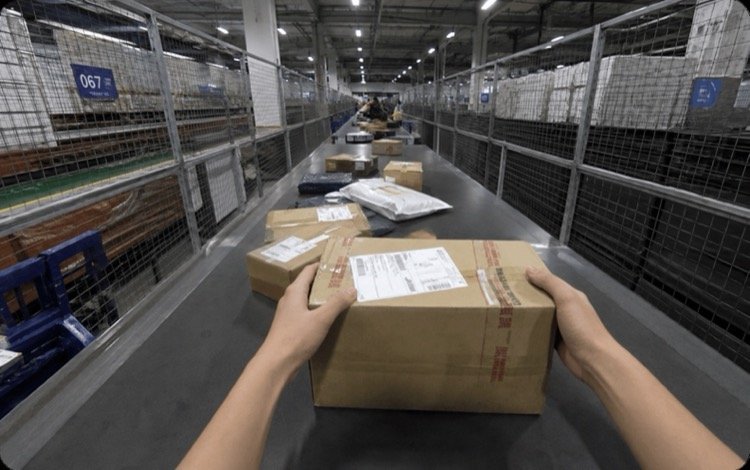
FPV camera head tracking vs fixed camera recording for egocentric AI data is fundamentally a choice between capturing an operator’s changing perspective and maintaining a stable view of the workspace. Head-mounted cameras follow human movement through a task. Fixed cameras preserve a consistent reference frame. Neither approach automatically produces better training data: the right choice depends on what your model must learn.
My recommendation is to start with the model’s intended observation space—not the camera specification sheet. A mobile assistant learning human activities needs different evidence from a robot inspecting components at a stationary workbench.
For many embodied AI projects, the most useful answer is hybrid: synchronized first-person and external recordings that reveal both local interaction and broader scene context.
What Does FPV Camera Head Tracking Mean in AI Data Collection?
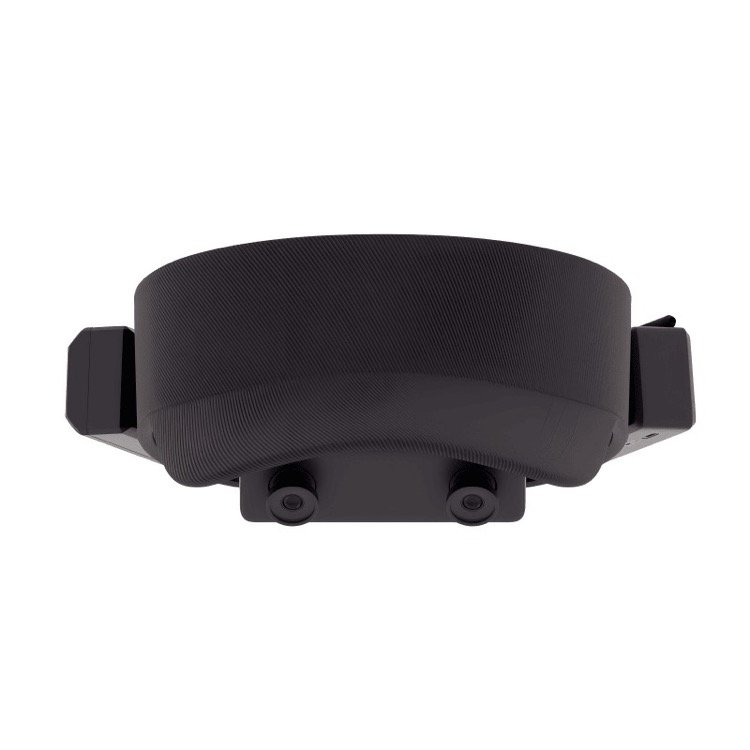
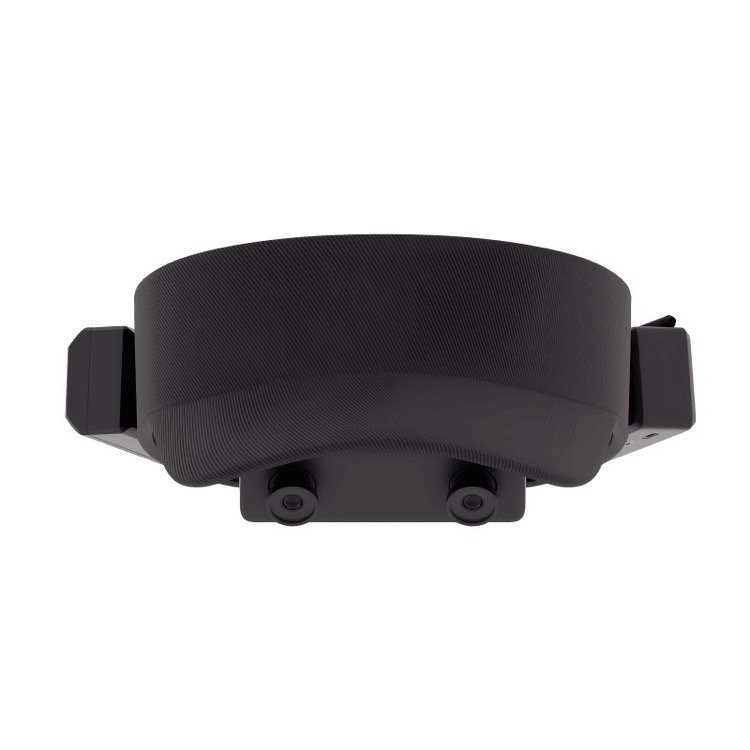
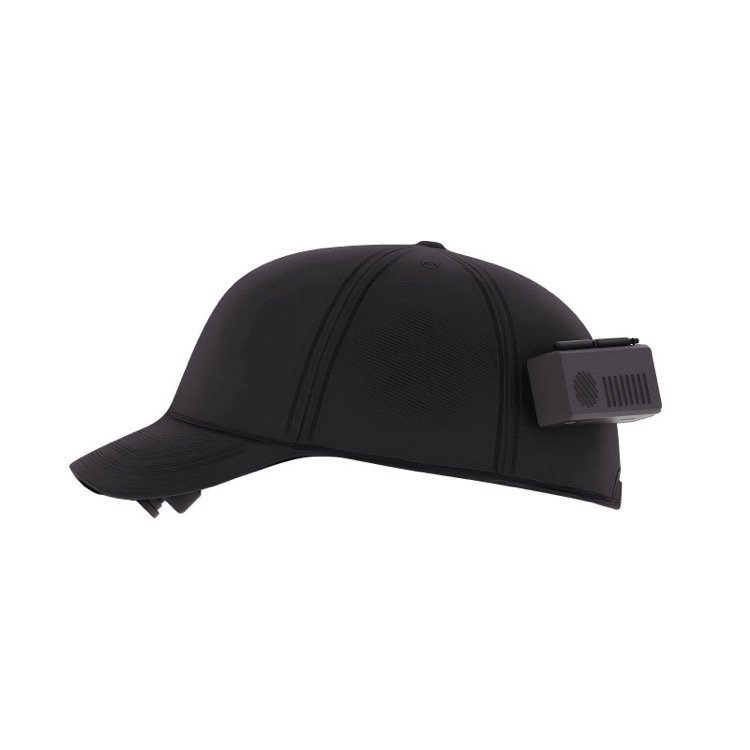
In this article, FPV camera head tracking means head-mounted first-person recording, ideally paired with measurements or estimates of camera orientation and position.
Three concepts must remain separate:
-
Head-mounted video records the scene from a camera attached to the wearer’s head.
-
Head-orientation tracking measures or estimates rotational movement.
-
Six-degree-of-freedom tracking estimates both orientation and position.
A camera moving with someone’s head does not automatically provide accurate pose measurements. Likewise, an IMU can support motion estimation, but it does not independently guarantee drift-free positioning.
The term also differs from FPV systems that use head movements to control a remote camera’s gimbal. That arrangement may be useful for teleoperation, but it is not necessarily human egocentric data collection.
Head Tracking Is Not Eye Tracking
Head direction provides contextual information about how someone explores a scene. It does not establish exactly where their eyes are looking.
An operator can glance at a warning indicator without turning their head. Precise gaze labels require a dedicated eye-tracking system or an explicitly validated estimation method. Treating the center of a head-mounted image as ground-truth attention introduces misleading supervision.
What Is Fixed Camera Recording?
Fixed camera recording uses cameras mounted in stationary positions, such as above an assembly station or beside a packing table.
These cameras offer a stable view of objects, people, and task outcomes. However, a stationary external camera normally produces third-person, or exocentric, footage—not egocentric footage.
That distinction matters when defining dataset requirements. Fixed recordings can complement an egocentric dataset, but they cannot reproduce everything visible from the operator’s perspective.
A chest-mounted camera is a separate category. Although fixed to the wearer’s torso, it moves through the environment and remains a wearable first-person viewpoint.
FPV Camera Head Tracking vs Fixed Camera Recording: Comparison Table
| Evaluation factor | Head-mounted FPV recording | Fixed external recording |
|---|---|---|
| Perspective | Moves with the operator’s head | Remains anchored to the workspace |
| Main strength | Captures changing first-person task context | Preserves consistent scene geometry |
| Hand–object visibility | Can show close interaction, depending on framing | Can provide continuous coverage of a defined work zone |
| Main visibility risk | Hands leave the frame during head turns | Bodies or equipment block the camera |
| Motion effects | Head movement can introduce blur and rapid viewpoint changes | Background remains stable unless the mount moves |
| Spatial interpretation | Requires reliable pose estimation for world-frame analysis | Requires calibration and a known camera-to-workspace relationship |
| Annotation | Moving viewpoints can complicate tracking | Stable views can simplify some labeling tasks |
| Operational burden | Wearer fitting, comfort, batteries, and session checks | Mounting, placement, coverage checks, and recalibration |
| Best fit | Mobile workflows and first-person activity understanding | Bounded workstations and external task verification |
These are practical tendencies, not universal performance rankings. Lens selection, lighting, camera placement, and task design can reverse individual advantages.
How Each Approach Changes Training Data Quality
Hand–Object Interaction and Occlusion
For fine manipulation, the decisive question is whether the relevant contact event is visible.
Head-mounted cameras can move naturally with an operator approaching a drawer, selecting a tool, or inspecting a component. However, the wearer may look away while continuing an action. The camera can miss the exact insertion or release moment.
Fixed cameras can maintain coverage of a tabletop, but an operator’s shoulder may obscure the contact point.
I would evaluate visibility at critical task phases—not simply count frames containing hands. Seeing a hand above a connector is different from seeing whether the connector actually engaged.
Camera Motion and Spatial Reasoning
Head-mounted recordings combine two sources of visual change: movement within the scene and movement of the camera itself.
For spatial learning, the pipeline must distinguish those effects. Camera calibration, pose estimates, and clearly defined coordinate frames become important.
Fixed cameras reduce this source of viewpoint variation. Nevertheless, they still require calibration for geometric measurements. Stable video alone does not establish metric depth, object dimensions, or world coordinates.
Stereo cameras can support depth estimation, but usable depth depends on calibration, image correspondence, lighting, and surface appearance.
Annotation and Dataset Consistency
Fixed viewpoints can make workspace regions and object trajectories easier to interpret. Head-mounted footage may require more review when objects repeatedly leave and re-enter the image.
However, easier annotation is not equivalent to better training value.
If the deployment camera moves, training exclusively on a clean, stationary view may leave the model poorly prepared for its actual observations. Annotation efficiency should be balanced against deployment relevance.
What Public Datasets Reveal About Camera Strategy
Ego4D: Diversity Beyond a Single Workstation
The original Ego4D paper reported 3,670 hours of video from 931 camera wearers across 74 locations in nine countries.
Its relevance is not that every project needs thousands of hours. Rather, it demonstrates how first-person data collection can cover varied people, activities, and environments beyond a single controlled station.
Selected portions also include additional modalities. That does not mean every recording contains every sensor stream—a useful reminder to specify modality coverage at the episode level.
DROID: Robot Learning Benefits from Multiple Viewpoints
DROID reports 76,000 robot demonstration trajectories, approximately 350 hours of interaction, and 564 scenes.
Its collection platform combines two adjustable external stereo cameras with a wrist-mounted stereo camera. The dataset therefore illustrates complementary viewpoints rather than a strict choice between human head-mounted recording and fixed recording.
These projects are not controlled comparisons of camera placement. They support a more defensible lesson: viewpoint strategy should follow the learning objective, and dataset diversity extends beyond recording duration.
Match Camera Placement to the Learning Objective
Human Activity Understanding and World Models
Head-mounted data is valuable when the model must interpret how people navigate, search, manipulate objects, and encounter changing scenes.
For world-model development, camera motion also creates a modeling requirement: the system must distinguish changes caused by observation movement from changes in the environment.
External views can provide supplementary evidence about events occurring outside the wearer’s field of view.
VLA Models and Robot Manipulation
Human demonstration video can support visual representation learning and task understanding. It does not automatically contain robot-executable action labels.
A Vision-Language-Action pipeline may additionally require:
-
Language instructions and task boundaries.
-
Hand or object pose annotations.
-
Robot states and control actions.
-
Retargeting or embodiment-specific adaptation.
-
Evaluation on the intended robot.
When deployment uses a wrist camera or stationary robot-cell camera, corresponding training observations deserve explicit coverage. Human head-mounted data should complement that requirement, not silently replace it.
A Practical Pilot for Comparing Both Recording Methods
Before scaling collection, run a synchronized pilot with representative tasks.
1. Define Acceptance Criteria
Specify what the model needs to observe: object identity, hand contact, task order, camera motion, or successful completion.
Set thresholds before reviewing results. Otherwise, teams may favor whichever recording looks more visually appealing.
2. Record the Same Episodes Simultaneously
Capture a head-mounted view and one or more external views during the same performance.
Include representative operators, object placements, lighting conditions, and difficult cases. Simultaneous capture reduces the risk of comparing different task executions rather than different viewpoints.
3. Evaluate Useful Data, Not Raw Hours
Measure:
-
Critical-event visibility.
-
Valid synchronization coverage.
-
Blur and dropped-frame rates.
-
Annotation time per accepted episode.
-
Recollection frequency.
-
Downstream performance on held-out tasks or environments.
Define each metric precisely. For example, critical-event visibility should distinguish partial visibility from a sufficiently clear view for reliable labeling.
4. Compare Total Cost per Accepted Episode
Calculate:
Total collection and processing cost ÷ accepted training episodes.
Include setup, calibration, operator time, annotation, privacy review, storage, and recollection.
A cheaper camera can produce more expensive usable data. Conversely, an elaborate wearable system may offer little additional value for a tightly bounded inspection task.
Synchronization, Calibration, and Delivery Requirements
Synchronization Must Be Measured
Precise timestamps are useful, but timestamps alone do not prove that video, IMU, and external cameras share an accurately aligned timebase.
Ask how the pipeline handles clock offsets, clock drift, dropped frames, and sensor interruptions. Validate alignment against an agreed tolerance appropriate to the task.
A timing mismatch around a rapid grasp can associate the wrong image with a motion measurement or action label.
Calibration Must Accompany the Recordings
For geometry-dependent work, request:
-
Camera intrinsics and distortion parameters.
-
Stereo calibration where applicable.
-
Camera-to-IMU transformations.
-
Coordinate-frame definitions and units.
-
Pose-estimation methods and validity indicators.
-
Calibration versions and session associations.
If stabilization or geometric image transformations are applied, document them. Processed frames must remain consistent with the calibration and pose information used downstream.
File Formats Are Only Containers
MP4 or AVI can hold video. CSV and JSON can carry timestamps, labels, and metadata. PLY can store point-cloud data.
None of these extensions alone makes a dataset training-ready.
Require an episode schema that explains stream relationships, units, missing-data conventions, task labels, and quality status. Keep raw sensor measurements distinguishable from derived outputs such as reconstructed geometry or estimated poses.
Where Virdyn’s VDEgo Approach Fits
Based on the supplied company information, Virdyn combines first-person capture hardware with scenario design, collection, cleaning, annotation, quality inspection, and delivery.
Its VDEgo-C2 is positioned as a binocular first-person capture device. The described VDEgo capabilities include RGB recording, synchronized IMU data, timestamps, camera-pose tracking, local storage, and wireless control.
These capabilities should be translated into project-specific acceptance requirements. Request representative recordings and verify synchronization accuracy, pose quality, runtime, field of view, and export completeness before committing to scale.
Virdyn’s real-world and simulation services can support a coordinated data strategy. However, simulated diversity should not be treated as proof of real-world transfer. Validate the resulting model on unseen physical environments and actual target tasks.
Build the Dataset Around the Task
Choose head-mounted capture when changing first-person observations are central to the learning problem. Choose fixed cameras when stable workspace coverage and external verification matter most. Combine them when either viewpoint alone leaves important events ambiguous.
For a Virdyn collection proposal, share your target model, deployment camera arrangement, task list, required modalities, and acceptance criteria. Request a synchronized pilot and sample delivery package before scaling. That turns a hardware comparison into a measurable training-data decision.
Frequently Asked Questions
Is a fixed camera suitable for egocentric AI data?
It can provide complementary external observations, but a stationary room camera is not itself an egocentric viewpoint. Label the streams separately and explain their relationship.
Does head-mounted FPV video include accurate head tracking?
Not necessarily. Video capture and pose tracking are separate capabilities. Confirm whether the system delivers orientation, six-degree-of-freedom trajectories, or only raw sensor measurements.
Can head tracking replace eye tracking?
No. Head direction and eye gaze are related but distinct. Do not label head orientation as measured gaze without an appropriate tracking or validation process.
Is stereo recording enough to generate reliable 3D data?
No. Stereo supports depth estimation, but calibration, synchronization, scene texture, and processing quality affect the result. Request validated outputs rather than assuming every stereo frame produces dependable geometry.
Which approach costs less?
There is no universal winner. Compare cost per accepted episode, including annotation and recollection. Fixed cameras often simplify bounded capture, while wearable systems can better accommodate movement between locations.
Should human demonstrations replace robot demonstrations?
Not automatically. Human video supplies useful perceptual and behavioral information, but robot control training still needs suitable action supervision or a validated transfer method.
References
1. Grauman, K., et al. “Ego4D: Around the World in 3000 Hours of Egocentric Video.” CVPR, 2022. Source for the original release’s scale, participant count, geographic coverage, and selected additional modalities.
2. DROID research team. “DROID: A Large-Scale In-the-Wild Robot Manipulation Dataset.” Official project page, 2024. Source for dataset scale, collection platform, camera configuration, and calibration coverage.
3. OpenCV. “Camera Calibration.” Official documentation. Technical reference for camera intrinsics, distortion, extrinsics, and calibration procedures.
4. OpenCV. “Camera Calibration and 3D Reconstruction.” Official documentation. Technical reference for stereo calibration and relationships between camera coordinate systems.
5. Project Aria. “Project Aria Pilot Dataset.” Official dataset documentation. Example of egocentric data supplied with sensor calibration, time alignment, and separately derived eye-gaze information.
Hot Tags: Egocentric Data Collection, AI Training Data Services, Embodied AI Datasets, Multimodal Data Collection, Robot Training Data, AI Data Annotation Services, Custom AI Datasets, First-Person Camera Systems, FPV Head Tracking, Computer Vision Data Collection
SHARE



