Powering Physical AI with Real-World Ego Datasets

Temporal Drift in AI Video: Reliable Data for Embodied AI
Content Menu
● What Is Temporal Drift in AI-Generated Video?
>> Why Temporal Consistency Matters for Embodied AI
● Why Video Models Lose Temporal Consistency
>> Limited Temporal Context and Representation
>> Weak Object and Interaction Tracking
>> Training Data That Omits Difficult Transitions
● How to Evaluate Temporal Drift Without Misleading Scores
>> Understand the Limits of FVD
● A Practical Workflow for Better Temporal Training Data
>> Step 1: Define the Intended Learning Task
>> Step 2: Capture Complete Egocentric Episodes
>> Step 3: Validate Timing and Calibration
>> Step 4: Annotate Persistent Identities and Events
>> Step 5: Deliver Reproducible Dataset Versions
● Combining Real-World and Simulated Data
>> Use Real Capture to Establish Behavioral Reference
>> Use Simulation to Expand Targeted Coverage
>> Keep Data Provenance Visible
● How Virdyn Supports Temporal Data Workflows
>> Egocentric Data Collection With VDEgo-C2
>> Multimodal Dataset Development
● Start With a Measurable Data Pilot
>> What causes temporal drift in AI-generated video?
>> Can higher-resolution video solve temporal inconsistency?
>> Is FVD enough to evaluate temporal consistency?
>> Why use egocentric data for robot learning?
>> Can simulated data replace real-world collection?
>> What should a multimodal dataset delivery include?
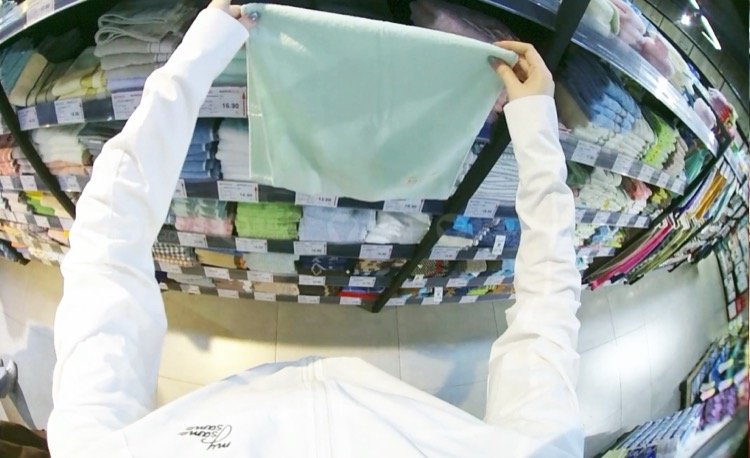
Temporal drift in AI-generated video occurs when objects, identities, or scene relationships become inconsistent as a sequence unfolds. A tool changes shape. A hand loses contact with an object. A package appears somewhere it could not physically reach. For teams developing embodied AI, these failures raise an important question: can the video support learning about the physical world?
The solution requires more than sharper frames. It combines temporal modeling, sequence-level evaluation, and training data that preserves actions over time.
This guide explains how to diagnose temporal inconsistency, evaluate it without misleading shortcuts, and build a stronger data pipeline using real-world egocentric capture, structured annotation, and simulation.
What Is Temporal Drift in AI-Generated Video?
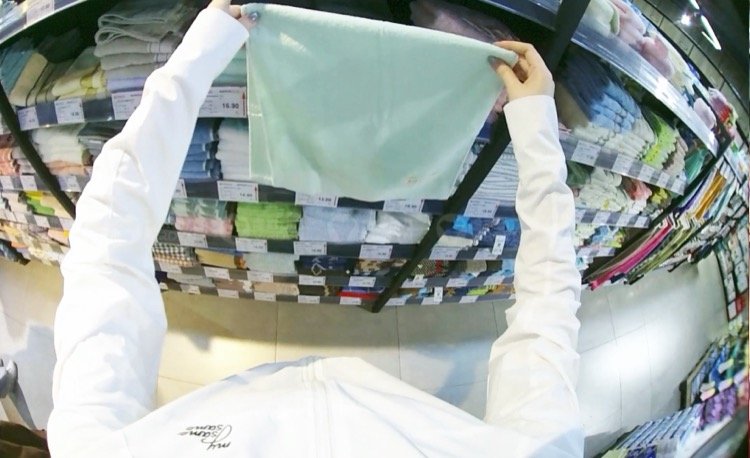
Temporal drift is the loss of visual, spatial, or semantic consistency across a video sequence. It may appear gradually or emerge suddenly after motion, occlusion, or a scene transition.
Common failure patterns include:
-
Identity drift: the same person or object changes appearance.
-
Geometric drift: shapes, dimensions, or positions shift inconsistently.
-
Motion inconsistency: trajectories jump or movements become unnatural.
-
Semantic drift: the sequence departs from the requested action.
-
Interaction failure: hands, tools, and objects no longer maintain plausible relationships.
Not every frame difference indicates drift. Lighting, perspective, and object appearance should change during natural movement.
The defining issue is whether those changes remain consistent with the scene and action.
Why Temporal Consistency Matters for Embodied AI
A generated clip can look convincing while depicting an impossible interaction.
Consider a warehouse picking sequence. A carton remains recognizable, but the fingers pass through its surface before it moves. Visually, much of the clip looks acceptable. As an example of physical manipulation, it is unreliable.
For embodied AI, the priority is continuity: what happened, what changed, and whether the action plausibly produced the observed result.
This distinction matters when evaluating synthetic training material, video-based world models, and demonstrations intended to support robot learning.
Why Video Models Lose Temporal Consistency
Limited Temporal Context and Representation
Some systems generate or extend video using limited temporal context. Earlier details may become unavailable or survive only in compressed representations, making persistent identities and scene relationships harder to preserve.
However, not all video models generate frames sequentially.
Lumiere, for example, introduced a Space-Time U-Net that generates the full temporal duration jointly within its architecture. This addresses a different modeling challenge from simply predicting the next frame.
The practical lesson is to diagnose the specific model rather than assume every temporal failure has the same cause.
Weak Object and Interaction Tracking
A model may preserve a general scene while losing a small but important detail.
A screwdriver can remain visible while its tip no longer aligns with the screw. A cup can retain its color while its handle changes sides.
These failures require more than image-quality checks. Evaluation must examine persistent objects, contact relationships, and action progression.
Training Data That Omits Difficult Transitions
Clean demonstrations alone do not represent realistic operating conditions.
Useful temporal coverage includes:
-
Hands temporarily hiding objects.
-
Objects leaving and re-entering the camera view.
-
Rapid head movement.
-
Similar-looking items crossing paths.
-
Interrupted actions and recovery attempts.
-
Lighting changes during manipulation.
A dataset should capture the transitions that challenge continuity, not just attractive examples of completed tasks.
How to Evaluate Temporal Drift Without Misleading Scores
A useful evaluation system separates visual quality, temporal stability, and task correctness.
No single metric establishes that a generated video is suitable for training.
Use Complementary Measures
| Evaluation layer | What to inspect | Important limitation |
|---|---|---|
| Frame quality | Blur, distortion, visual artifacts | Does not establish sequence consistency |
| Subject consistency | Appearance persistence | Can favor low-motion outputs |
| Motion evaluation | Smoothness and movement | Smooth motion can still be physically wrong |
| Task review | Action order, contact, completion | Requires explicit task definitions |
| Dataset-level comparison | Overall generated-video distribution | Can conceal individual failure cases |
VBench provides a useful framework by separating dimensions such as subject consistency, background consistency, temporal flickering, motion smoothness, and dynamic degree.
This separation matters because a nearly static video can appear temporally stable while failing to perform the requested action.
Understand the Limits of FVD
Fréchet Video Distance compares distributions of video features. It can support model comparison, but it should not be treated as a direct detector of every temporal defect.
Research on FVD has identified content bias: some implementations respond more strongly to individual-frame quality than to temporal degradation.
Likewise, perceptual comparisons between neighboring frames need careful interpretation. Legitimate movement changes appearance. Low frame-to-frame difference is not automatically evidence of better video.
Review Complete Actions
Human reviewers should inspect whole episodes, including:
-
The initial scene.
-
The approach to the object.
-
Contact and manipulation.
-
Release or placement.
-
The final state.
Record the first failure timestamp, affected object, failure category, and severity.
These records provide a clearer improvement target than a generic “poor quality” label.
A Practical Workflow for Better Temporal Training Data
The following workflow is a proposed operating framework, not a claim of measured performance improvement.
Step 1: Define the Intended Learning Task
Start with the downstream objective.
Is the dataset intended for video generation, action recognition, a Vision-Language-Action model, or world-model research?
Specify:
-
Required actions and environments.
-
Relevant objects and interactions.
-
Necessary sensor modalities.
-
Episode boundaries.
-
Expected labels.
-
Acceptance criteria.
Human demonstrations do not automatically provide robot-compatible action labels. That mapping must be designed separately.
Step 2: Capture Complete Egocentric Episodes
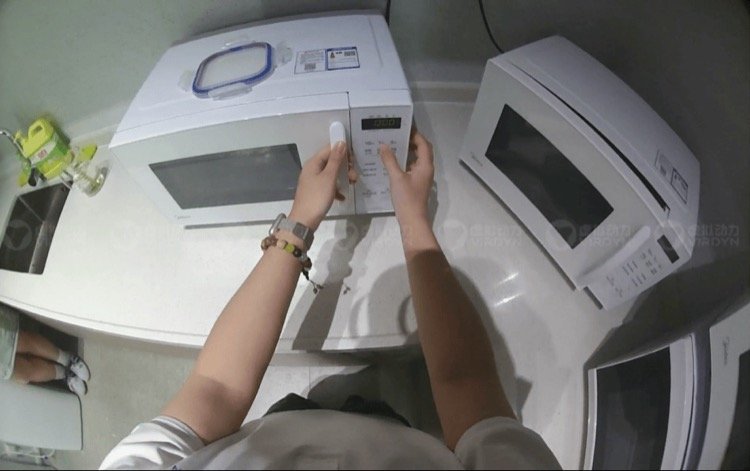
First-person recording places the camera close to the operator’s interaction context.
For a packaging task, capture locating the item, grasping it, positioning it, closing the package, and checking the result.
Preserve enough context before and after each action to explain state changes. Avoid cutting away the transition that makes an outcome understandable.
Step 3: Validate Timing and Calibration
Temporal reliability also depends on acquisition quality.
Check stereo synchronization, timestamp continuity, dropped frames, and alignment between video and IMU streams.
Where camera pose or reconstructed geometry is included, document calibration, coordinate systems, estimation methods, and confidence.
Do not describe derived poses, hand trajectories, or three-dimensional reconstructions as ground truth without a suitable validation process.
Step 4: Annotate Persistent Identities and Events
Annotation should explain what continues across frames and what changes during an action.
Useful fields include:
-
Persistent object identifiers.
-
Action start and end times.
-
Visibility and occlusion states.
-
Hand–object contact events.
-
Object-state transitions.
-
Completion, interruption, and failure labels.
Reviewers should distinguish “not visible” from “no longer present.” That distinction becomes essential when an object passes behind a hand or leaves the field of view.
Step 5: Deliver Reproducible Dataset Versions
A usable delivery needs more than video files.
Include a manifest linking episodes, sensor streams, annotations, and metadata. Document units, coordinate frames, schema versions, and known limitations.
Split evaluation data by meaningful sources of variation, such as operator, environment, or recording session. Avoid placing near-identical neighboring clips in training and evaluation sets.
Combining Real-World and Simulated Data
Real and simulated data serve different purposes.
Real-world capture records actual human behavior, lighting, occlusion, and handling variation. Simulation allows controlled changes to objects, environments, and task conditions.
Neither automatically guarantees transfer to a deployed robot.
Use Real Capture to Establish Behavioral Reference
Egocentric recordings can document how people approach objects, adjust grasps, and recover from mistakes.
EgoMimic demonstrates the potential of combining egocentric human demonstrations with robot data through cross-domain alignment and a shared learning framework.
Its lesson is not that human video replaces robot demonstrations. Alignment between human observations, human motion, and robot actions remains important.
Use Simulation to Expand Targeted Coverage
Simulation is especially useful when evaluation reveals a specific gap.
For example, a team might vary shelf spacing, object placement, or camera viewpoints around an existing task definition.
However, simulated contact, friction, object deformation, and appearance may differ from reality. Evaluate synthetic additions against held-out real-world tasks before increasing their share of training.
Keep Data Provenance Visible
Every episode should identify its origin:
-
Real-world recording.
-
Simulated sequence.
-
Generated or modified video.
-
Derived annotation or reconstruction.
This allows teams to trace failures and compare the contribution of each source.
More footage is useful only when its relevance and limitations remain understandable.
How Virdyn Supports Temporal Data Workflows
Virdyn’s supplied service information describes an end-to-end offering spanning requirements analysis, scenario design, task planning, capture, processing, annotation, quality inspection, and delivery.
Its relevance to temporal reliability lies in organizing those stages around complete, synchronized action sequences.
Egocentric Data Collection With VDEgo-C2
Virdyn describes VDEgo-C2 as a self-developed binocular first-person capture device.
The supplied capabilities include stereo RGB recording, synchronized IMU data, timestamps, camera-pose tracking, local storage, and wireless remote control.
Before deployment, confirm project-specific requirements for calibration, synchronization tolerance, recording duration, storage, and pose accuracy.
These parameters should be agreed in the collection specification rather than inferred from a feature list.
Multimodal Dataset Development
Virdyn’s described dataset services cover RGB video, IMU streams, synchronized timing information, camera poses, spatial data, body motion, and hand-operation data.
Available engagement types include off-the-shelf datasets, custom datasets, and industry-specific collection.
Potential delivery formats include MP4, AVI, CSV, JSON, and PLY, depending on the data product.
The format alone does not establish training readiness. Buyers should request sample episodes, annotation schemas, provenance records, and quality reports before scaling.
A Warehouse Picking Pilot
An illustrative pilot could record operators selecting, grasping, transporting, and placing cartons under varied conditions.
The review would examine object identity through occlusion, contact timing, synchronized streams, and final placement.
A held-out set would then test whether added data improves the intended model or task.
This is a proposed project design, not a reported Virdyn customer result.
Start With a Measurable Data Pilot
Before commissioning a large dataset, define one task, its failure modes, and the evidence required for acceptance.
Share your target environment, required modalities, annotation schema, and evaluation criteria with Virdyn. Request a sample capture and quality-review package before committing to full-scale collection.
A well-scoped pilot makes it easier to determine whether the dataset addresses the actual learning problem.
Frequently Asked Questions
What causes temporal drift in AI-generated video?
Contributing factors include limited temporal context, weak cross-frame relationships, incomplete interaction modeling, and training data that underrepresents difficult transitions. The relevant causes depend on the model architecture and task.
Can higher-resolution video solve temporal inconsistency?
Not by itself. Higher resolution can reveal more detail, but it does not establish persistent identity, plausible motion, or correct action order. Spatial quality and temporal reliability require separate evaluation.
Is FVD enough to evaluate temporal consistency?
No. FVD supports distribution-level comparison but has documented limitations. Combine it with targeted temporal measures, action-level review, and structured human assessment.
Why use egocentric data for robot learning?
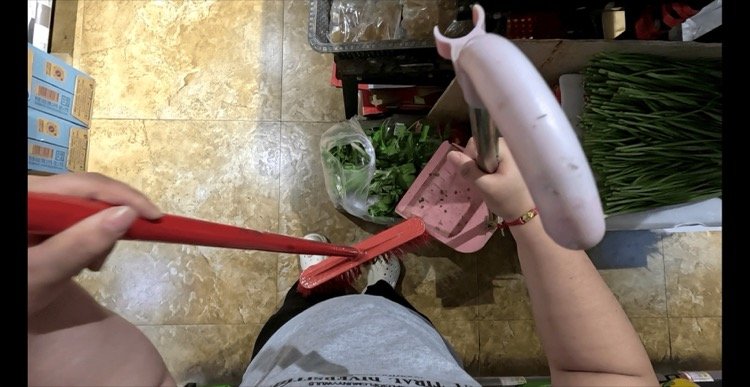
First-person recordings capture manipulation from an operator-centered viewpoint. They can support learning about actions and interactions, but transferring human demonstrations to robots requires suitable alignment and robot-specific validation.
Can simulated data replace real-world collection?
Not universally. Simulation provides controlled variation, while real capture records actual operating conditions. The appropriate balance depends on measured performance on representative real-world tasks.
What should a multimodal dataset delivery include?
Request synchronized streams, episode identifiers, calibration metadata, annotation definitions, provenance, quality reports, and documented limitations. Derived signals should include their estimation methods and validation status.
References
1. iMerit — “Solving Temporal Drift in AI-Generated Video”. Source article informing the topic, failure categories, annotation discussion, and production-evaluation context.
2. Bar-Tal et al. — “Lumiere: A Space-Time Diffusion Model for Video Generation”, 2024. Primary research supporting the distinction between sequential generation and joint space-time modeling.
3. Huang et al. — “VBench: Comprehensive Benchmark Suite for Video Generative Models”, CVPR 2024. Primary source for multidimensional video-generation evaluation.
4. VBench — Supplementary Material. Technical basis for the discussion of consistency scores, motion smoothness, and the static-video evaluation limitation.
5. Ge et al. — “On the Content Bias in Fréchet Video Distance”, CVPR 2024. Primary research supporting the discussion of FVD’s temporal-sensitivity limitations.
6. EgoMimic — “Scaling Imitation Learning via Egocentric Video”. Research project supporting the discussion of human–robot data alignment and combined demonstration learning. Its findings are not Virdyn performance claims.
Hot Tags: AI Training Data, AI Data Collection, Data Annotation Services, Egocentric Data Collection, Multimodal Datasets, Embodied AI, Robotics Training Data, Synthetic Data Generation, Computer Vision Data, Custom Dataset Development
SHARE



