Powering Physical AI with Real-World Ego Datasets

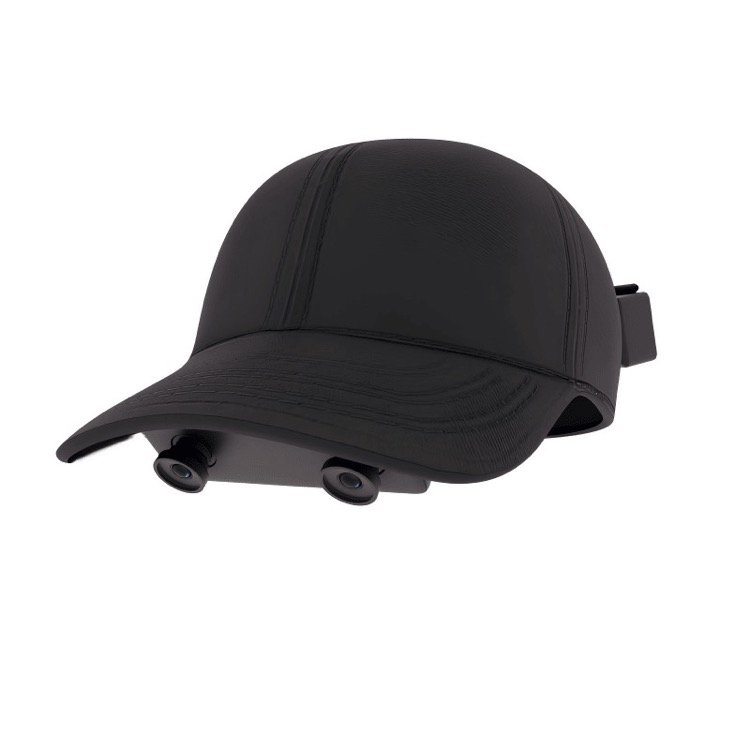
Head-Mounted vs Chest-Mounted Cameras for AI Data Collection
Content Menu
● FPV Head Tracking Kit vs Chest-Mounted Camera: What Are You Comparing?
>> An FPV Head Tracking Kit Is Not Always a Data Collection Headset
>> A Chest-Mounted Camera Records the Torso’s Perspective
● Head-Mounted vs Chest-Mounted Cameras: Comparison Table
● Which Camera Captures Better Hand–Object Interactions?
>> Head-Mounted Cameras Can Follow Changing Workspaces
>> Chest-Mounted Cameras Can Preserve a Forward Work Area
● Motion, Depth, and Synchronization: What Placement Cannot Guarantee
>> A Steadier View Is Not Automatically Better Training Data
>> Stereo Cameras Are Not Automatically Depth Sensors
>> Timing Quality Matters More Than Matching Start Times
● What Research Reveals About Wearable Camera Placement
>> Large Datasets Demonstrate the Value of Complementary Views
>> New Research Highlights Viewpoint Mismatch
● A Practical Pilot for Comparing Both Mounts
>> 1. Select Representative and Difficult Tasks
>> 2. Define Acceptance Rules Before Reviewing Footage
>> 3. Calculate Useful Yield, Not Just Recording Hours
>> 4. Test the Data in the Intended Pipeline
● Human Demonstrations Are Not Robot Action Labels
● How Virdyn Supports Egocentric AI Data Collection
● Which Mount Should You Choose?
>> Is an FPV Head Tracking Kit the Same as an Egocentric Recorder?
>> Is a Head-Mounted Camera Always Better for Robot Training?
>> Can a Chest-Mounted Camera Capture Gaze?
>> Does VDEgo-C2 Provide Multimodal Data?
>> Should Every Collection Use Multiple Cameras?
Choosing an FPV head tracking kit vs chest-mounted camera for real-world AI data collection starts with one question: what must your model actually see? A head-mounted system follows head orientation and can capture changing viewpoints during natural activity. A chest-mounted camera follows the torso and may provide more consistent framing for some repetitive tasks.
My recommendation is to prioritize observability: whether the recording preserves the objects, actions, and context your model needs. Neither mounting position automatically produces better training data.
For robotics teams, research laboratories, and dataset buyers, the right comparison goes beyond video quality. It includes hand visibility, motion, synchronization, calibration, operator comfort, and the cost of delivering usable demonstrations.
FPV Head Tracking Kit vs Chest-Mounted Camera: What Are You Comparing?
An FPV Head Tracking Kit Is Not Always a Data Collection Headset
“FPV head tracking kit” can describe a remote-viewing system in which head movements control a camera gimbal. Such systems commonly combine compatible goggles, video transmission hardware, and a movable camera.
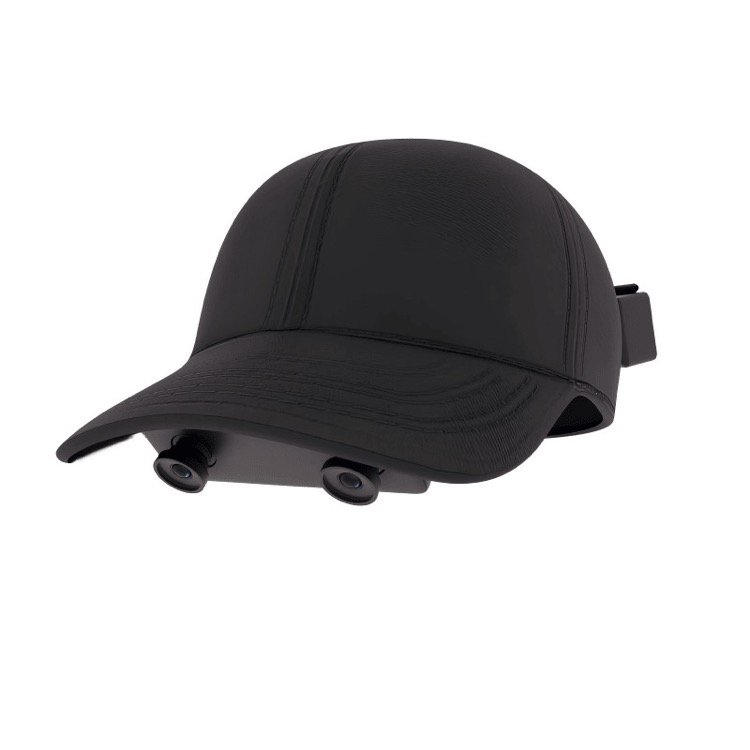
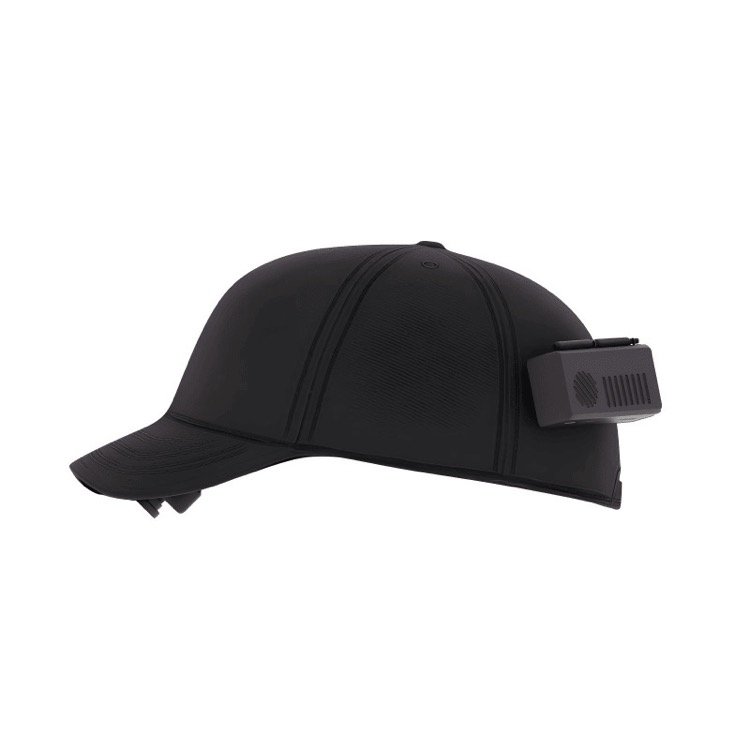
A head-mounted egocentric recorder is different: its cameras move directly with the wearer’s head. It may record synchronized inertial measurements without controlling any remote camera.
This article compares head-worn capture systems with chest-mounted cameras for human demonstration collection. A conventional remote FPV kit should only enter that comparison after its recording, timestamp, calibration, and sensor-export capabilities have been verified.
A Chest-Mounted Camera Records the Torso’s Perspective
A chest-mounted camera attaches to a harness or clothing near the upper torso. Its viewpoint changes with body movement rather than every head turn.
That separation can help preserve a workbench view when the operator looks elsewhere. However, it can also miss a task performed above the camera or beside the torso.
Importantly, head orientation is not eye gaze. A head-worn camera does not establish exactly where someone is looking unless a suitable gaze-measurement system is included.
Head-Mounted vs Chest-Mounted Cameras: Comparison Table
The following differences describe placement tendencies, not guaranteed performance. Lens selection, mounting angle, task geometry, and sensor configuration can change the outcome.
| Comparison factor | Head-mounted capture system | Chest-mounted camera |
|---|---|---|
| Viewpoint | Moves with head orientation | Moves with torso orientation |
| Workspace coverage | Can follow changing work locations | Can retain a consistent forward workspace |
| Hand visibility | May capture downward-looking manipulation | May capture forward tabletop activity |
| Typical blind spots | Hands working while the wearer looks away | Actions above or beside the torso |
| Motion characteristics | Includes head turns and nods | Avoids some independent head movement |
| Fit concerns | Headwear, slippage, balance | Harness position, clothing, posture |
| Gaze information | Requires separate gaze sensing | Also requires additional sensing or inference |
| Depth and motion data | Depend on sensors and processing | Depend on sensors and processing |
| Selection method | Test critical-action coverage | Test the same critical-action coverage |
Which Camera Captures Better Hand–Object Interactions?
Head-Mounted Cameras Can Follow Changing Workspaces
For mobile activities, a head-worn camera can capture transitions between shelves, tools, containers, and work surfaces as the wearer turns toward them.
That makes it a useful candidate for warehouse picking, domestic tasks, and multi-station assembly. Nevertheless, looking toward a workspace does not guarantee uninterrupted hand visibility. An operator may look toward the next object while finishing the current action.
Chest-Mounted Cameras Can Preserve a Forward Work Area
A chest camera can be useful when hands remain in a predictable region in front of the body.
For example, a packing station may permit consistent framing across repeated demonstrations. Yet the same mount may struggle when a worker bends, reaches overhead, or handles objects close to the torso. Arms, clothing, countertops, and large objects can obstruct the view.
My selection rule is straightforward: compare complete task recordings, particularly grasping, contact, insertion, release, and recovery—not attractive sample frames.
Motion, Depth, and Synchronization: What Placement Cannot Guarantee
A Steadier View Is Not Automatically Better Training Data
Chest placement may reduce camera movement caused by independent head turns. Head placement may preserve useful viewpoint changes but introduce rapid scene motion.
Both characteristics involve trade-offs. Motion can complicate tracking, while an apparently stable recording can still omit the decisive action.
Evaluate blur, exposure, framing, and missing interaction details separately. Do not use visual smoothness as a substitute for task coverage.
Stereo Cameras Are Not Automatically Depth Sensors
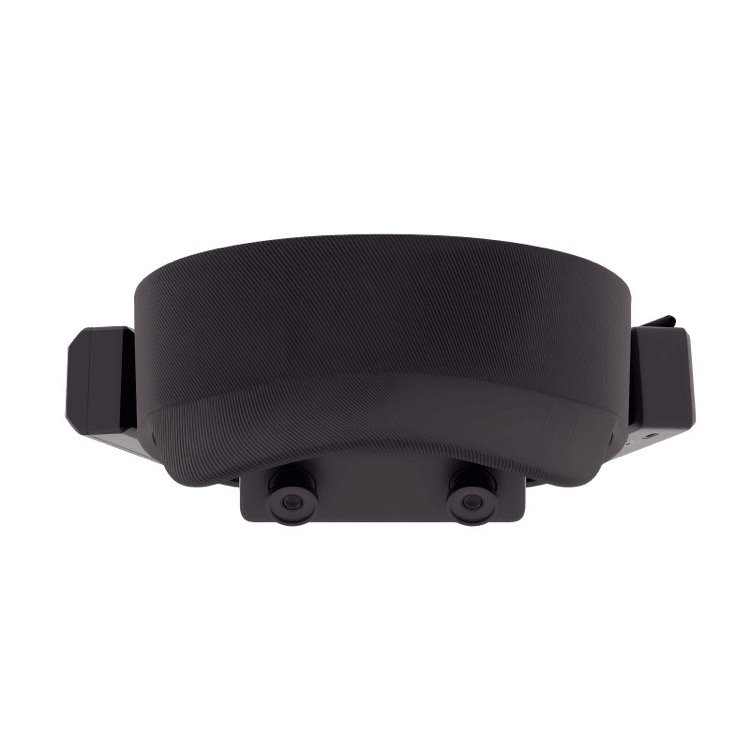
Virdyn describes VDEgo-C2 as a binocular egocentric recorder with synchronized video, IMU data, and calibration parameters.
Stereo images provide inputs for depth estimation, but usable depth depends on calibration, processing, and scene conditions. Likewise, an IMU stream is not automatically a validated camera trajectory.
Project Aria’s research documentation illustrates why multimodal systems provide sensor calibration and time-alignment information alongside recordings. When buying a system, request sample outputs and validation procedures rather than assuming every advertised data product is measured directly.
Timing Quality Matters More Than Matching Start Times
Starting video and inertial recording together does not prove that individual measurements align correctly.
For multimodal AI data collection, specify:
-
Timestamp units and clock domains.
-
Camera–IMU alignment methods.
-
Dropped-frame reporting.
-
Calibration files and coordinate conventions.
-
Available evidence of alignment accuracy.
Project Aria documents sensor time offsets explicitly, demonstrating that synchronization involves more than attaching timestamps to files.
What Research Reveals About Wearable Camera Placement
Large Datasets Demonstrate the Value of Complementary Views
Ego-Exo4D combines synchronized first-person and external views of skilled activities.
Carnegie Mellon University’s announcement describes more than 800 participants across six countries and more than 1,400 hours of video. The project treats perspectives as complementary: first-person recordings capture the participant’s immediate experience, while external cameras preserve surrounding context.
This is not evidence that one wearable mount universally wins. It supports a more useful principle: add another viewpoint when it supplies information the primary camera cannot observe.
New Research Highlights Viewpoint Mismatch
A 2026 preprint on neck-mounted gaze estimation reports approximately four hours of recordings from eight participants. In that dataset, 15.9% of valid neck-view gaze points fell outside the camera’s field of view.
A neck-mounted camera is not identical to a chest-mounted camera, and this small study does not establish a universal failure rate. It does illustrate why a lower wearable viewpoint should not be treated as interchangeable with a head-level view.
For dataset planning, the practical lesson is to measure coverage in your actual tasks.
A Practical Pilot for Comparing Both Mounts
Before purchasing equipment at scale, I would require a matched pilot rather than select a mount from specifications alone. The following framework adapts task-based placement testing into a procurement workflow.
1. Select Representative and Difficult Tasks
Include routine activity and challenging moments:
-
Fine manipulation near the torso.
-
Overhead or side-facing work.
-
Seated and standing operation.
-
Movement between stations.
-
Mistakes and recovery actions.
Test different operators and body types. A mount that works for one person may require adjustment for another.
2. Define Acceptance Rules Before Reviewing Footage
Specify which events must remain visible and which sensor outputs are required.
For an insertion task, seeing the object approach may be insufficient if the contact point disappears. For navigation, surrounding context may matter more than continuous fingertip visibility.
Use task-specific acceptance rules so reviewers judge learning value rather than cinematic appearance.
3. Calculate Useful Yield, Not Just Recording Hours
For a proposed pilot, define:
-
Critical-action visibility rate: visible required events divided by all required events.
-
Accepted episode yield: approved demonstrations divided by recorded demonstrations.
-
Cost per accepted episode: total collection and processing cost divided by approved demonstrations.
These are proposed evaluation measures, not published performance benchmarks. They translate the documented need to assess visibility, review burden, and accepted episodes into a practical buying decision.
4. Test the Data in the Intended Pipeline
Import recordings, timestamps, calibration files, and annotations before expanding collection.
Where resources allow, compare downstream results using similarly sized head-view, chest-view, and combined-view subsets. Keep known blind spots in the dataset documentation.
The lowest-cost camera is not necessarily the lowest-cost source of usable episodes once review, synchronization, and recollection are included.
Human Demonstrations Are Not Robot Action Labels
For Vision-Language-Action development, human video can preserve visual context and task progression. However, head-mounted footage alone does not directly supply robot joint commands, gripper actions, or end-effector trajectories.
That distinction should shape the collection brief. A visually complete demonstration and a robot-executable action record are different deliverables.
Request an explicit inventory of recorded signals, derived outputs, and annotations. Virdyn’s public device documentation lists video, timestamps, inertial data, audio, and calibration; those outputs should not be silently interpreted as robot control labels.
How Virdyn Supports Egocentric AI Data Collection
Virdyn positions VDEgo as a head-mounted collection system for egocentric datasets. Its published workflow describes task-based recording, local storage, wireless control, multimodal outputs, and offline trajectory processing.
For a project, I would assess that workflow through a representative sample package—not assume every dataset requires every available output.
A useful procurement brief should request:
-
A representative recording from the intended environment.
-
The camera and IMU calibration package.
-
Timestamp and synchronization documentation.
-
Examples of recorded versus derived data.
-
A task-level acceptance checklist.
-
A sample delivery compatible with the intended processing pipeline.
These requests turn product capabilities into verifiable project requirements. Numerical resolution, frame rate, recording duration, and processing accuracy should be confirmed for the supplied configuration rather than inferred from general marketing language.
Which Mount Should You Choose?
Choose a head-mounted system when the task involves changing viewpoints, movement between work areas, or frequent orientation toward different objects.
Choose a chest-mounted camera when a forward-facing workspace stays observable and pilot recordings demonstrate sufficient coverage through the complete task.
Consider a combined setup when one view repeatedly misses essential information. Add the second camera only if the benefit justifies additional synchronization, storage, privacy review, and annotation work.
For Virdyn projects, the next step is specific: share your task list, workspace conditions, required sensor streams, and acceptance criteria. Request a VDEgo-C2 sample collection and validate it against a chest-mounted alternative before committing to large-scale production.
Frequently Asked Questions
Is an FPV Head Tracking Kit the Same as an Egocentric Recorder?
No. A remote FPV kit may move a gimbal in response to head movement. An egocentric recorder captures the wearer’s viewpoint directly. Verify the recording architecture before comparing products.
Is a Head-Mounted Camera Always Better for Robot Training?
No. Its usefulness depends on whether it captures the required actions and context. Chest placement can be appropriate when the workspace stays visible and head movement would otherwise interrupt framing.
Can a Chest-Mounted Camera Capture Gaze?
Not directly from ordinary scene video. Gaze estimation requires additional sensing or inference. A head-mounted scene camera also does not automatically provide measured eye gaze.
Does VDEgo-C2 Provide Multimodal Data?
Virdyn’s documentation lists binocular video, timestamps, IMU data, audio, and calibration parameters. Confirm the exact outputs and any derived processing included in your delivery.
Should Every Collection Use Multiple Cameras?
No. Start with the smallest viewpoint set that preserves the required information. Add cameras when pilot evidence shows meaningful coverage gains that justify the extra processing and operational burden.
References
1. CADDXFPV. “FPV Head Tracking Systems.” Manufacturer explanation of head-controlled camera gimbals and compatible viewing systems. https://www.caddxfpv.com/pages/fpv-head-tracking-systems
2. EGXO. “Egocentric Camera Placement: Head vs. Chest vs. Wrist.” Practical placement guidance covering visibility, occlusion, comfort, and pilot evaluation. https://egxodata.com/resources/egocentric-camera-placement-head-chest-wrist
3. Virdyn. “VDEgo – Egocentric Video Data Collection Service at Scale.” Manufacturer documentation describing device configurations and multimodal outputs. https://www.virdynm.com/vdego-egocentric-video-data-collection-service-at-scale-first-person-vision-product/
4. Virdyn. “Scaling Egocentric Video Data Collection: Bridging the Gap Between Vision and Action.” Manufacturer description of task-based capture, local storage, and trajectory processing. https://www.virdynm.com/news/scaling-egocentric-video-data-collection-bridging-the-gap-between-vision-and-action/
5. Project Aria research team. “Project Aria: A New Tool for Egocentric Multi-Modal AI Research.” Research paper describing sensor calibration and time-aligned multimodal capture. https://ar5iv.labs.arxiv.org/html/2308.13561
6. Project Aria Documentation. “Temporal Alignment of Sensor Data.” Technical explanation of sensor timestamps and temporal offsets. https://facebookresearch.github.io/projectaria_tools/docs/tech_insights/temporal_alignment_of_sensor_data
7. Carnegie Mellon University. “CMU Researchers Collect Soccer, Bike Repair, Cooking Videos for Massive Video Learning Dataset.” Institutional account of Ego-Exo4D collection scale and complementary perspectives. https://www.cs.cmu.edu/news/2023/ego-exo-4d
8. “Egocentric Gaze Estimation via Neck-Mounted Camera.” 2026 research preprint describing a paired head/neck-view dataset and viewpoint-related gaze limitations. https://arxiv.org/html/2602.11669v1
Hot Tags: Egocentric Data Collection, AI Data Collection Services, Head-Mounted Camera, Chest-Mounted Camera, FPV Head Tracking Kit, Embodied AI Training Data, Robotics Training Datasets, Multimodal Data Collection, Custom AI Datasets, First-Person Video Data
SHARE



