Powering Physical AI with Real-World Ego Datasets


Healthcare Data De-Identification Tools for Multimodal AI
Content Menu
● What Healthcare Data De-Identification Actually Requires
>> Detection, Transformation, and Validation Are Different
● Comparing Healthcare Data De-Identification Software Tools
>> iMerit Ango Hub: Consider the Review Workflow
>> Amazon Comprehend Medical: Separate Detection From Redaction
>> IBM Optim Data Privacy: Focus on Structured Relationships
>> Presidio: Customization Requires Ownership
● Why Multimodal Healthcare Data Needs a Different Approach
>> Preserve Training Utility While Reducing Exposure
● Where Virdyn Fits in a Privacy-Conscious Data Pipeline
>> VDEgo-C2 for First-Person Data Collection
>> Dataset Development for Embodied AI
● A Practical Workflow for Privacy-Conscious Training Data
>> 1. Define the Intended Use and Release Conditions
>> 2. Minimize Sensitive Information at Capture
>> 3. Establish Modality-Specific Transformations
>> 4. Combine Automation With Targeted Review
>> 5. Validate Privacy and Model-Relevant Quality
>> 6. Deliver an Auditable Data Package
● How to Run a Meaningful Vendor Pilot
● Illustrative Scenario: Preparing a Laboratory Demonstration Dataset
● Choose the Workflow Before the Software
>> What is the best de-identification software for healthcare data?
>> Does removing patient names make a dataset de-identified?
>> Can clinical text tools de-identify first-person video?
>> Is synthetic data automatically anonymous?
>> Does Virdyn provide a certified healthcare de-identification platform?
>> What should a multimodal dataset delivery include?
De-identification software tools for healthcare data help organizations prepare sensitive information for research, analytics, and AI development. However, choosing a solution requires more than comparing identifier detection features. Clinical notes, scanned documents, first-person video, and sensor recordings expose different privacy risks—and need different processing workflows.
My starting point when evaluating these tools is simple: define what the released dataset must protect and what it must preserve. A system that removes names but leaves readable wristbands is incomplete. A system that hides every object may protect privacy while destroying training value.
This guide compares practical solution categories, explains their limitations, and explores how Virdyn’s multimodal data services can fit into a privacy-conscious data production workflow.

What Healthcare Data De-Identification Actually Requires
De-identification means more than deleting obvious personal details. The goal is to reduce identification risk while preserving information needed for an approved purpose.
Under the United States HIPAA Privacy Rule, two recognized methods are available:
-
Safe Harbor requires removing specified identifier categories and having no actual knowledge that remaining information could identify someone.
-
Expert Determination requires a qualified expert to document that identification risk is very small under the anticipated conditions of use.
Neither method is satisfied simply because a vendor describes its software as privacy-focused.
Detection, Transformation, and Validation Are Different
A complete workflow separates three responsibilities:
-
Detection identifies potentially sensitive information.
-
Transformation removes, masks, replaces, or otherwise modifies selected information.
-
Validation checks the resulting dataset against defined privacy and usability requirements.
A detection API may provide entity locations without changing the source document. A masking engine may transform database fields without evaluating contextual identification risk.
Pseudonymization also should not be treated as automatic anonymization. Replacing a patient’s name with a consistent code can preserve useful relationships, but other information may still make identification possible.
Comparing Healthcare Data De-Identification Software Tools
The following options represent different approaches, not interchangeable products. This is a capability-based comparison rather than a hands-on performance ranking.
| Solution | Primary role | Suitable starting point | Main evaluation question |
|---|---|---|---|
| iMerit Ango Hub | AI-assisted processing with optional human verification | Teams seeking managed annotation and review | Which modalities and review controls are included? |
| Amazon Comprehend Medical | PHI detection in English clinical text | Organizations building clinical text pipelines | How will detected entities be transformed and validated? |
| IBM Optim Data Privacy | Policy-driven masking of structured data | Nonproduction databases and testing datasets | Are relationships and required formats preserved? |
| Presidio | Customizable sensitive-data detection and anonymization framework | Engineering teams building controlled workflows | Who maintains recognizers, integrations, and validation? |
iMerit Ango Hub: Consider the Review Workflow
iMerit describes Ango Hub as supporting automated de-identification alongside optional human verification.
That combination can be relevant when automated detections require contextual judgment. For example, reviewers may need to distinguish clinically meaningful terminology from identifying details.
Before procurement, request a representative demonstration. Confirm supported input formats, reviewer permissions, exception handling, and the evidence included with each delivery. Human review is valuable only when its scope and acceptance criteria are clear.
Amazon Comprehend Medical: Separate Detection From Redaction
Amazon Comprehend Medical’s DetectPHI API analyzes English clinical text and returns detected entities, locations, and confidence scores.
These outputs can support a redaction pipeline, but detection alone does not produce a validated, de-identified dataset. AWS also notes that its detected entities do not map one-to-one to the Safe Harbor identifier list.
Evaluate how your implementation handles unsupported content, missed entities, confidence thresholds, and final output generation.
IBM Optim Data Privacy: Focus on Structured Relationships
IBM Optim Data Privacy emphasizes masking sensitive information in nonproduction environments while preserving formats and relationships.
This makes it relevant to application testing, development, and structured-data workflows.
It is not a substitute for evaluating identifiers inside video, speech, or unstructured clinical narratives. Buyers should test consistency across linked tables and confirm that transformed datasets still support their intended tasks.
Presidio: Customization Requires Ownership
Presidio provides configurable components for detecting and anonymizing sensitive information in text, with additional image-related capabilities.
Its documentation explicitly warns that automated detection cannot guarantee finding every sensitive item.
For organizations with suitable engineering resources, customization can be attractive. However, implementation teams must own recognizer configuration, domain-specific testing, infrastructure security, and ongoing maintenance.
Why Multimodal Healthcare Data Needs a Different Approach
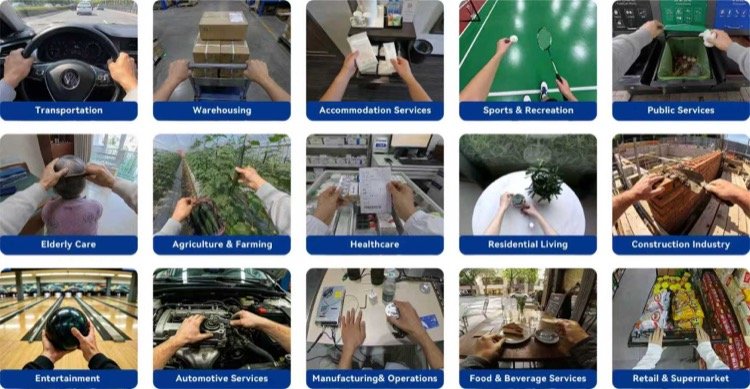
Text-oriented tools address only part of the problem when AI training data includes wearable recordings, spatial information, or human demonstrations.
A first-person recording may expose patient details through:
-
Faces and reflections.
-
Wristbands and document labels.
-
Computer screens and whiteboards.
-
Spoken names, if audio is collected.
-
Device identifiers and file metadata.
-
Spatial context or distinctive surroundings.
Removing one exposure does not resolve the others.
For egocentric data collection, every delivered channel needs a defined privacy treatment. That includes annotations and metadata—not just the visible video.
Preserve Training Utility While Reducing Exposure
The central tradeoff is utility.
A robot learning to manipulate equipment may need clear views of hands, handles, contact points, and object motion. Large privacy masks can obscure those signals.
A better evaluation asks whether privacy transformations preserve:
-
Hand–object interactions.
-
Action boundaries and task order.
-
Relevant object geometry.
-
Temporal continuity.
-
Alignment between video and sensor streams.
These requirements should be written into acceptance criteria before production begins. Otherwise, privacy processing and model development may optimize for conflicting outcomes.
Where Virdyn Fits in a Privacy-Conscious Data Pipeline
Virdyn, also associated with VDEgo, describes its offering as an end-to-end data infrastructure service for embodied intelligence, robotics training, and computer vision.
Its stated workflow covers requirements analysis, scene design, task planning, first-person capture, cleaning, annotation, quality inspection, and delivery.
This places Virdyn in a different category from a standalone PHI detection API. Its relevant role is organizing and producing multimodal datasets around a project’s requirements.
Healthcare de-identification capabilities, contractual safeguards, and any required regulatory arrangements should be verified separately.
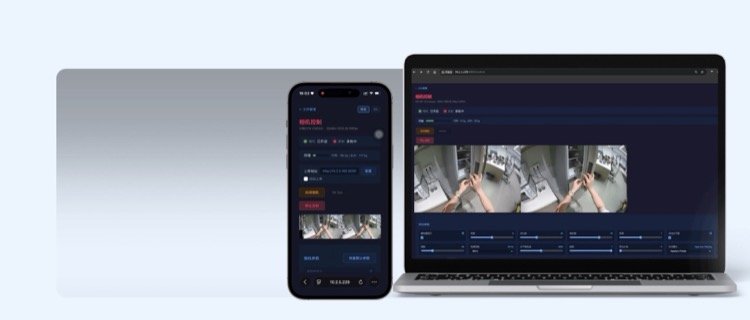
VDEgo-C2 for First-Person Data Collection
According to the supplied product information, VDEgo-C2 supports binocular RGB capture, synchronized IMU data, precise timestamps, camera pose tracking, local storage, and wireless remote control.
Those capabilities can support coordinated recording of human demonstrations.
They do not, by themselves, establish medical-data compliance or validated de-identification. Before deployment, confirm the security configuration, access controls, transfer process, retention policy, and handling of incidental sensitive information.
Local storage is a deployment feature, not a complete privacy strategy.
Dataset Development for Embodied AI
Virdyn’s stated data offerings include RGB video, IMU measurements, synchronization information, camera poses, spatial data, body motion, and hand-operation data.
Delivery options include off-the-shelf and custom datasets, with formats such as MP4, AVI, CSV, JSON, and PLY.
For Vision-Language-Action models and World Models, file format alone is insufficient. Buyers should also specify coordinate conventions, units, timestamp definitions, calibration records, annotation schemas, and task descriptions.
Where these fields contain sensitive information, they need the same review discipline as the primary recordings.
A Practical Workflow for Privacy-Conscious Training Data
The following process connects procurement requirements with production decisions.
1. Define the Intended Use and Release Conditions
Document who will receive the data, what models it will support, and where processing will occur.
Distinguish controlled internal research from wider distribution. Establish which legal, contractual, and institutional requirements apply before selecting a tool.
2. Minimize Sensitive Information at Capture
Avoid collecting unnecessary identifiers.
Use approved demonstration areas, remove unrelated paperwork, and substitute fictional labels where appropriate. Define how collectors should respond when bystanders or unexpected sensitive content enter the scene.
Privacy-aware scene design can reduce downstream processing, although it does not eliminate verification.
3. Establish Modality-Specific Transformations
Create separate rules for text, images, video, audio, and metadata.
For synchronized recordings, define how masks, cuts, or exclusions affect related streams. Removing video frames without updating timestamps can leave otherwise usable sensor data misaligned.
4. Combine Automation With Targeted Review
Use automated processing for scale, then direct reviewers toward high-risk content and uncertain outputs.
For video, examine continuity across frames rather than checking isolated screenshots. A label hidden in one frame may become readable when the wearer turns.
Reviewers should work within controlled environments with appropriate access restrictions.
5. Validate Privacy and Model-Relevant Quality
Measure both residual exposure and unnecessary removal.
Check whether transformed data still supports action recognition, object tracking, or other intended tasks. Escalate uncertain cases instead of treating confidence scores as final decisions.
6. Deliver an Auditable Data Package
Include a dataset manifest, processing-policy version, annotation specification, quality report, and documented limitations.
For multimodal projects, add synchronization conventions and calibration information where relevant. Record exclusions so recipients understand what the dataset does not represent.
How to Run a Meaningful Vendor Pilot
Do not choose a provider solely from a feature list or an overall accuracy claim.
Build a representative evaluation set containing ordinary cases and difficult examples, such as small screen text, partial faces, reflections, unusual names, and identifiers visible during motion.
Measure:
-
Recall: how many relevant sensitive items were detected.
-
Precision: how many detections were genuinely sensitive.
-
Residual exposure: what remains in processed outputs.
-
Task preservation: whether the intended training signals survive.
-
Operational effort: processing, integration, and reviewer time.
For video, define whether results are measured per frame, per identifier track, or per sequence. These units are not interchangeable.
An aggregate score can hide poor performance on a rare but consequential identifier category. Review results by modality and risk type.
Illustrative Scenario: Preparing a Laboratory Demonstration Dataset
Consider a hypothetical project recording technicians manipulating laboratory containers. The training objective is to learn grasping, placement, and task sequencing.
Potential exposures include specimen labels, workstation screens, staff badges, and reflected faces.
A practical plan would use fictional specimen labels where feasible, capture only necessary work areas, and review remaining exposures across complete sequences. Privacy processing would then be checked for accidental removal of fingertips, container edges, or contact points.
Simulation could supplement selected task variations without recording additional people or real specimens. It would still require validation for task realism and should not be assumed equivalent to real-world demonstrations.
This scenario illustrates workflow design; it is not a reported customer project or performance result.
Choose the Workflow Before the Software
The right solution depends on your data, release conditions, and technical resources.
Clinical text detection, structured masking, and multimodal dataset production solve related but distinct problems. A credible procurement process tests the complete workflow rather than assuming one product covers everything.
For an embodied intelligence project, contact Virdyn with your target tasks, recording environment, required modalities, privacy constraints, and delivery specifications. Request a scoped pilot with agreed acceptance criteria before committing to production.
Frequently Asked Questions
What is the best de-identification software for healthcare data?
There is no universal best choice. Select tools according to data modality, deployment requirements, transformation needs, and validation results. Test candidates on representative data before procurement.
Does removing patient names make a dataset de-identified?
No. Names are only one potential identifier. Dates, record numbers, images, contextual details, and other information may still create identification risk.
Can clinical text tools de-identify first-person video?
Not by themselves. Text detection can support processing of extracted screen or label text, but video also requires attention to faces, reflections, temporal continuity, and metadata.
Is synthetic data automatically anonymous?
No. Assess the generation process and outputs. Do not assume that simulated or generated content is free from sensitive source information or identification risk.
Does Virdyn provide a certified healthcare de-identification platform?
The supplied materials describe capture hardware and multimodal data services, not independently verified healthcare de-identification certification. Confirm relevant capabilities, safeguards, and contractual requirements directly.
What should a multimodal dataset delivery include?
Beyond files, request schemas, timestamp conventions, calibration details, annotation definitions, quality reports, processing records, and documented limitations. These make the delivery easier to evaluate and use.
References
1. iMerit — De-Identification Software Tools for Healthcare Data: A Comparative Review
Original article used for comparative context and iMerit’s description of Ango Hub, automated processing, and optional human verification. Product statements are vendor descriptions, not independent benchmark findings.
2. U.S. Department of Health and Human Services — Guidance Regarding Methods for De-identification of Protected Health Information
Primary regulatory guidance supporting the discussion of Safe Harbor, Expert Determination, identifier removal, and identification risk.
3. Amazon Web Services — DetectPHI API Reference
Technical documentation covering English-language support and outputs including entity categories, locations, and confidence scores.
4. Amazon Web Services — Detect PHI
Documentation explaining that detected PHI entities do not map one-to-one to the Safe Harbor identifier list.
5. IBM — Overview of the Optim Data Privacy Components
Technical documentation supporting the discussion of masking, fictional replacement data, nonproduction use, and structured-file processing.
6. IBM — Optim Data Privacy
Product information describing policy-driven masking, format preservation, referential integrity, and nonproduction data use.
7. Presidio — Project Documentation
Documentation supporting the description of customizable sensitive-data detection and the limitation that automated processing cannot guarantee identification of all sensitive information.
Hot Tags: Healthcare Data De-Identification, Healthcare Data Anonymization, Medical Data De-Identification Software, AI Training Data Services, Multimodal Data Collection, Egocentric Data Collection, Embodied AI Datasets, Robotics Training Data, Custom AI Datasets, AI Data Annotation Services
SHARE



