Powering Physical AI with Real-World Ego Datasets


Top 10 Egocentric Data Service Provider In China
Content Menu
● How to Evaluate an Egocentric Data Service Provider
● Why Source Egocentric Data Services from China?
>> A Combination of Hardware and Data-Service Capabilities
>> A Developing Market with Uneven Disclosure
● Top 10 Egocentric Data Service Providers and Infrastructure Partners in China
>> 2. Datatang
>> 3. Nexdata
>> 4. Dataocean AI — Formerly Speechocean
>> 7. AgiBot
>> 8. Noitom
● Supplier Comparison: Capacity, MOQ, and Certification
● Technical Buyer’s Guide: What Should the Dataset Actually Contain?
>> Define the Learning Objective Before Selecting Sensors
>> Require Calibration and Synchronization Evidence
>> Separate File Containers from Training Readiness
>> Apply Hardware Compliance Requirements Correctly
● Common Procurement Problems and How to Avoid Them
>> Raw Hours Disguised as Usable Hours
>> Repeated Demonstrations Presented as Diversity
>> “Real-World” Data That Comes from One Reconfigured Room
● An Overlooked Procurement Trap: The Rig Can Change the Behavior
● A Practical Purchasing Workflow
>> Step 1: Verify the Contracting Entity
>> Step 2: Run a Representative Pilot
>> Step 3: Agree on Acceptance Before Scaling
>> Step 4: Plan Digital and Physical Logistics Separately
>> 1. How Can Buyers Verify Whether an ISO Certificate Has Expired?
>> 2. Can Human Egocentric Video Directly Replace Robot Teleoperation Data?
>> 3. What Is a Reasonable MOQ for Custom Egocentric Data Collection?
>> 4. How Should Buyers Compare Two Synchronization Claims?
>> 5. Who Should Own Customized Data and the Resulting Annotations?
Choosing an egocentric data service partner in China requires more than comparing hourly prices or camera specifications. Professional buyers need to evaluate sensor synchronization, task diversity, data ownership, quality-control procedures, delivery consistency, and the supplier’s ability to support changing model requirements.
The most useful purchasing principle is traceability: every delivered episode should connect to a documented collection session, hardware configuration, processing history, annotation version, and permitted commercial use.
China offers a substantial robotics ecosystem in which to source these services. According to the International Federation of Robotics’ World Robotics 2026 release, China installed approximately 354,000 industrial robots in 2025, representing 59% of global installations and a 20% year-on-year increase. These figures describe industrial robot adoption—not the size of the egocentric data market—but demonstrate the scale of the country’s automation environment.
This guide presents ten companies worth evaluating across managed data collection, multimodal dataset development, collection hardware, and supporting annotation infrastructure.
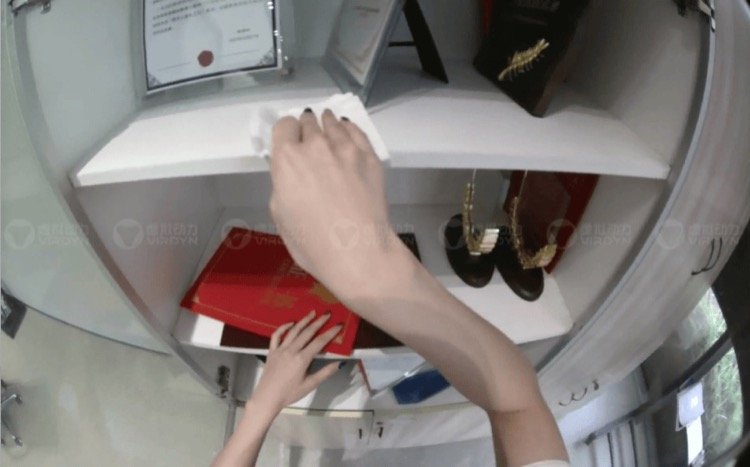
How to Evaluate an Egocentric Data Service Provider
A conventional factory audit examines production equipment, materials, inspection procedures, and shipment performance. An egocentric data supplier requires a similar operational review, but the principal deliverable is usable, legally documented training data.
Before requesting quotations, establish the following assessment framework.
| Evaluation area | Evidence buyers should request | Purchasing significance |
|---|---|---|
| Collection engineering | Sample recordings, device configuration, calibration files, synchronization test results | Determines whether modalities can support the intended learning task |
| Research and development | Capture-system documentation, processing tools, integration examples | Indicates capacity to adapt when requirements change |
| Quality control | Written acceptance criteria, rejection logs, reviewer procedures, batch reports | Makes delivery quality measurable |
| Production capacity | Accepted hours per week, concurrent operators, qualified locations, ramp-up schedule | Separates realistic throughput from theoretical recording capacity |
| Data rights | Participant releases, location permissions, licensing terms, subcontractor agreements | Supports lawful collection and commercial use |
| Delivery reliability | Pilot milestones, batch cadence, corrective-action procedures | Reduces interruption to training schedules |
| Security | Access-control procedures, storage locations, deletion policy, relevant certificates | Helps buyers assess exposure of sensitive recordings |
Use these criteria to select a pilot partner, not merely to score a sales presentation.
For an initial project, a supplier that identifies technical limitations clearly may be more valuable than one that immediately agrees to every specification.
Why Source Egocentric Data Services from China?
A Combination of Hardware and Data-Service Capabilities
China’s supplier landscape includes wearable-camera developers, motion-capture companies, robotics manufacturers, and established training-data service businesses.
For example, Guangzhou-based Virdyn offers first-person capture equipment and customized collection; Beijing-based Noitom develops human-motion digitization systems; and AgileX combines robotics platforms with portable egocentric collection equipment. These are complementary capabilities, not identical service models.
For buyers, the practical opportunity is to coordinate capture hardware, field operations, processing, and robotics integration within a connected supplier ecosystem.
However, location alone does not prove that a company controls its own collection workforce, owns the recording locations, or can deliver the required dataset.
A Developing Market with Uneven Disclosure
Public evidence now includes substantial egocentric datasets and production programs.
Nexdata advertises a 10,000-hour egocentric multimodal dataset. Dataocean AI describes a customer program supporting more than 50,000 usable hours per month across multiple collection approaches. Lightwheel has announced a 100,000-hour open egocentric dataset released in stages. These figures measure different things: catalog size, project supply capacity, and a staged dataset release. They should not be treated as directly comparable production statistics.
There is no comparable egocentric-service export series established by the sources used for this guide. Industrial robot installation statistics should therefore provide market context, not substitute for evidence of a particular supplier’s data-service capacity.
Top 10 Egocentric Data Service Providers and Infrastructure Partners in China
1. Virdyn — VDEgo
Virdyn is a relevant starting point for buyers seeking a combination of proprietary capture hardware and customized first-person data collection.
Its corporate materials state that the company was established in 2016. Its VDEgo operation identifies Guangzhou Virdyn Network Technology Co., Ltd. as the business behind the service and lists its headquarters in Guangzhou.
Virdyn’s published VDEgo-C2 materials describe binocular first-person recording, IMU data, hardware timestamps, calibration parameters, and a decompression interface. The company also describes wireless browser-based controls for recording, previews, and file management.
-
Core strength: Connecting capture-device development with task-specific egocentric collection.
-
Customer focus: Embodied AI developers, computer-vision teams, robotics laboratories, and organizations collecting industrial or everyday manipulation tasks.
-
Customization scope: Scenario-specific collection is publicly offered. Buyers should separately confirm hardware branding, mechanical changes, firmware modifications, and other OEM/ODM requirements.
-
Market coverage: International inquiries are supported, but a regional sales breakdown is not disclosed in the reviewed materials.
For smaller AI teams and growing businesses, Virdyn is worth evaluating where a focused pilot and direct hardware-to-data coordination could simplify procurement. Its contact page explicitly offers custom collection proposals and demo datasets.
That makes it a candidate for cost-conscious, research-led projects, but not a proven lowest-cost supplier. Buyers should validate communication efficiency, engineering responsiveness, minimum project size, and total accepted-data cost during the pilot.
The broader workflow described in the company information supplied for this guide includes requirements analysis, scenario design, collection, cleaning, annotation, inspection, and delivery. Treat that scope as a proposed project specification and confirm each stage contractually.
Supplier verification note: The requested VDEgo “About Us” page could not be retrieved during research. The independently accessible VDEgo contact and technical pages support the narrower claims above.
2. Datatang
Datatang is an established training-data company whose website states that it was founded in 2010. Its public offering includes licensed datasets, customized data services, and industry solutions. The company also advertises egocentric collection activities with Xvisio.
-
Core strength: Combining an established dataset business with customized collection services.
-
Customer focus: AI developers requiring licensed datasets, collection, processing, and broader training-data support.
-
Customization scope: Bespoke data production and delivery specifications; physical-device OEM/ODM should not be assumed.
-
Market coverage: The company describes a global customer base, although the reviewed materials do not provide regional revenue proportions.
Datatang deserves consideration when procurement involves several data categories rather than a single first-person video requirement.
Before appointment, request a project-specific demonstration of hand visibility, synchronization, pose outputs, and annotation granularity. A broad training-data portfolio does not establish that every egocentric configuration is available off the shelf.
3. Nexdata
Founded in 2011, Nexdata offers off-the-shelf datasets together with customized collection, annotation, and curation services.
Its published catalog includes a 10,000-hour egocentric multimodal dataset with synchronized 4K stereo video, camera calibration parameters, full-body pose annotations, and step-by-step action labels. It also lists a six-camera dataset with multimodal outputs and specified synchronization performance. These remain supplier-published product claims to validate against samples.
-
Core strength: Detailed, productized egocentric dataset offerings.
-
Customer focus: Robotics, manipulation learning, spatial perception, and multimodal model development.
-
Customization scope: Collection, annotation, curation, and dataset delivery; hardware private labeling requires separate confirmation.
-
Market coverage: International AI training-data customers.
Nexdata also announced an embodied AI collection facility exceeding 4,000 square meters in January 2026. Facility area indicates infrastructure investment, but buyers should still request task-specific accepted throughput rather than infer capacity from floor space.
4. Dataocean AI — Formerly Speechocean
Dataocean AI, formerly Speechocean, states that it was founded in 2005 and serves international customers across multiple training-data categories.
Its September 2026 embodied AI case study describes a production program combining first-person collection, Universal Manipulation Interface-based collection, and robot teleoperation. The company reports support for more than 50,000 usable data hours per month within that program.
-
Core strength: Large-program data engineering and standardized production workflows.
-
Customer focus: World-model developers and organizations seeking continuing multimodal data supply.
-
Customization scope: Collection methods, task scheduling, alignment, annotation, processing, and delivery.
-
Market coverage: International technology and enterprise clients.
Dataocean is particularly relevant to buyers planning recurring deliveries rather than a one-time recording project.
The reported monthly figure should not be interpreted as immediately available capacity for every customer. Confirm how much relates specifically to egocentric recordings, which quality criteria apply, and what capacity can be reserved.
5. Lightwheel
Founded in 2023, Lightwheel operates across simulation assets, egocentric human data, and robotics evaluation. It has a China corporate presence and international operations; its current corporate materials describe its headquarters as Santa Clara, California. Buyers seeking a strictly mainland-headquartered supplier should account for that distinction.
Its EgoSuite offering combines capture devices, field operations, post-processing, and annotations such as hand pose, body pose, and semantic action labels.
-
Core strength: Connecting real-world human demonstrations with simulation and evaluation infrastructure.
-
Customer focus: Embodied AI, robotics foundation models, and world-model development.
-
Customization scope: Data collection, annotation, simulation assets, and evaluation services.
-
Market coverage: International robotics and AI organizations.
Lightwheel’s EgoSuite-Open100K announcement describes a planned 100,000-hour dataset, with the first 10,000 hours available at the time of the referenced release and the remainder scheduled in stages. Buyers should distinguish announced total volume from currently accessible subsets.
6. AgileX Robotics
AgileX Robotics was founded in 2016 and supplies robotics platforms and customized unmanned-driving solutions. Its Pika product family extends that offering into portable manipulation and egocentric data collection.
Pika Pro combines first-person capture with UMI-based handheld collection. Its published configuration includes RGB, depth, IMU, and spatial information, depending on the selected components.
-
Core strength: Collection infrastructure for teams operating their own robotics data pipeline.
-
Customer focus: Robotics researchers, universities, startups, and corporate development teams.
-
Customization scope: Robotics integration and collection-system configuration; managed field collection must be confirmed separately.
-
Market coverage: International research and commercial robotics users.
AgileX is a stronger fit when the buyer wants to build internal collection capability than when the sole requirement is outsourced delivery of accepted hours.
Check software compatibility, calibration maintenance, local technical support, and the division of responsibility for annotation.
7. AgiBot
AgiBot was founded in 2023 and is based in Shanghai. Its activities span robots, models, and embodied-data infrastructure.
Its MEgo system combines MEgo View and MEgo Gripper with a processing platform intended to capture and structure synchronized vision, motion, and tactile information.
-
Core strength: Linking human demonstration collection with a broader robotics ecosystem.
-
Customer focus: Embodied AI developers, robotics research groups, and deployment partners.
-
Customization scope: Collection-system integration, processing, and robotics collaboration; dataset licensing and OEM arrangements require individual negotiation.
-
Market coverage: Chinese and international robotics development ecosystems, without a verified regional sales split in the reviewed sources.
AgiBot is worth assessing when robot compatibility and manipulation-data alignment are central requirements.
Keep open dataset access, commercial dataset procurement, and hardware purchase agreements separate. Each can carry different rights, warranties, and support obligations.
8. Noitom
Founded in Beijing in 2012, Noitom specializes in human-motion digitization. Its Perception Neuron portfolio includes inertial and optical-inertial hybrid motion-capture systems used in robotics, research, entertainment, and other applications.
-
Core strength: Body-motion capture and human-motion integration.
-
Customer focus: Humanoid robotics teams, research laboratories, industrial simulation users, and digital-content developers.
-
Customization scope: Motion-capture integration and application-specific workflows; first-person video collection and managed dataset delivery require explicit confirmation.
-
Market coverage: International users across research and commercial applications.
Noitom belongs on an infrastructure shortlist when egocentric video must be paired with detailed human movement.
It should not automatically be treated as a turnkey egocentric collection contractor. Buyers need a clear statement covering cameras, synchronization, field operations, annotation, and final dataset responsibility.
9. Magic Data
Magic Data was founded in Beijing in 2016. Its documented training-data activities cover speech, language, and computer vision, with customized collection and annotation services.
-
Core strength: Data-processing workflows and human-in-the-loop annotation.
-
Customer focus: AI teams requiring collection, labeling, and structured training resources.
-
Customization scope: Dataset requirements, annotation procedures, and processing workflows; hardware OEM/ODM is not established by the reviewed evidence.
-
Market coverage: AI technology developers, with regional service availability to confirm directly.
Magic Data is an adjacent candidate for the annotation and processing portion of an egocentric program.
The reviewed sources do not establish a current, dedicated end-to-end egocentric capture offering. Buyers should request recent first-person project samples before including it in a final collection-service tender.
10. BasicFinder
BasicFinder was established in 2015 and has documented capabilities in collection, cleaning, annotation, and data-management infrastructure. Reporting describes its HIVE annotation system, DATA platform, and model-training workflow.
-
Core strength: Annotation operations and configurable data-management infrastructure.
-
Customer focus: Computer-vision teams, enterprise AI projects, and research organizations.
-
Customization scope: Annotation workflows, platform deployment, and data lifecycle management.
-
Market coverage: Documented Chinese enterprise and research customers, with historical references to overseas academic users; current regional coverage needs confirmation.
BasicFinder may be relevant when the buyer already controls recording operations but needs structured processing and governance.
As with Magic Data, the reviewed evidence does not verify a specialized current egocentric collection service. Treat it as an adjacent infrastructure candidate, not a confirmed like-for-like alternative to VDEgo, Nexdata, or Dataocean.
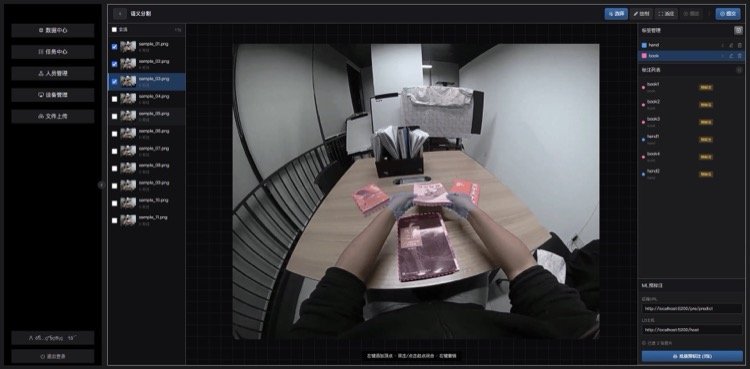
Supplier Comparison: Capacity, MOQ, and Certification
Published dataset volume is not the same as available collection capacity. Likewise, a certificate logo does not verify current certification status.
The table below deliberately marks undisclosed information rather than inventing comparable figures.
| Supplier | Public scale indicator | MOQ or minimum project size | Certification position in this review |
|---|---|---|---|
| Virdyn / VDEgo | Custom collection and demo datasets offered; accepted-hour capacity not disclosed | Confirm pilot and hardware minimums | Current certificates not independently validated |
| Datatang | Established catalog and custom-data services; comparable egocentric throughput not disclosed | Confirm by project | Current certificates not independently validated |
| Nexdata | Published 10,000-hour egocentric dataset; announced 4,000+ m² facility | Confirm licensing and custom-collection minimums | Current certificates not independently validated |
| Dataocean AI | Reports 50,000+ usable hours/month in a specific embodied-data program | Confirm reserved capacity and minimum commitment | Current certificates not independently validated |
| Lightwheel | Reports 20,000+ demonstration hours/week across its operation | Confirm commercial package and custom-project minimums | Current certificates not independently validated |
| AgileX | Collection hardware platform; no comparable managed-service throughput established | Request hardware quantity and service terms | Request model-specific conformity documentation |
| AgiBot | MEgo collection ecosystem; no comparable contracted throughput established | Confirm hardware and data terms | Request hardware- and entity-specific documentation |
| Noitom | Motion-capture infrastructure; no comparable egocentric service throughput established | Request system and integration minimums | Request relevant system documentation |
| Magic Data | General collection and annotation capabilities | Confirm specialist project minimums | Current certificates not independently validated |
| BasicFinder | Annotation and data-management infrastructure | Confirm deployment and processing minimums | Current certificates not independently validated |
Scale indicators are supplier-published and use different measurement bases. “Not independently validated” does not mean a company lacks certification.
Technical Buyer’s Guide: What Should the Dataset Actually Contain?
Define the Learning Objective Before Selecting Sensors
Egocentric footage captures a first-person view of interaction, but human demonstrations and robot action trajectories are not automatically equivalent. Robot learning must bridge differences in sensing, action representation, and body mechanics.
Specify whether the project supports:
-
Visual representation learning.
-
Human activity understanding.
-
Vision-Language-Action model development.
-
Manipulation policy learning.
-
Spatial reconstruction.
-
World-model training.
Then define which modalities and annotations are necessary.
For example, a perception dataset may prioritize visual diversity, while a manipulation project may require calibrated geometry, hand-object interactions, and an explicit action representation.
Require Calibration and Synchronization Evidence
Supplier documentation increasingly emphasizes synchronized multimodal recording, calibration parameters, and structured spatial outputs. VDEgo and Nexdata both describe such elements in their published offerings.
A purchasing specification should request:
-
Camera intrinsics and inter-sensor extrinsics.
-
Coordinate-frame definitions and measurement units.
-
Timestamp units and clock-source descriptions.
-
Dropped-frame and corrupted-file reports.
-
Synchronization test methods and results.
-
Calibration version linked to every recording session.
-
Confidence or validity indicators for estimated pose outputs.
Do not accept “millisecond synchronization” without a definition of how it was measured.
Ask whether the claim refers to exposure timing, sensor timestamps, stream alignment, or a software reconstruction after recording.
Separate File Containers from Training Readiness
An MP4 file can contain usable video without containing the information needed for robot learning.
The procurement specification should describe a complete episode structure: observations, timestamps, task descriptions, calibration references, annotations, and—where applicable—action trajectories.
Lightwheel’s open release illustrates the distinction by providing LeRobot v3 and MCAP formats rather than describing delivery only as video files. That does not make those formats mandatory for every project; the correct choice depends on the buyer’s training pipeline.
Require the pilot to load successfully into your actual ingestion code before approving full production.
Apply Hardware Compliance Requirements Correctly
CE marking and RoHS relate to applicable hardware requirements, not to the accuracy of a dataset. CE marking concerns conformity with relevant European product legislation; RoHS restricts hazardous substances in electrical and electronic equipment within its scope.
For imported capture devices, request:
-
An EU Declaration of Conformity identifying the exact model.
-
Applicable conformity-assessment documentation.
-
Relevant test reports and technical documentation.
-
Confirmation that customized configurations remain covered.
Do not use CE or RoHS as a substitute for data-security review, annotation evaluation, or commercial-rights verification.
Common Procurement Problems and How to Avoid Them
Raw Hours Disguised as Usable Hours
A quotation can look attractive when it counts every recorded minute, including setup, failed capture, obstructed lenses, or duplicate material.
Define billing around accepted deliverables. Establish in advance whether unsuccessful task attempts are valuable training examples or rejectable recordings.
A failed grasp may be useful. A missing sensor stream may not be.
Repeated Demonstrations Presented as Diversity
A large number of recordings can still contain limited variation.
Request a coverage matrix showing tasks, locations, operators, object instances, lighting conditions, and task outcomes. Agree on which dimensions must differ and which repetitions are intentional.
For evaluation data, require separation by meaningful sources of similarity—not merely by file name.
“Real-World” Data That Comes from One Reconfigured Room
Ask for location provenance and a scene inventory.
Controlled environments are useful, but they should be labeled honestly. Dataocean’s published case study specifically distinguishes laboratory limitations from collection in homes, offices, retail, and industrial environments.
Unclear Commercial Rights
Require written terms addressing collection permission, participant releases, bystander handling, location authorization, sublicensing, retention, and dataset reuse.
For recordings collected in China, cross-border transfer requirements depend on the data involved and applicable rules. Exemptions from particular transfer mechanisms do not eliminate every underlying privacy obligation. Obtain project-specific legal review rather than treating a supplier’s general compliance statement as sufficient.
An Overlooked Procurement Trap: The Rig Can Change the Behavior
A less obvious risk is that the collection setup changes how people perform the task.
An operator may slow down to keep hands visible, avoid natural head movements, or follow instructions so carefully that recordings no longer represent ordinary work.
This is a practical audit concern, not a claim that one supplier’s data is defective.
During the pilot:
-
Record a small set of ordinary task performances.
-
Repeat them under the proposed production instructions.
-
Compare duration, hand visibility, movement patterns, and task outcomes.
-
Document any behavior the protocol encourages or suppresses.
-
Decide whether that behavior is appropriate for the intended training objective.
This catches a problem that resolution charts and clean annotation samples cannot reveal: a technically polished dataset may still represent the wrong behavior.
A Practical Purchasing Workflow
Step 1: Verify the Contracting Entity
Match the quotation, business registration, invoice details, bank beneficiary, and intellectual-property agreement.
Ask which entity owns the capture equipment, employs or contracts operators, and remains responsible for subcontracted work.
Step 2: Run a Representative Pilot
Include easy tasks, difficult interactions, occlusions, and relevant environmental variation.
For Virdyn, the publicly offered demo dataset provides an initial screening opportunity, but a buyer-specific pilot is still needed to validate the intended use case.
Step 3: Agree on Acceptance Before Scaling
Specify:
-
Complete and valid episode requirements.
-
Modality availability.
-
Annotation definitions and review methods.
-
Coverage quotas.
-
Rejection and rework rules.
-
Delivery cadence.
-
Change-control procedures.
Measure cost per accepted episode or accepted hour, alongside internal integration effort.
Step 4: Plan Digital and Physical Logistics Separately
For datasets, agree on storage regions, access permissions, encrypted transfer, checksums, manifests, and deletion confirmation.
For hardware, assign responsibility for shipping terms, customs clearance, batteries, replacement units, and local repairs.
A supplier’s ability to deliver files internationally does not establish that the same commercial arrangement covers device importation.
Conclusion
The right egocentric data service provider is the one that can deliver the required information repeatedly, with documented quality and usable rights—not simply the largest advertised recording volume.
Virdyn merits an early evaluation for projects seeking customized first-person collection alongside proprietary capture hardware. Nexdata, Datatang, and Dataocean offer established data-service capabilities; Lightwheel connects egocentric collection with simulation and evaluation; AgileX, AgiBot, and Noitom provide relevant collection infrastructure. Magic Data and BasicFinder are better treated as adjacent processing candidates unless they demonstrate current, project-specific egocentric capture capability.
For a productive first discussion with Virdyn, send a concise brief covering your target model, task list, environments, required modalities, delivery structure, rights requirements, and pilot acceptance criteria. Request a demo and a scoped collection proposal, then compare the results against the same specification used for competing suppliers.

Frequently Asked Questions
1. How Can Buyers Verify Whether an ISO Certificate Has Expired?
Search the exact certificate number or legal company name in IAF CertSearch and review the status, standard, scope, issuing certification body, and covered entity. The service distinguishes active, suspended, withdrawn, and expired certificates.
If a record is missing or inconsistent, contact the issuing certification body directly. Also check that the scope and site cover the operations used for your project.
2. Can Human Egocentric Video Directly Replace Robot Teleoperation Data?
Not automatically.
Human recordings provide useful first-person interaction information, but robot learning must bridge sensing, action, and kinematic differences. The appropriate combination depends on the model and training method.
Ask suppliers to identify which outputs are measured, estimated, reconstructed, or converted into a robot-compatible representation.
3. What Is a Reasonable MOQ for Custom Egocentric Data Collection?
The reviewed public sources do not establish a reliable industry-wide MOQ.
Request separate prices for a technical demo, buyer-specific pilot, initial production batch, and recurring supply agreement.
Include setup costs, annotation, rework, licensing, transfer, and storage so that the lowest headline hourly rate does not obscure the real commitment.
4. How Should Buyers Compare Two Synchronization Claims?
Require both suppliers to test against the same definition.
Specify the sensor pair, measurement procedure, recording duration, operating conditions, and acceptable error distribution. Request example data and test reports.
Do not compare a hardware-trigger specification from one supplier with post-processed alignment from another as though they were identical.
5. Who Should Own Customized Data and the Resulting Annotations?
The contract should distinguish raw recordings, annotations, processing software, pre-existing assets, and derived outputs.
Specify whether delivery is exclusive, whether the supplier can resell or reuse recordings, and whether subcontractors retain rights. Make training, evaluation, modification, and permitted onward transfer explicit.
Where personal information is involved, ownership language alone does not resolve privacy or cross-border transfer obligations.
References
1. Virdyn — “About Us.” Corporate background supporting the company’s stated establishment in 2016 and its focus on motion capture and 3D technologies. https://www.virdynm.com/about-us/
2. VDEgo — “Contact VDEgo: Custom Egocentric Video Datasets Service by Virdyn.” Identifies the operating company, Guangzhou headquarters, custom dataset inquiries, and demo availability. https://vdegoai.com/pages/contact-us
3. VDEgo — “What Is Egocentric Video Data and How Is It Building in Embodied AI.” Explains first-person data collection and the company’s approach to embodied AI training data. https://vdegoai.com/blogs/what-is-egocentric-video-data-and-how-is-it-building-in-embodied-ai
4. Datatang — Official Corporate Website. Describes the company’s establishment in 2010, licensed datasets, customized training-data services, and egocentric collection activities. https://datatang.com/
5. Nexdata — Official Corporate Website. Provides company background, dataset listings, and information about collection, annotation, and curation services. https://www.nexdata.ai/
6. Nexdata — “Nexdata Announces Completion and Full Operation of Its World-Class Embodied AI Data Collection Factory.” Company-issued announcement describing a collection facility exceeding 4,000 square meters. Facility size should not be interpreted as verified accepted-data throughput. https://www.prnewswire.com/news-releases/nexdata-announces-completion-and-full-operation-of-its-world-class-embodied-ai-data-collection-factory-302670963.html
7. Dataocean AI — “Case Study: Building an Industrial-Scale Data Pipeline for Embodied AI.” Describes a supplier-reported production program combining first-person collection, manipulation-interface collection, and robot teleoperation. Reported capacity applies to the featured program, not necessarily to immediately available customer capacity. https://dataoceanai.com/case-study%EF%BD%9Cbuilding-an-industrial-scale-data-pipeline-for-embodied-ai/
8. Dataocean AI — Official Corporate Website. Summarizes the company’s training-data services and application areas. https://dataoceanai.com/
9. Lightwheel — “EgoSuite.” Describes its egocentric human-data solution, collection infrastructure, and multimodal processing capabilities. https://lightwheel.ai/egosuite
10. Lightwheel AI on Hugging Face — “EgoSuite-Open100K: 100,000 Hours of Egocentric Human Data for Physical AI.” Explains the dataset’s announced scale and staged release, including the distinction between the total planned collection and initially available data. https://huggingface.co/blog/LightwheelAI/egosuite-open100k
11. Lightwheel — “Lightwheel and MANUS Announce Strategic Partnership.” Provides corporate background and describes Lightwheel’s simulation, synthetic-data, and egocentric-data activities. https://lightwheel.ai/media/lightwheel-manus-partnership
12. AgileX Robotics — “About Us.” Provides corporate background, including the company’s establishment in 2016 and its robotics platform focus. https://global.agilex.ai/pages/about-us
13. AgileX Robotics — “Pika Pro.” Product information covering portable egocentric and manipulation-data collection infrastructure. https://global.agilex.ai/products/pika
14. AgiBot — “AGIBOT Unveils New Generation of Embodied AI Robots and Models.” Describes the company’s robotics ecosystem and its approach to aligning egocentric collection with robot data. https://www.agibot.com/article/231/detail/63.html
15. AgiBot — Product Launch Announcement Distributed Through PR Newswire. Provides additional information about the MEgo collection system and related embodied AI products. https://www.prnewswire.com/news-releases/agibot-unveils-new-generation-of-embodied-ai-robots-and-models-accelerating-real-world-deployment-of-physical-ai-302746195.html
16. Noitom — Official Corporate Website. Provides company background and information on inertial and hybrid motion-capture systems. This supports its inclusion as an infrastructure partner, not proof of a turnkey egocentric collection service. https://www.noitom.com/
17. The Silicon Review — “Meet the Speech Recognition Pioneer: Magic Data Technology.” Company profile describing Magic Data’s background and training-data activities. This source does not independently establish a current end-to-end egocentric capture service. https://thesiliconreview.com/magazine/profile/meet-the-speech-recognition-pioneer-magic-data-technology-provides-valuable-data-for-machine-learning-and-improve-performances-of-ai-models
18. 36Kr — BasicFinder Company and Funding Profile. Reports the company’s establishment in 2015 and its development from annotation operations into broader data infrastructure. https://m.36kr.com/p/1723937374209
19. Sohu — “BasicFinder Provides One-Stop Data Collection and Annotation Services.” Historical coverage of BasicFinder’s collection, cleaning, annotation, and platform capabilities. Current egocentric service availability requires direct confirmation. https://www.sohu.com/a/160936828_118792
20. Georgia Tech — “Robot Learning from Embodied Human Data.” Research presentation discussing the relationship between human demonstrations and robot learning, including differences in observation, action representation, and embodiment. https://faculty.cc.gatech.edu/~danfei/corl24.pdf
21. European Commission — “RoHS Directive.” Official guidance on restrictions concerning hazardous substances in electrical and electronic equipment. RoHS does not certify dataset quality. https://environment.ec.europa.eu/topics/waste-and-recycling/rohs-directive_en
22. Your Europe — “CE Marking.” Official guidance on applicable product-conformity requirements, manufacturer responsibilities, and documentation. CE marking applies to relevant hardware, not training-data accuracy. https://europa.eu/youreurope/business/product-rules-compliance/general-product-compliance/ce-marking/index_en.htm
23. IAF CertSearch — “Certificate Search.” Certificate-verification service supporting searches by company name or certificate number. https://www.iafcertsearch.org/services/certificate-search
24. IAF CertSearch — “Certificate Verification Guide.” Explains how to review certificate status, covered organizations, certification scope, and issuing bodies. https://support.iafcertsearch.org/verifiers/getting-started/certificate-verification-guide
25. American National Standards Institute — “China Publishes New Provisions on Cross-Border Data Flow Administration.” Overview of the provisions issued by China’s Cyberspace Administration on March 22, 2024. https://www.ansi.org/standards-news/all-news/4-12-24-china-publishes-new-provisions-on-cross-border-data-flow-administration
26. MHP Law Firm — “China Loosens Data Export Control by Providing Exemptions.” Legal commentary explaining the 2024 cross-border data provisions and relevant exemptions. https://www.mhplawyer.com/EN/05-13398.aspx
27. DLA Piper — “Data Protection Laws of the World: China—Transfer.” Legal overview of China’s personal-information transfer requirements. Project-specific obligations should be assessed against the rules applicable when collection and transfer occur. https://www.dlapiperdataprotection.com/countries/china/transfer.html
Hot Tags: Egocentric Data Service, Egocentric Data Collection, AI Training Data Services, Embodied AI Datasets, Robotics Training Data, First-Person Video Datasets, Multimodal Data Collection, Custom AI Dataset Development, AI Data Annotation Services, Egocentric Data Providers In China
SHARE