Powering Physical AI with Real-World Ego Datasets

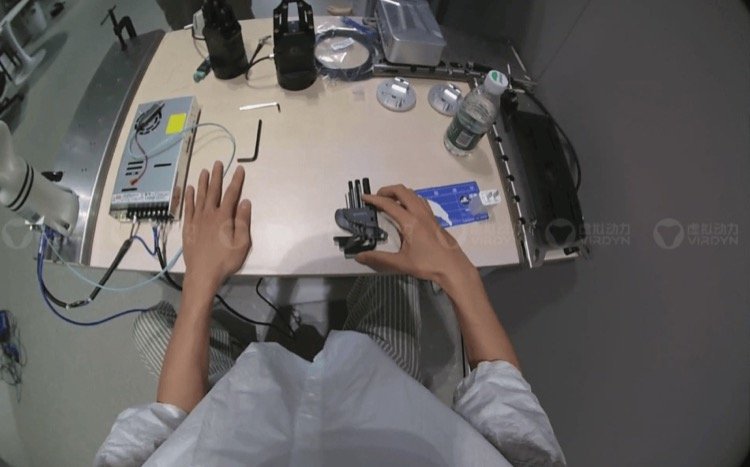
Top 5 3D Point Cloud Annotation Tools for Embodied AI
Content Menu
● What Is 3D Point Cloud Annotation?
● Five 3D Point Cloud Annotation Tools Compared
>> 1. iMerit Ango Hub: Managed Multimodal Annotation
>> 2. Deepen AI: Calibration and Multisensor Workflows
>> 3. Segments.ai: Sequential Labeling for Robotics Teams
>> 4. CVAT: Customizable Annotation Infrastructure
>> 5. Amazon SageMaker Ground Truth: AWS-Integrated Labeling
● Why Embodied AI Needs More Than Point Cloud Labels
>> Connect Geometry With Actions
>> Distinguish Stereo Video From Point Clouds
● How Virdyn Supports the Data Pipeline
● A Practical Pilot Before You Scale
>> Step 1: Define the Learning Objective
>> Step 2: Include Difficult Conditions
>> Step 3: Validate Synchronization and Calibration
>> Step 4: Measure Annotation Quality
>> Step 5: Test the Delivered Dataset
● Real Data and Simulation: Assign Each a Clear Role
● Compare Total Delivery Cost, Not Just Labeling Rates
● Build Your Dataset Around the Model’s Actual Task
>> What Are 3D Point Cloud Annotation Tools Used For?
>> Which Tool Is Best for Embodied AI?
>> Can Egocentric Video Replace LiDAR?
>> Does VDEgo-C2 Automatically Produce Training-Ready Point Clouds?
>> What Should a Multimodal Dataset Delivery Include?
>> Can AI-Assisted Annotation Eliminate Human Review?
Choosing the right 3D point cloud annotation tools is not simply about drawing accurate boxes around objects. For robotics and embodied AI teams, the real challenge is building training data that connects spatial geometry, visual context, movement, and meaningful interactions.
A platform may perform well on road scenes yet require substantial adaptation for warehouse picking, industrial assembly, or first-person manipulation data. Likewise, excellent annotation software cannot repair missing timestamps, poorly calibrated cameras, or an incomplete collection plan.
My recommendation is to evaluate interoperability first: can your collection equipment, annotation platform, quality controls, and training pipeline exchange data without losing essential context?
This guide compares five established platforms, explains their practical trade-offs, and shows where Virdyn’s VDEgo data collection and processing services fit into an end-to-end workflow.
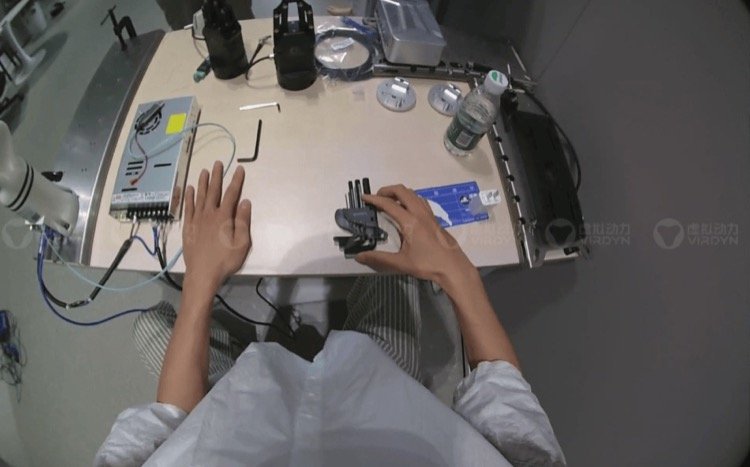
What Is 3D Point Cloud Annotation?
3D point cloud annotation assigns meaningful labels to spatial points captured by LiDAR, depth sensors, or reconstructed imagery. These points describe the geometry of objects and environments.
Depending on the model’s objective, annotation may include:
1. 3D cuboids identifying object position, dimensions, and orientation.
2. Semantic segmentation assigning a category to individual points.
3. Instance segmentation distinguishing separate objects within one category.
4. Object tracking preserving identities across consecutive frames.
5. Attributes describing visibility, activity, or operational context.
For embodied AI, identifying an object is only part of the task. A robot may also need to understand whether a drawer is open, which hand holds a tool, and when an interaction changes the scene.
These requirements connect point cloud labeling with multimodal video annotation, action segmentation, and task-level metadata.
Five 3D Point Cloud Annotation Tools Compared
The following platforms represent different operating models rather than a universal ranking. Their suitability depends on your sensors, annotation requirements, staffing, and infrastructure.
| Platform | Primary strength | Suitable project profile | Main evaluation question |
|---|---|---|---|
| iMerit Ango Hub | Multimodal tooling with managed annotation services | Complex projects requiring external delivery support | Does the proposed workflow meet your specific acceptance criteria? |
| Deepen AI | Calibration, multisensor annotation, and validation | Sensor-rich robotics and autonomy programs | Can calibration and annotation outputs integrate with your stack? |
| Segments.ai | Sequential point cloud and camera labeling | Robotics teams iterating on perception datasets | Do automation and exports support your annotation schema? |
| CVAT | Customizable, self-hosted annotation infrastructure | Research teams and engineering-led internal workflows | Which required features work in your chosen deployment? |
| Amazon SageMaker Ground Truth | Managed labeling within AWS infrastructure | Teams storing and processing datasets in AWS | What preparation and workforce configuration will the project require? |
1. iMerit Ango Hub: Managed Multimodal Annotation
Ango Hub combines point cloud annotation tooling with iMerit’s annotation services. Its documented capabilities include cuboids, semantic segmentation, sequential object tracking, and camera–point cloud projection.
This combination can suit organizations that need both software and delivery capacity. Instead of assembling a separate workforce, review process, and escalation structure, buyers can scope these components together.
However, a managed service still requires precise specifications. Request a pilot covering occlusion, small objects, overlapping instances, and difficult sensor views.
The important question is not whether a provider offers quality assurance, but how it measures errors, resolves disagreements, and documents corrections.
2. Deepen AI: Calibration and Multisensor Workflows
Deepen AI brings calibration, annotation, and validation into the same broader data workflow. Its current offering includes 2D and 3D labeling, quality workflows, and managed annotation services.
This matters because sensor alignment problems can resemble annotation mistakes. If camera imagery and point clouds disagree, labelers may draw inconsistent boundaries even when following instructions correctly.
For robotics teams working with multiple cameras, LiDAR, radar, or IMUs, evaluating calibration alongside annotation can reduce fragmented troubleshooting.
Ask the provider to demonstrate your actual sensor configuration. A convincing generic demo does not establish compatibility with your coordinate frames, recording structure, or delivery schema.
3. Segments.ai: Sequential Labeling for Robotics Teams
Segments.ai supports point cloud annotation alongside camera imagery. Its documented features include keyframe interpolation, cuboid propagation, and developer integrations.
These capabilities are relevant when objects persist across sequences. Annotators can use surrounding frames to understand motion and identity rather than treating every observation independently.
For an engineering-led team, integration flexibility may be as important as the interface. Test whether predictions can be imported, reviewed, corrected, and exported without manual restructuring.
Automation should also be evaluated on difficult sequences. Fast propagation is useful only when review effort remains manageable around occlusions, abrupt motion, and changing visibility.
4. CVAT: Customizable Annotation Infrastructure
CVAT provides a 3D point cloud workflow with cuboid creation, orthogonal views, and propagation or interpolation across frames.
Its appeal is control. Teams can evaluate self-hosted deployment and adapt internal workflows around their infrastructure.
That flexibility comes with operational responsibility. Hosting, access management, upgrades, dataset conversion, and workflow maintenance require engineering time.
Avoid assuming that every desired annotation type or sensor-fusion feature is available in every configuration. Validate the exact version, supported formats, and export behavior before committing.
CVAT can be a practical choice when infrastructure ownership matters more than purchasing a fully managed service.
5. Amazon SageMaker Ground Truth: AWS-Integrated Labeling
Amazon SageMaker Ground Truth supports 3D point cloud object detection, tracking, and semantic segmentation. Its sensor-fusion workflow can connect point clouds with camera imagery.
For teams already using AWS, keeping storage and labeling within the same ecosystem may simplify parts of the architecture.
Preparation remains important. Input manifests, sensor poses, camera parameters, and synchronized frames must match the relevant task requirements.
Ground Truth should therefore be evaluated as a workflow, not merely an annotation screen. Include data preparation, workforce setup, review, storage, and output conversion when estimating project effort.
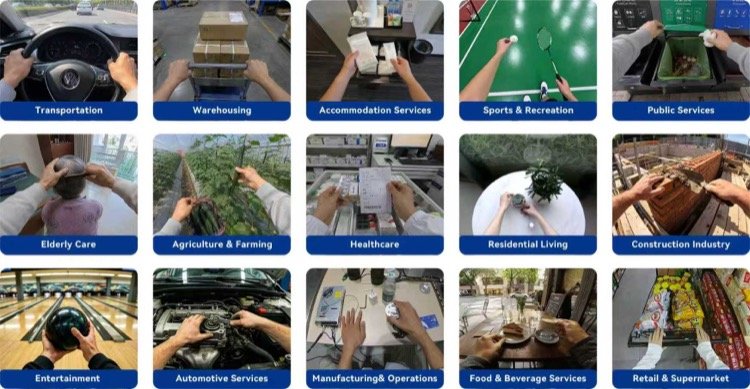
Why Embodied AI Needs More Than Point Cloud Labels
A perception dataset might identify a cup on a table. A manipulation dataset may need to describe how a person reaches for it, establishes contact, lifts it, and places it elsewhere.
That distinction changes the collection and annotation requirements.
Connect Geometry With Actions
For vision-language-action models, spatial annotations may need to connect with instructions, action segments, and task outcomes.
An example specification could include:
1. Object identity and spatial location.
2. Hand–object contact intervals.
3. Task instruction and action boundaries.
4. Object state before and after interaction.
5. Completion, failure, and recovery labels.
Human first-person demonstrations are not automatically robot action trajectories. Mapping them to executable robot controls requires additional modeling, representations, or robot-specific data.
Distinguish Stereo Video From Point Clouds
A stereo camera records paired images. Producing a useful point cloud typically requires calibration and a depth-estimation or reconstruction pipeline.
Likewise, an IMU stream does not automatically provide validated camera poses or accurate hand trajectories.
When purchasing multimodal data, separate directly recorded signals from derived outputs. Ask how each derived field was generated, what uncertainty it carries, and how it was checked.
This distinction prevents “multimodal” from becoming a label for incomplete deliverables.
How Virdyn Supports the Data Pipeline
Virdyn’s role differs from that of a standalone annotation platform. According to the supplied company brief, it combines egocentric collection hardware, real-world collection services, simulation capabilities, and data processing.
Its VDEgo-C2 device is positioned for first-person recording of human operations. The brief describes stereo RGB capture, synchronized IMU data, timestamps, local storage, and wireless control.
For a buyer, the potential value is continuity across stages:
1. Define the model objective and required modalities.
2. Design environments, tasks, and operator instructions.
3. Capture first-person demonstrations.
4. Clean, synchronize, and organize recordings.
5. Apply annotations and quality checks.
6. Deliver agreed files and metadata.
Virdyn describes both off-the-shelf and custom dataset offerings, with potential deliverables including MP4, AVI, CSV, JSON, and PLY.
These are file containers or formats, not proof of training readiness. The contract should also define schemas, units, coordinate conventions, calibration records, and supported derived outputs.
A Practical Pilot Before You Scale
My preferred buying approach is a small, representative pilot evaluated against written acceptance criteria. This is a proposed procurement method, not a claim about measured customer results.
Step 1: Define the Learning Objective
Specify what the model must learn: object detection, scene segmentation, manipulation understanding, navigation, or another task.
Then identify which labels and modalities directly support that objective.
Step 2: Include Difficult Conditions
Do not build the pilot entirely from clean demonstrations. Include occlusion, clutter, reflective surfaces, unusual object orientations, and unsuccessful actions where relevant.
Cover different operators and environments when those variations matter to deployment.
Step 3: Validate Synchronization and Calibration
Check timestamps, missing frames, coordinate transforms, and projection alignment before large-scale annotation.
Otherwise, reviewers may spend time correcting labels when the underlying sensor alignment is wrong.
Step 4: Measure Annotation Quality
Use metrics appropriate to the task rather than a single unexplained accuracy percentage.
| Quality dimension | Example check |
|---|---|
| Geometry | Cuboid overlap or center-position error |
| Segmentation | Per-class intersection over union |
| Tracking | Identity switches and fragmented tracks |
| Temporal labels | Action-boundary disagreement |
| Completeness | Missing required objects or attributes |
| Delivery integrity | Schema validation and successful sample loading |
Set thresholds with the model team. Different object sizes and downstream tasks may require different tolerances.
Step 5: Test the Delivered Dataset
Load the actual export into your training pipeline. Confirm identifiers, units, class mappings, timestamps, and train–validation splits.
A visually convincing annotation demo is not a substitute for a usable delivered dataset.
Real Data and Simulation: Assign Each a Clear Role
Simulation can support controlled scene variation and generate labels from known scene state. Real recordings provide observations of actual interactions and environmental conditions.
The two are complementary, but synthetic volume alone does not establish transfer to deployment.
For a Virdyn project combining real collection and simulation, request:
1. Separate provenance for real and synthetic samples.
2. Consistent label definitions across both sources.
3. Documentation of simulated scene assumptions.
4. Evaluation on representative real-world data.
Split datasets carefully. Closely related recordings from the same session should not leak across training and evaluation sets and inflate apparent performance.
Compare Total Delivery Cost, Not Just Labeling Rates
A low per-frame quote can become expensive after conversion, rework, and integration.
Compare proposals using the same scope:
1. Collection planning and operator training.
2. Calibration and synchronization.
3. Annotation and independent review.
4. Correction rounds and acceptance testing.
5. Storage, transfer, and format conversion.
6. Privacy handling and usage rights.
For first-person collection, also define consent, access controls, retention, and treatment of identifiable people or confidential workspace information.
No customer reviews were supplied for this article. Consequently, this comparison does not present invented testimonials, independent hands-on testing, or unsupported performance rankings.
Build Your Dataset Around the Model’s Actual Task
Choose annotation software after defining the data your model needs—not before.
Ango Hub, Deepen AI, Segments.ai, CVAT, and Ground Truth address different combinations of tooling, infrastructure, and delivery support. Virdyn can be evaluated as a collection-and-processing partner alongside the selected platform.
Send Virdyn a project brief containing your target task, operating environment, required modalities, annotation schema, and delivery format. Request a representative VDEgo-C2 pilot, a sample export, and written acceptance criteria before scaling production.
Frequently Asked Questions
What Are 3D Point Cloud Annotation Tools Used For?
They create structured labels from spatial data for tasks such as object detection, segmentation, and tracking. Applications include robotics, autonomous systems, and industrial perception.
Which Tool Is Best for Embodied AI?
There is no universal winner. Choose according to required modalities, annotation types, integration needs, deployment constraints, and available review resources. Test candidates using the same representative pilot.
Can Egocentric Video Replace LiDAR?
Not automatically. Egocentric video captures first-person appearance and interaction context. LiDAR provides spatial measurements through a different sensing process. Suitability depends on the model’s requirements and reconstruction pipeline.
Does VDEgo-C2 Automatically Produce Training-Ready Point Clouds?
Do not assume this from stereo capture alone. Confirm the available reconstruction workflow, calibration inputs, supported outputs, validation method, and which processing steps are included in the quoted service.
What Should a Multimodal Dataset Delivery Include?
It should include agreed sensor files, annotations, timestamps, identifiers, schemas, and provenance. Calibration records, coordinate transforms, derived-data documentation, and quality reports may also be necessary.
Can AI-Assisted Annotation Eliminate Human Review?
Not reliably across every condition. Pre-labeling and propagation can support productivity, but difficult objects, occlusions, unfamiliar environments, and ambiguous interactions still require an appropriate validation process.
References
1. iMerit — “Top 5 Tools for 3D Point Cloud Annotation”.[imerit]
2. iMerit — “LiDAR & 3D Point Cloud Annotation Services for AI”. Source for Ango Hub annotation capabilities, sensor projection, tracking, and managed service positioning.[imerit]
3. Deepen AI — Official Platform and Services Overview. Source for current calibration, annotation, validation, and managed service offerings. This updates the original article’s description of its workforce model.[deepen]
4. Segments.ai — “3D Point Cloud Labeling Platform”. Source for camera–point cloud visualization, keyframe interpolation, and cuboid propagation.[segments]
5. Segments.ai — “Fast Point Cloud Labeling With Model Predictions”. Source for model-assisted labeling and developer integration workflows.[segments]
6. CVAT — “Point Cloud Annotation: A Complete Guide to 3D Data Labeling”. Source for the documented 3D cuboid workflow, orthogonal views, propagation, and interpolation.[cvat]
7. Amazon SageMaker AI Documentation — “Use Ground Truth to Label 3D Point Clouds”. Source for supported labeling tasks, sensor fusion, and calibration-dependent projection.[docs.aws.amazon]
8. AWS — “Labeling Data for 3D Object Tracking and Sensor Fusion in Amazon SageMaker Ground Truth”. Technical reference for synchronization, sensor poses, and input preparation.[aws.amazon]
9. VDEgo — “What Is Egocentric Video Data and How Is It Building in Embodied AI”. Manufacturer source for VDEgo-C2 positioning and first-person collection workflows; not an independent product evaluation.[vdegoai]
Hot Tags: 3D Point Cloud Annotation, Point Cloud Annotation Tools, LiDAR Data Annotation, 3D Data Labeling Services, AI Data Annotation Services, Multimodal Data Collection, Egocentric Data Collection, Robotics Training Data, Embodied AI Datasets, Sensor Fusion Annotation
SHARE



