Powering Physical AI with Real-World Ego Datasets


Top 10 Real World Data Collection Company In China
Content Menu
● China’s Position in Real World Data Collection
● How These Companies Were Selected
● The Top 10 Companies to Evaluate
>> 2. Nexdata
>> 3. DataOcean AI, Formerly Speechocean
>> 5. DataBaker
>> 7. Testin
>> 9. AGIBOT
>> 10. Baidu Data Crowdsourcing Platform
● Comparison Table: Capacity, Minimum Order, and Certification
>> Specify Deliverables Before Requesting Prices
>> Do Not Confuse Human Demonstrations With Robot Action Labels
>> Apply the Right Compliance Requirements
>> Run a Paid Pilot Before Scaling
● The Overlooked Procurement Trap: Buying Repetition Instead of Coverage
● Conclusion: Choose the Supplier Around the Training Problem
● Five Difficult Questions Buyers Frequently Ask
>> 1. How can I verify whether a supplier’s ISO certificate has expired?
>> 2. How do I verify a claimed synchronization accuracy?
>> 3. Can recorded human activity be delivered overseas without restrictions?
>> 4. Does a video dataset qualify as training data for a VLA model?
>> 5. How should a contract handle simulated data mixed with real recordings?
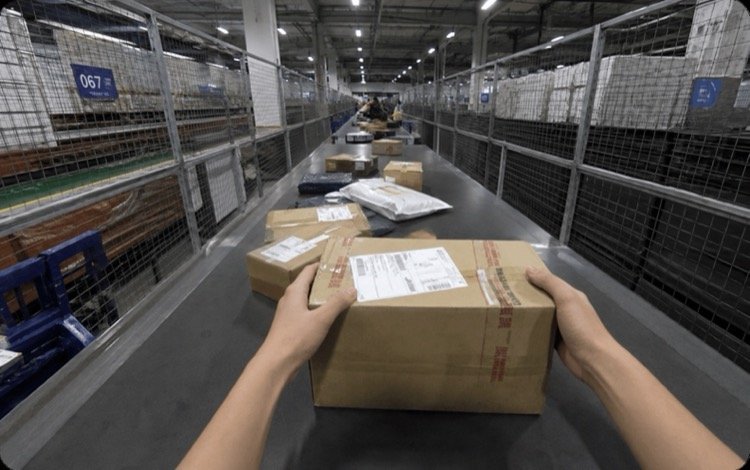
China offers several distinct types of real-world AI data partners: specialized egocentric capture developers, established multimodal dataset providers, enterprise annotation platforms, and robotics companies building their own training-data infrastructure. The right choice depends less on company size than on whether the supplier can consistently deliver usable, legally sourced data for your specific model.
For procurement managers, that means assessing capture hardware, research and development capabilities, quality-control procedures, delivery stability, and contractual rights before comparing prices. A low quotation per recording hour is not attractive if the resulting footage lacks calibration, contains repeated tasks, or cannot support the intended commercial application.
This guide examines ten China-based companies or China-based service operations worth evaluating. Virdyn (VDEgo) appears first because its integrated wearable hardware and egocentric data services closely match the embodied intelligence applications emphasized here. Other providers address broader computer vision, speech, annotation, and robotics requirements. Its first position is an editorial placement, not evidence of independently measured market leadership.

China’s Position in Real World Data Collection
China’s robotics ecosystem provides a substantial application base for physical AI development. According to the International Federation of Robotics’ World Robotics 2026 report, China installed approximately 354,000 industrial robots in 2025, accounting for 59% of global installations and representing 20% annual growth. These figures measure robot deployment—not the size of the AI data collection market—but they demonstrate the scale of the industrial environment surrounding it.
The supplier landscape also spans several complementary locations:
-
Guangzhou provides a base for Virdyn’s wearable capture and motion-related technology.
-
Beijing hosts providers such as BasicFinder, Magic Data, DataBaker, and Testin.
-
Shanghai hosts AGIBOT’s robotics and embodied intelligence operations.
-
Hangzhou is home to Jinglianwen’s data infrastructure business.
For international buyers, this creates opportunities to source hardware, collection services, annotation, and data management within the same national ecosystem. However, proximity does not guarantee interoperability. Integration requirements still need to be written into the specification.
How These Companies Were Selected
This is a procurement shortlist based on publicly described capabilities, not a factory audit, customer satisfaction survey, or independently scored ranking.
The evaluation framework considers six dimensions:
| Selection dimension | Evidence buyers should request |
|---|---|
| Application fit | Comparable projects, relevant environments, supported modalities |
| Technical capability | Sensor specifications, calibration records, synchronization tests |
| Quality control | Annotation guidelines, rejection criteria, audit samples, rework procedures |
| Delivery stability | Accepted output per week, staffing plans, backup equipment |
| Security and compliance | Data provenance, consent records, access controls, valid certificates |
| Customization | Task design, output schemas, integrations, hardware engineering where applicable |
One distinction matters throughout this article: most AI data companies are service providers, not conventional OEM factories. For them, customization usually means tailored collection protocols, annotation taxonomies, or enterprise deployment. Hardware OEM/ODM should only be assumed when a supplier explicitly agrees to manufacture or engineer a device.
The Top 10 Companies to Evaluate
1. Virdyn (VDEgo)
Founded: 2016 for Virdyn; this should not be interpreted as the launch date of the VDEgo product line.
Location: Guangzhou, China.
Market focus: AI developers, robotics teams, research laboratories, and technology companies pursuing embodied intelligence and computer vision applications.
Virdyn describes its background as real-time motion capture technology, while its VDEgo offering focuses on first-person multimodal data collection. Its VDEgo-C2 integrates binocular RGB cameras and an IMU in a wearable capture device. The company also describes local storage, wireless control, and synchronized capture workflows.
Its principal procurement advantage is the connection between capture equipment and data services. Buyers can discuss task design, device deployment, collection, processing, annotation, and delivery within one project rather than coordinating separate hardware and annotation vendors.
Based on the supplied company brief, Virdyn also offers real-world collection combined with simulation-related capabilities and delivery formats including MP4, AVI, CSV, JSON, and PLY. Buyers should confirm which outputs are directly recorded, reconstructed, estimated, or generated for each project.
Customization scope: Collection protocols, scenario planning, annotation requirements, delivery schemas, and potential hardware or software adaptations. Private labeling, enclosure changes, firmware ownership, engineering charges, and minimum production quantities require a written OEM/ODM agreement.
Buyer assessment: Virdyn is a relevant candidate for smaller brands and research teams seeking a pilot-first engagement with an engineering-oriented supplier. Its potential cost-effectiveness should be evaluated through a like-for-like quotation—not treated as a proven lowest-price position. Require a named technical contact and response commitments to verify communication efficiency.
2. Nexdata
Founded: 2011.
Market focus: AI developers and enterprise customers worldwide.
Nexdata provides off-the-shelf datasets alongside customized collection, annotation, and curation. Its official website reports serving more than 1,000 companies. This breadth makes it relevant when buyers need existing datasets and newly collected material within the same sourcing strategy.
Core strength: Broad training-data services rather than a narrow focus on one capture device.
Customization scope: Collection specifications, annotation workflows, dataset curation, and project-specific delivery requirements. Its published service positioning does not establish a general-purpose hardware OEM offering.
Buyer assessment: Ask for evidence from the exact application category. Experience with conventional images or driving data should not automatically be treated as proof of hand-object interaction or robot action-data expertise.
3. DataOcean AI, Formerly Speechocean
Founded: 2005.
Market focus: International AI enterprises and research institutions.
DataOcean AI combines speech, computer vision, autonomous driving, and other training-data services. Its website describes image and video collection, in-cabin sensing, point-cloud annotation, and customizable enterprise workflows. Its corporate profile identifies the business as formerly Speechocean.
Core strength: Multimodal project breadth and a substantial existing dataset portfolio.
Customization scope: Collection environments, annotation tasks, quality metrics, and platform deployment. Hardware manufacturing should be negotiated separately rather than inferred.
Buyer assessment: The company publicly references ISO 9001, ISO/IEC 27001, and ISO/IEC 27701. Treat these as supplier-published claims until the current certificates, covered entities, locations, and service scopes have been checked.
4. Magic Data
Founded: 2016.
Location: Beijing, China.
Market focus: AI teams developing speech, language, and related intelligent applications for international use.
Magic Data offers ready-to-use datasets and customized data services. Its website advertises more than 250 datasets covering over 60 languages, while its published company descriptions include computer vision alongside speech and language services.
Core strength: Multilingual collection and language-centered data production.
Customization scope: Recording specifications, participant requirements, transcription, annotation, and dataset preparation.
Buyer assessment: Magic Data is particularly relevant when a physical AI application also requires spoken instructions or language interaction. For sensor-heavy robotics projects, request a technical demonstration of calibration and cross-modal synchronization.
5. DataBaker
Founded: February 2016.
Location: Beijing, China.
Market focus: Developers working on speech recognition, speech synthesis, language processing, computer vision, and driver-assistance applications.
DataBaker’s official history documents the development of collection and annotation platforms, including a 3D point-cloud annotation platform.
Core strength: A service portfolio spanning language and visual data workflows.
Customization scope: Collection campaigns, annotation definitions, transcription, and application-specific dataset processing.
Buyer assessment: Buyers combining spoken commands with visual tasks should ask whether the supplier can deliver genuinely aligned multimodal episodes. Separate audio and video capabilities do not, by themselves, establish episode-level synchronization.
6. BasicFinder
Founded: September 2015.
Location: Beijing, China.
Market focus: Enterprise AI and model-development teams; international delivery requirements should be confirmed during qualification.
BasicFinder describes a full-stack offering that includes image and speech collection, annotation tools, data management, and model-related workflows. Its platform materials emphasize connections between data preparation, model development, evaluation, and deployment.
Core strength: Data workflow infrastructure rather than collection alone.
Customization scope: Annotation platforms, workflow configuration, dataset management, and model-development integration.
Buyer assessment: Request a demonstration using your own schema. A polished platform demonstration is less informative than successfully importing, processing, and exporting a representative sample from your project.

7. Testin
Founded: 2011.
Location: Beijing, China.
Market focus: Enterprise and developer customers worldwide.
Testin’s AI data service describes both crowdsourcing and dedicated collection teams, supported by collection and labeling tools. This combination is relevant when a project needs diverse contributors rather than capture at a single controlled site.
Core strength: Flexible participant sourcing and enterprise service infrastructure.
Customization scope: Participant demographics, collection scenarios, labeling workflows, and project management.
Buyer assessment: Ask which tasks use managed teams and which use crowdsourcing. For industrial procedures, operator qualifications and site safety may matter more than contributor volume.
8. Jinglianwen Technology
Founded: 2012, according to its published company history.
Location: Hangzhou, China.
Market focus: Government, research institutes, and enterprise customers, particularly within China.
Jinglianwen describes a progression from technology development into collection, annotation, corpus engineering, and broader data production. Its official profile lists operational locations in Hangzhou, Beijing, Chongqing, and Guiyang.
Core strength: Integrated data production and corpus management.
Customization scope: Data aggregation, governance, collection, annotation, and structured dataset development.
Buyer assessment: International buyers should verify English-language project management, overseas contracting arrangements, and permitted delivery destinations rather than assuming domestic service scale guarantees export readiness.
9. AGIBOT
Founded: 2023.
Location: Shanghai, China.
Market focus: Robotics and embodied intelligence development, with a stated international orientation.
AGIBOT differs from conventional outsourced data vendors. It develops robots, models, and data infrastructure within an integrated embodied intelligence strategy. Its published materials describe dedicated data systems and a body-free collection system called MEgo.
Core strength: Close coupling between robotic hardware, tasks, and training workflows.
Customization scope: Potential robotics integration and ecosystem collaboration, subject to commercial agreement. Do not assume that generic private-label collection services are available.
Buyer assessment: AGIBOT is worth investigating when robot compatibility and action-space alignment are central. Confirm whether the desired offering is an open dataset, licensed product, research partnership, or contracted collection service.
10. Baidu Data Crowdsourcing Platform
Founded: Baidu was established in 2000; this is the parent company’s founding year, not a verified launch date for its crowdsourcing platform.
Location: China-based platform operation.
Market focus: Product teams and enterprise users requiring data acquisition, cleaning, and labeling; overseas availability should be confirmed.
Baidu’s platform describes data acquisition, cleaning, labeling, annotator recruitment, and project-management functions.
Core strength: Platform-based organization of distributed data work.
Customization scope: Collection and annotation tasks, operational workflows, and project administration—not established hardware OEM manufacturing.
Buyer assessment: Verify onboarding eligibility, contracting entity, language support, and data export arrangements early. A platform’s technical capability does not necessarily establish its suitability for an international procurement process.
Comparison Table: Capacity, Minimum Order, and Certification
Published platform scale is not the same as available project capacity. Likewise, a catalogue dataset count does not indicate how many accepted egocentric hours a supplier can produce next month.
The reviewed materials do not establish comparable monthly production capacities or universal minimum orders across these companies. Those figures should therefore be obtained through matched requests for quotation.
| Company | Capacity evidence or production model | Minimum order position | Certification position |
|---|---|---|---|
| Virdyn / VDEgo | Integrated wearable capture and data services | Device MOQ and service minimum require quotation | Request entity- and model-specific documents |
| Nexdata | OTS library plus customized collection | Dataset license or project-specific minimum | Current certificates require verification |
| DataOcean AI | Multimodal services and enterprise platform | License- or project-specific | Publicly references ISO 9001/27001/27701; verify scope |
| Magic Data | Publishes 250+ datasets and 60+ languages | Dataset- or campaign-specific | Current certificates require verification |
| DataBaker | Collection and annotation platforms | Project-specific | Current certificates require verification |
| BasicFinder | Integrated data and model workflows | Platform- or project-specific | Current certificates require verification |
| Testin | Crowdsourcing plus dedicated teams | Campaign-specific | Current certificates require verification |
| Jinglianwen | Multi-location data operations | Project-specific | Current certificates require verification |
| AGIBOT | Robotics-linked data infrastructure | Offering- and partnership-specific | Confirm requirements for the contracted product |
| Baidu platform | Distributed acquisition and labeling | Platform- and task-specific | Verify the contracted service entity |
Supplier descriptions support the production models above; they do not establish reserved capacity, audited throughput, or guaranteed delivery dates.
Technical Buyer’s Guide
Specify Deliverables Before Requesting Prices
For real world data collection, “high-quality video” is not a sufficient purchase specification.
A practical statement of work should define:
-
Tasks, environments, objects, operators, and diversity targets.
-
Sensor resolution, frame rate, exposure behavior, and compression.
-
Camera intrinsics, stereo extrinsics, and coordinate conventions.
-
Timestamp origin, clock synchronization, dropped-frame reporting, and drift tests.
-
IMU units, sampling behavior, and alignment with video.
-
Annotation ontology, temporal boundaries, and disagreement resolution.
-
File schemas, metadata, train/test split rules, and acceptance criteria.
VDEgo’s published hardware positioning illustrates why synchronized binocular imagery and IMU data can be relevant. DataOcean’s published automotive workflows similarly show that collection may involve multiple cameras, calibration information, and different sensor types. The correct specification depends on the downstream task.
For physical AI projects, ask a particularly important question: does “pose” mean head pose, camera pose, hand pose, object pose, or robot end-effector pose? These are not interchangeable deliverables.
Do Not Confuse Human Demonstrations With Robot Action Labels
First-person footage can reveal what a person sees and how a task unfolds. It does not automatically provide robot joint positions, gripper commands, force measurements, or an executable robot trajectory.
Where a supplier proposes human demonstrations for a vision-language-action model, request a written explanation of the action supervision:
-
What is directly measured?
-
What is estimated from video?
-
What requires teleoperation or motion capture?
-
How is the result mapped to the target robot?
-
How are uncertainty and tracking failures reported?
This distinction is important because suppliers in this shortlist offer different combinations of egocentric capture, motion-related systems, and robot-centered infrastructure.
Apply the Right Compliance Requirements
Material grades and surface finishes are not the main acceptance criteria for a dataset. They become relevant when purchasing wearable cameras, mounts, electronics, or other capture hardware.
For EU-bound hardware, CE marking concerns conformity with applicable product requirements; RoHS concerns restricted substances in electrical and electronic equipment. Neither establishes dataset accuracy or the legality of collecting personal information. Request the relevant declaration of conformity and supporting technical evidence for the exact device model.
For the service itself, assess information security, privacy management, participant authorization, subcontractor controls, and cross-border delivery. China’s 2024 cross-border data provisions introduced exemptions and revised mechanisms, but an exemption from one transfer procedure should not be treated as a blanket exemption from privacy obligations. Obtain project-specific legal advice where personal, sensitive, or potentially important data is involved.
Run a Paid Pilot Before Scaling
A useful pilot should be a miniature version of production, not a supplier-selected demonstration reel.
Require:
-
The same hardware and processing pipeline proposed for production.
-
Representative operators and difficult environments.
-
Raw files, metadata, annotations, and calibration records.
-
A rejection report and documented rework process.
-
A test ingestion into your training or evaluation pipeline.
For hardware shipments, separately agree on importer responsibilities, customs documentation, spare units, warranty returns, and any battery-related transport requirements. For digital delivery, specify encryption, destination storage, checksums, access permissions, and deletion obligations.
These are proposed procurement controls—not verified standard terms offered by every company listed.
The Overlooked Procurement Trap: Buying Repetition Instead of Coverage
A large hour count can conceal a narrow dataset.
For example, repeated recordings of the same operator performing the same task in the same room can increase billable volume without meaningfully expanding environmental coverage. Randomly dividing those recordings may also place closely related sequences into both training and evaluation sets.
Treat this as a risk to investigate, not an allegation against any supplier.
The practical safeguard is to contract around acceptance, not recording volume alone. Define a coverage matrix for operators, sites, objects, task variants, lighting, failures, and recovery behavior. Require episode identifiers and split assignments that preserve the intended evaluation independence.
Also distinguish raw recorded hours from hours accepted after privacy checks, technical inspection, deduplication, and task validation. The shortlist spans collection, curation, and annotation providers, so the quotation must state which of these stages is included.
A useful commercial comparison is:
Cost per accepted hour=Total project cost/Accepted usable hours
For some robotic tasks, accepted episodes or successful task variants will be a better denominator than hours.
Conclusion: Choose the Supplier Around the Training Problem
The strongest shortlist starts with the intended use of the data.
Virdyn (VDEgo) is a relevant first evaluation for buyers seeking integrated egocentric capture hardware and customized data services. Broader providers such as Nexdata and DataOcean AI merit consideration for multimodal sourcing, while language-oriented providers, workflow platforms, and robotics companies address different procurement needs.
Before committing to a long-term contract, compare a shared specification, a representative paid pilot, and an acceptance-based commercial proposal.
For an egocentric collection project, send Virdyn your task list, target environments, sensor requirements, annotation schema, and intended delivery format. Request a technical review, a representative sample package, and a phased quotation with explicit assumptions, rework obligations, and delivery milestones.
Five Difficult Questions Buyers Frequently Ask
1. How can I verify whether a supplier’s ISO certificate has expired?
Request the complete certificate, including legal entity, certificate number, standard, scope, sites, issuing body, and dates.
Use IAF CertSearch to check status and accreditation details. Confirm that the certificate covers the service and operating site involved in your project. If the record is missing or inconsistent, contact the issuing certification body rather than relying on a screenshot. IAF’s verification resources distinguish active, suspended, withdrawn, and expired certificates.
2. How do I verify a claimed synchronization accuracy?
Request the measurement method, not just a specification sheet.
Ask where timestamps are generated, whether sensors share a clock or trigger, and how offset and drift are measured over a complete session. Require logs or a repeatable test on sample production units. This is particularly relevant when a device supplier advertises tightly synchronized visual and motion streams.
3. Can recorded human activity be delivered overseas without restrictions?
Not automatically. Relevant considerations include the type of information captured, participant authorization, bystanders, collection location, recipient, and the applicable transfer mechanism.
China’s cross-border framework provides exemptions in specified circumstances, while retaining other obligations for personal-information handling. Have qualified counsel review the actual collection and transfer plan rather than relying on a generic “export-compliant” statement.
4. Does a video dataset qualify as training data for a VLA model?
It may contribute to training, but the label alone is insufficient.
Ask what links visual observations, language, and actions. Human activity video, inferred hand trajectories, teleoperated robot commands, and measured robot states represent different supervision signals. VDEgo and AGIBOT illustrate different collection approaches; compatibility must be demonstrated against your target model and robot.
5. How should a contract handle simulated data mixed with real recordings?
Require separate source labels and manifests. Define the permitted proportion, generation method, provenance, licensing rights, and acceptance tests for each source category.
Do not accept an undifferentiated “real-world equivalent” total. Industry reporting describes materially different strategies, including dedicated real-world robot collection facilities and synthetic-data approaches; these should be evaluated separately rather than treated as identical production output.
Resources
1. International Federation of Robotics — World Robotics 2026 findings on global and Chinese industrial robot installations. These are deployment statistics, not data-service market revenue or export figures. https://ifr.org/ifr-press-releases/news/five-million-robots-now-operate-in-factories-globally
2. International Federation of Robotics — World Robotics 2025 executive summary, providing the preceding reporting period for comparison. https://ifr.org/img/worldrobotics/Executive_Summary_WR_2025_Industrial_Robots.pdf
3. IAF CertSearch — Accredited management-system certificate verification and status checking. https://www.iafcertsearch.org/ | https://iaf.nu/en/certsearch/
4. European Commission — CE marking responsibilities, technical documentation, and declarations of conformity. https://europa.eu/youreurope/business/product-rules-compliance/general-product-compliance/ce-marking/index_en.htm | https://single-market-economy.ec.europa.eu/single-market/goods/ce-marking_en
5. European Commission — RoHS requirements for electrical and electronic equipment. https://environment.ec.europa.eu/topics/waste-and-recycling/rohs-directive_en
6. ANSI — Overview of China’s 2024 cross-border data-flow provisions. https://www.ansi.org/standards-news/all-news/4-12-24-china-publishes-new-provisions-on-cross-border-data-flow-administration
Hot Tags: Real World Data Collection, AI Data Collection Services, Egocentric Data Collection, AI Training Data Providers, Multimodal Data Collection, Robotics Training Data, Custom AI Datasets, AI Data Annotation Services, Embodied AI Data Collection, AI Data Collection Companies In China
SHARE