Powering Physical AI with Real-World Ego Datasets


Automated vs Manual Data Collection for AI: A Practical Comparison
Automated data collection vs manual field collection is a decision about what your AI must learn—not simply how quickly you can gather files. Automated pipelines offer repeatability and scale. Human-led field collection reveals the unpredictable actions, environments, and exceptions that physical-world AI must understand.
For robotics, embodied intelligence, and computer vision, the strongest approach often combines both. People demonstrate meaningful behavior in real environments; automated systems record, organize, process, and expand those observations.
My recommendation is to start with the deployment problem. Define the behaviors your model must handle, identify missing evidence, and then choose the collection method. More data is valuable only when it improves relevant coverage.

Automated Data Collection vs Manual Field Collection: Key Differences
| Comparison factor | Automated data collection | Manual field collection |
|---|---|---|
| Primary mechanism | Programmed sensors, software, robots, or simulation | People performing, recording, or supervising real-world tasks |
| Main advantage | Repeatable acquisition at scale | Context-rich examples of actual behavior |
| Initial investment | Integration, calibration, infrastructure, and pipeline development | Recruitment, training, equipment, and site preparation |
| Ongoing effort | Monitoring, maintenance, storage, and exception handling | Operator time, coordination, supervision, and review |
| Scenario control | Strong within configured environments | Flexible, but dependent on protocols and participants |
| Main quality risk | Systematic errors can spread unnoticed | Inconsistent execution and incomplete coverage |
| Best-fit applications | Continuous monitoring, repeated trials, synthetic variation | Human demonstrations, unfamiliar workflows, contextual discovery |
| Essential safeguard | Automated checks plus independent audits | Standardized instructions plus technical validation |
These categories overlap. A person wearing synchronized cameras is performing manual field collection, while the recording and processing pipeline may be highly automated.
What Is Automated Data Collection for AI Projects?
Automated data collection uses configured systems to acquire information with limited intervention during capture.
In physical AI projects, this can include:
-
Fixed cameras recording manufacturing operations.
-
Robots logging observations, actions, and outcomes.
-
Connected sensors capturing equipment conditions.
-
Wearable devices synchronizing video and motion signals.
-
Simulators generating scenes and corresponding annotations.
Automated Real-World Capture vs Synthetic Data Generation
Automated collection does not necessarily mean synthetic data.
A camera recording an actual warehouse captures real observations. A simulator rendering a warehouse generates synthetic observations. Both may operate automatically, but their limitations differ.
Real sensors remain vulnerable to occlusion, calibration drift, and environmental interference. Simulation depends on the accuracy and diversity of its scenes, materials, sensors, and physical assumptions.
NVIDIA’s technical guidance distinguishes appearance gaps from content gaps: simulated images may look different from reality, or the scenes may omit important objects and configurations. Automation alone solves neither problem.
What Is Manual Field Collection for AI Projects?
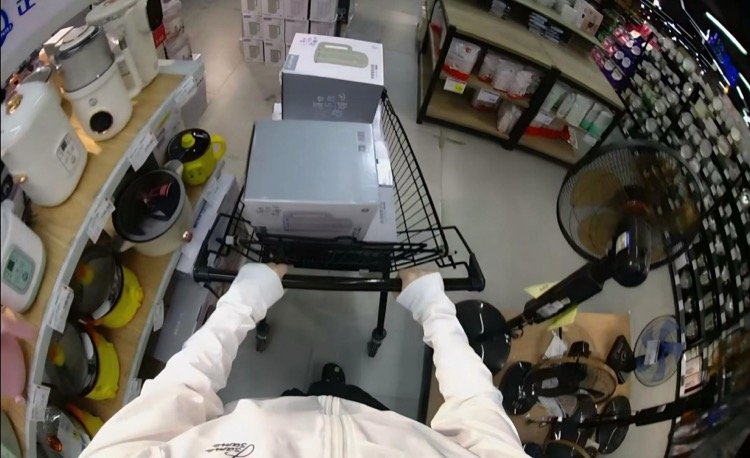
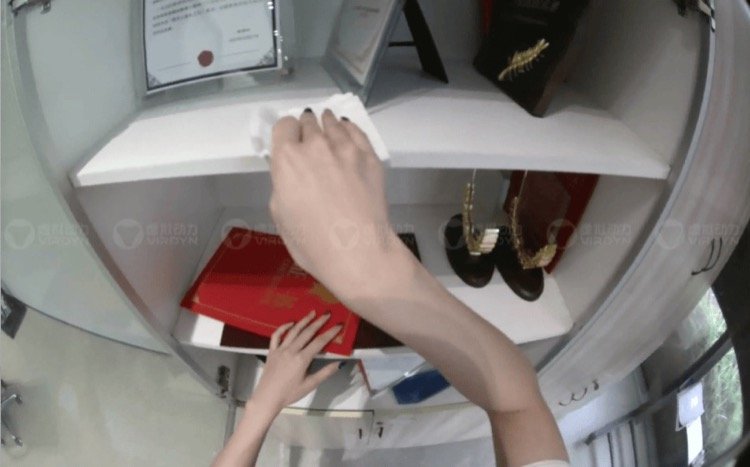
Manual field collection involves people deliberately gathering data in real environments. For embodied AI, participants may perform tasks while wearing cameras, demonstrate manipulation sequences, or teleoperate robots.
Examples include:
-
A worker sorting irregular packages.
-
A technician assembling components.
-
A participant opening drawers and retrieving utensils.
-
An operator demonstrating how a robot should recover from a failed grasp.
Why Egocentric Data Collection Matters
First-person recording captures activities from the participant’s viewpoint. It can reveal hand–object interactions, intermediate task states, and the sequence connecting an instruction to an outcome.
However, human-view video is not automatically robot-action supervision.
A human demonstration can support perception, representation learning, or task understanding. Training a robot controller may additionally require robot observations, action labels, embodiment mapping, or teleoperated demonstrations.
That distinction matters when selecting data for Vision-Language-Action models: visually relevant footage is not necessarily a complete action-training dataset.
Comparing Data Quality, Coverage, Cost, and Speed
Data Quality: Consistency Is Not the Same as Correctness
Automation can enforce consistent settings, filenames, and capture intervals. Yet a misconfigured pipeline can produce consistently unusable data.
Field collection can capture realistic behavior but introduce variation in camera placement, operator technique, and task interpretation.
I would evaluate both methods against the same acceptance criteria:
-
Are the relevant objects and actions visible?
-
Are sensors calibrated and timestamps aligned?
-
Are labels supported by observable evidence?
-
Are missing signals identified?
-
Can every accepted episode be traced to its source?
A clean file is not necessarily a useful training example.
Coverage: Repetition Does Not Guarantee Diversity
Automated systems are effective at repeating defined conditions. Human-led collection is useful for discovering conditions the original specification overlooked.
A warehouse worker may reposition a damaged carton before lifting it. If the collection script includes only successful, unobstructed picks, that recovery behavior disappears from the dataset.
Neither method guarantees representative coverage. Coverage must be planned across locations, objects, participants, task stages, and failure modes.
Cost and Speed: Measure Accepted Output
Automated pipelines require setup and maintenance. Field programs require scheduling, training, travel, supervision, and repeat visits. Either method can become expensive when rejected recordings or missing annotations trigger rework.
Use cost per accepted episode, rather than cost per recorded hour:
Total collection, processing, review, and rework cost ÷ accepted training episodes.
For continuous monitoring, accepted synchronized hours may be a better denominator. For manipulation learning, complete episodes may be more meaningful.
An accepted episode should meet predefined requirements for visibility, completeness, synchronization, permissions, and annotation quality. Without that definition, supplier quotations are difficult to compare.
What Published Robotics Datasets Actually Demonstrate
Two research projects illustrate why collection strategy matters beyond raw volume.
Ego4D: Real-World Diversity Requires Deliberate Collection
The original Ego4D paper reports 3,670 hours of egocentric video from 74 locations across nine countries.
Its relevance is not simply scale. The project captures diverse everyday activities, showing how first-person collection can support research into human interactions across different environments.
However, broad activity footage does not automatically cover a particular factory, proprietary tool, or deployment workflow. General datasets and industry-specific collection serve different purposes.
DROID: Human Demonstration and Standardized Infrastructure Can Coexist
The DROID project reports approximately 76,000 robot demonstration trajectories, representing 350 hours of interaction across 564 scenes.
This is an important distinction from wearable human video: DROID contains robot manipulation demonstrations.
Its collection approach shows that human participation and scalable infrastructure are complementary. People provide demonstrations, while shared hardware and collection procedures support aggregation across environments.
These projects are research examples, not evidence that any supplier will achieve equivalent outcomes.
A Better Hybrid Strategy for Embodied AI Data Collection
For many physical-world projects, I would structure the collection program around three connected stages.
1. Discover Behavior Through Real-World Field Collection
Begin with a targeted set of representative tasks. Record normal execution, common interruptions, and safe recovery behavior.
Use the pilot to answer practical questions:
-
Does the camera retain visibility during manipulation?
-
Which objects become occluded?
-
Are task boundaries unambiguous?
-
Which actions require additional sensors or viewpoints?
The objective is to improve the specification before scaling production.
2. Automate Capture, Processing, and Quality Checks
Once the protocol is stable, automate repeatable operations:
-
Device configuration and recording checks.
-
File ingestion and integrity verification.
-
Timestamp validation.
-
Missing-stream detection.
-
Annotation pre-processing.
-
Dataset packaging and versioning.
Retain human review for ambiguous actions, unusual failures, and samples flagged by automated checks.
3. Expand Variation Through Simulation
Use simulation to explore controlled changes in lighting, object placement, backgrounds, and other relevant parameters.
Domain randomization can expand variation, but it should reflect plausible deployment conditions. Visually convincing imagery does not guarantee accurate contact dynamics or transferable control behavior.
Treat synthetic data as a testable addition. Compare models trained with and without it on an independent real-world evaluation set.
A Practical Pilot for Comparing Collection Methods
Before committing to a large dataset, run a matched pilot.
Step 1: Define the Deployment Task
Specify the environment, target behavior, objects, sensor requirements, and operational constraints.
“Collect warehouse video” is too broad. “Capture carton retrieval from three shelf heights under partial occlusion” provides a testable scope.
Step 2: Create a Coverage Matrix
Map the combinations that matter.
| Dimension | Example variation |
|---|---|
| Objects | Size, material, deformability, reflectivity |
| Environment | Layout, clutter, illumination |
| Execution | Operator technique, speed, interruptions |
| Outcome | Success, failure, recovery |
| Sensors | Viewpoint, exposure, calibration status |
Prioritize deployment-relevant combinations rather than attempting every possible permutation.
Step 3: Compare Equivalent Deliverables
Ask each collection approach to produce the same task coverage and annotation specification.
Measure acceptance rate, processing effort, missing data, delivery time, and model performance. Do not compare unlabeled automated footage with fully reviewed field episodes as though they were equivalent products.
Step 4: Prevent Evaluation Leakage
Separate training and evaluation data by meaningful units, such as location, participant, session, or object instance.
Randomly splitting adjacent frames from one recording can place nearly identical observations in both sets. That tests familiarity more than generalization.
Step 5: Scale the Approach That Fixes Observed Failures
If performance deteriorates in unfamiliar environments, expand environmental coverage. If failures cluster around hand occlusion, revise viewpoints. If actions are ambiguous, improve supervision.
Let measured failure patterns determine the next collection budget.
Multimodal Delivery: Specify More Than File Formats
MP4, AVI, CSV, JSON, and PLY are useful containers, but extensions alone do not make a dataset training-ready.
For synchronized multimodal AI datasets, request:
-
Timestamp units and clock references.
-
Camera intrinsics and extrinsics.
-
Coordinate frames and pose conventions.
-
IMU sampling information.
-
Episode boundaries and task identifiers.
-
Annotation definitions and confidence fields.
-
Missing-data flags and quality reports.
-
Dataset versions and permitted uses.
Also distinguish recorded signals from derived outputs. Camera pose, hand trajectories, and reconstructed geometry may require additional processing. Their accuracy and availability should be specified separately.
Privacy, Safety, and Data Provenance
Collection quality includes the right to use the resulting data.
Define participant permissions, site authorization, access controls, retention periods, and handling procedures for faces, screens, documents, or confidential equipment.
Automated recording can capture sensitive information continuously. Human-led collection can expose participants to workplace hazards. Simulation reduces some physical collection risks but does not remove licensing or asset-provenance questions.
NIST’s AI Risk Management Framework emphasizes context, documentation, and evaluation. Apply that principle by documenting where data came from, what it represents, and where its limitations remain.
How Virdyn Supports a Hybrid Data Collection Workflow
According to the supplied company information, Virdyn (VDEgo) combines first-person capture, real-environment collection, simulation capabilities, and data processing.
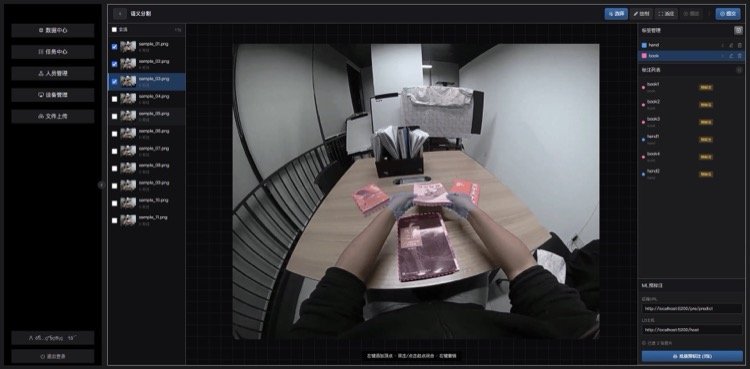
Its stated services cover requirements analysis, scenario design, task planning, collection, cleaning, annotation, quality inspection, and delivery.
The supplied brief describes the VDEgo-C2 as a binocular first-person capture device and lists capabilities including RGB recording, synchronized IMU data, timestamps, pose tracking, local storage, and wireless control. Project-specific performance and output availability should be confirmed during technical scoping.
For procurement, request a representative sample, calibration documentation, synchronization measurements, annotation guidelines, and an acceptance report before commissioning production.
The commercial objective should be a verifiable dataset specification—not an unsupported promise of model improvement.
Turn Your Deployment Requirements Into a Collection Plan
The practical answer to automated data collection vs manual field collection is often a coordinated workflow: discover real behavior, automate repeatable production, and validate simulated expansion.
Discuss your target tasks, operating environments, required modalities, and delivery schema with Virdyn. Request a scoped pilot with sample episodes and measurable acceptance criteria before scaling your AI data program.

Frequently Asked Questions
Is automated data collection better than manual field collection?
It is better for repeatable acquisition under defined conditions. Manual field collection is valuable for contextual behavior and unfamiliar workflows. The right choice depends on deployment coverage and supervision requirements.
Is manual field collection the same as manual annotation?
No. Collection acquires observations or demonstrations. Annotation adds labels or structure afterward. Either collection method can use human, automated, or combined annotation workflows.
Can synthetic data replace real-world collection?
Not reliably across all tasks. Synthetic data can expand controlled variation, but its usefulness must be validated against real deployment conditions and independent test data.
Is first-person video enough to train a VLA model?
Not necessarily. Video can support visual and task understanding, but robot-action learning may require aligned actions, robot states, or a method for translating human demonstrations.
How should an AI team choose a collection provider?
Compare sample quality, relevant scenario access, synchronization evidence, annotation consistency, provenance, security practices, and acceptance terms. Evaluate equivalent deliverables rather than headline recording volume.
References
1. Grauman, K., et al. — Ego4D: Around the World in 3000 Hours of Egocentric Video. CVPR, 2022. Source for the original release figures and first-person research context.
2. DROID Research Team — DROID: A Large-Scale In-the-Wild Robot Manipulation Dataset. Official project page. Source for demonstration trajectories, interaction hours, and scene coverage.
3. NVIDIA — Domain Randomization With Replicator. Technical documentation explaining synthetic variation, appearance gaps, content gaps, and transfer limitations.
4. NVIDIA — Isaac Sim—Robotics Simulation and Synthetic Data Generation. Product and developer documentation covering simulation, synthetic data generation, and demonstration workflows.
5. National Institute of Standards and Technology — Artificial Intelligence Risk Management Framework (AI RMF 1.0). January 2023. Source for contextual risk assessment, data representativeness, documentation, and evaluation principles.
Hot Tags: AI Data Collection Services, Automated Data Collection, Manual Data Collection, AI Training Data, Egocentric Data Collection, Multimodal Datasets, Robotics Training Data, Synthetic Data Generation, Data Annotation Services, Custom Dataset Development
SHARE