Powering Physical AI with Real-World Ego Datasets

Top 10 Data Labeling Service Providers in China
Choosing a data labeling service provider in China requires more than comparing annotation prices. For procurement managers, the real questions are whether a supplier can maintain label consistency, protect sensitive information, scale production without weakening quality control, and deliver datasets that work inside an existing training pipeline.
China offers a substantial supplier ecosystem spanning multilingual speech, computer vision, autonomous driving, large-model alignment, and embodied intelligence. National policy also supports further development: guidelines announced in January 2025 set a target for the data labeling industry’s compound annual growth rate to exceed 20% through 2027. This is a policy target—not a verified measurement of growth already achieved.
This guide compares ten providers with Chinese origins, operations, or delivery connections. It places Virdyn (VDEgo) first because its combination of egocentric capture hardware, custom collection, and annotation is particularly relevant to embodied AI procurement. The order is an editorial shortlist, not an independently audited market-share ranking.
Supplier descriptions draw on public company materials and selected industry sources. Published capacity figures remain supplier claims unless otherwise stated; they should be checked during qualification.
How We Selected These Data Labeling Providers
A useful supplier assessment should evaluate the production system behind the labels—not simply the size of an annotator network.
The following framework can be used during an initial request for information:
| Evaluation area | Suggested weighting | Evidence buyers should request |
|---|---|---|
| Technical fit | 25% | Comparable samples, supported annotation types, schema compatibility |
| Quality control | 25% | Written guidelines, reviewer structure, error definitions, adjudication records |
| Security and data rights | 20% | Current certificates, access controls, processing locations, collection permissions |
| Delivery reliability | 15% | Reserved staffing, ramp-up plan, accepted weekly throughput |
| Customization and communication | 10% | Named technical lead, escalation process, change-control procedure |
| Commercial transparency | 5% | Pilot fees, minimum engagement, rework terms, delivery charges |
These weights are a proposed purchasing framework, not numerical scores assigned to the companies below.
For data services, conventional factory terminology also needs adjustment. “Production capacity” should mean accepted output under a defined task specification. “MOQ” usually means a minimum project value, annotation volume, recording duration, or reserved team commitment.
Likewise, OEM/ODM is not a standard description for most annotation contracts. Its closest equivalent is a customized data-production program: buyer-defined ontologies, collection scenarios, workflows, interfaces, and deliverable formats. Hardware customization, where available, requires a separate engineering agreement.
Why Consider China for Data Labeling Services?
An established ecosystem with different regional strengths
The shortlist illustrates several useful supplier concentrations. Beijing is home to businesses such as Datatang, BasicFinder, Magic Data, and Longmao Data. Hangzhou hosts Mindflow, while Guangzhou is the operating base associated with Virdyn. These locations provide practical starting points for supplier visits and technical meetings, although a registered address alone does not prove delivery capacity.
China’s industry policy explicitly encourages specialized companies, annotation bases, technical innovation, and stronger connections between research and commercial applications. For buyers, the potential advantage is access to a broad production ecosystem rather than a single low-cost labor pool.
Market growth does not eliminate supplier risk
Mordor Intelligence’s current data annotation tools market report estimates a global market of USD 2.32 billion in 2025 and USD 3.07 billion in 2026. These figures concern annotation tools worldwide; they should not be presented as the size of China’s outsourced data labeling service market.
That distinction matters. Tool licensing, dataset licensing, managed annotation, and custom data collection are related businesses, but their revenue, capacity, and quality measures are not interchangeable.
Comparison Table: Specialization, Capacity, MOQ, and Certifications
“Not verified” means the public evidence reviewed did not establish a dependable figure or current certificate. It does not mean the supplier lacks the capability or certification.
No standardized public minimum engagement was verified for the ten providers. Buyers should request project-specific quotations rather than assume that a small pilot or low minimum order is automatically available.
| Provider | Main procurement fit | Published scale or capacity indicator | MOQ / minimum engagement | Certification evidence reviewed |
|---|---|---|---|---|
| Virdyn (VDEgo) | Egocentric video, embodied AI, capture-to-label programs | Reports a collection facility exceeding 1,000 m² and thousands of hours of validated first-person data | Not verified; request pilot and production quotes | Current management-system certificates not verified |
| Datatang | Multimodal collection, annotation, licensed datasets | Describes full-stack services supporting thousands of enterprises; committed throughput requires quotation | Not verified | Request current certificates and delivery-site scope |
| Nexdata | Multimodal annotation and international dataset programs | Publishes a network of more than 20,000 professional annotators; this is not reserved project capacity | Not verified | States ISO 9001, ISO 27001, and ISO 27701 |
| Dataocean AI / SpeechOcean | Speech, language, vision, and custom training data | Company profile reports 10,000+ completed projects across more than 70 countries | Not verified | Current certificates not verified in this review |
| BasicFinder | Annotation platforms, managed labeling, data operations | Describes 12 self-operated data centers and an alliance of 200+ annotation teams | Not verified | Website reports CMMI Level 3; this is not a substitute for information-security certification |
| Magic Data | Conversational AI, speech, and language datasets | Public materials establish specialization; comparable accepted-output capacity not verified | Not verified | Request current certificates |
| Testin AI Data | Enterprise AI training-data services | Parent platform describes broad enterprise services; annotation-specific throughput not verified | Not verified | Request certificates covering the actual annotation operation |
| Stardust AI | Annotation and data management | Public profiles describe vision, speech, text, and autonomous-driving expertise; committed throughput not verified | Not verified | Request current certificates and contracting-entity details |
| Mindflow | Autonomous-driving annotation and data platforms | Documents data-lifecycle and automated-labeling products; accepted weekly output requires quotation | Not verified | Request current certificates |
| Longmao Data / AIJet Data | Multimodal labeling, SFT/RLHF, and model evaluation | Reports 5,000+ custom projects and 4 million+ crowdsourcing resources; registered resources are not dedicated staff | Not verified | Request current certificates and site coverage |
The Top 10 Data Labeling Service Providers to Evaluate
1. Virdyn (VDEgo): Egocentric Data Collection and Embodied AI Annotation
Virdyn dates its corporate history to 2016 and operates from Guangzhou. That date should not be interpreted as the launch year of every VDEgo product or service. Its published materials emphasize proprietary first-person capture systems, multimodal datasets, and data processing for embodied AI.
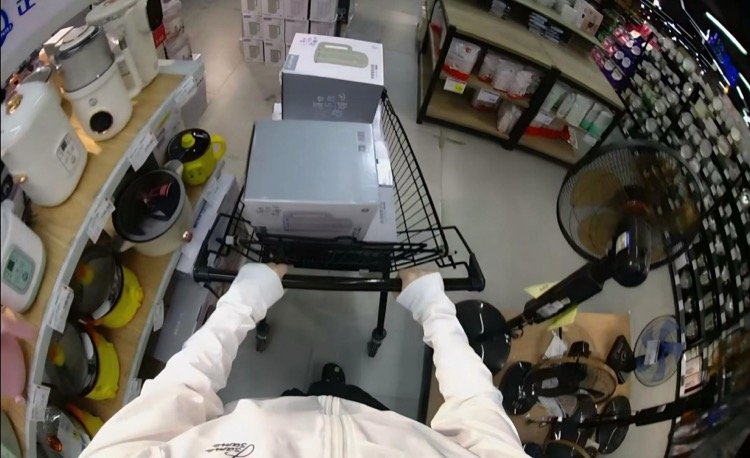
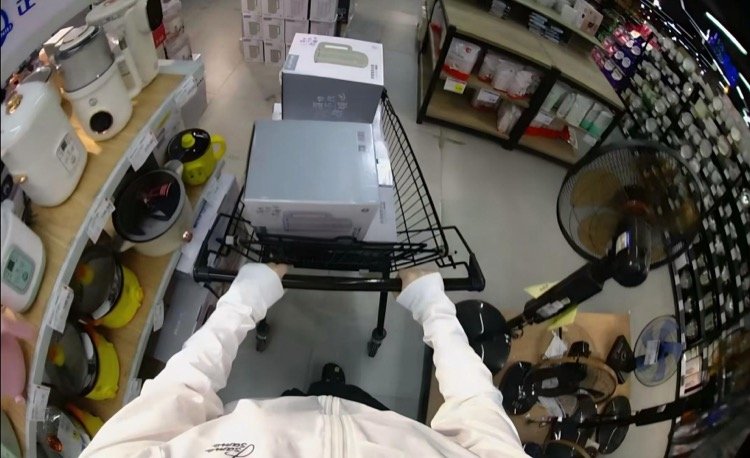
Its distinctive proposition is the connection between collection and annotation. Rather than receiving only customer-supplied files, VDEgo describes a workflow covering scenario preparation, operator task execution, synchronized capture, processing, and dataset delivery. Supported annotation activities include camera trajectory reconstruction, lens-distortion correction, skeletal and hand-object pose estimation, action classification, and behavioral language descriptions.
-
Core strength: Coordinating egocentric capture and downstream annotation within one production program.
-
Markets served: International AI developers; the company reports customers in more than ten countries, although geographic revenue shares are not disclosed.
-
Customization scope: Task sequences, collection environments, scenario coverage, annotation requirements, and standard-format exports.
-
Best-fit buyer: Robotics teams, laboratories, and smaller development programs seeking a focused capture-to-label partner.
VDEgo merits consideration as a potentially cost-effective alternative to coordinating separate camera, collection, and annotation vendors. However, neither a general price advantage nor superior communication speed has been independently established. Buyers should test both through a paid pilot, a named technical contact, and agreed response times.
Its proprietary hardware background also makes deeper engineering discussions relevant. Nevertheless, private labeling, firmware changes, mechanical redesign, and exclusive OEM arrangements should be confirmed individually rather than inferred from its custom data services.

2. Datatang: Broad Multimodal Data Services
Datatang is a Beijing-based training-data business offering licensed datasets, customized collection, and annotation. Its current Chinese website states a 2010 founding date, while older international company profiles state 2011. Procurement teams should resolve that discrepancy against the legal entity named in the contract.
Its documented experience covers speech, images, video, text, autonomous-driving collection, tracking, and point-cloud annotation. Public company materials describe relationships with AI businesses and research institutions internationally.
-
Core strength: Broad coverage across data types and collection requirements.
-
Markets served: Chinese and international AI developers, including automotive applications.
-
Customization scope: Bespoke collection protocols, annotation workflows, and training-data deliverables.
-
Buyer checkpoint: Confirm the relationship between the selling entity, delivery organization, website brand, and subcontractors.
Datatang is worth evaluating when one procurement program spans several modalities. Ask for separate quality and throughput commitments for each workstream rather than accepting one blended production figure.
3. Nexdata: Multimodal Annotation With International Delivery Reach
Nexdata states that it was founded in 2011. Its current corporate page describes the business as Singapore-based, so buyers should not automatically classify its contracting entity or every processing location as mainland Chinese. It belongs in this sourcing comparison because of its historical and operational relevance to the wider Chinese training-data ecosystem, but actual delivery locations require confirmation.
Its services cover speech, images, video, point clouds, and text. It also publishes embodied AI and automotive offerings and states that it holds ISO 9001, ISO 27001, and ISO 27701 certifications.
-
Core strength: Broad modality coverage and an established international commercial offering.
-
Markets served: Global automotive, high-technology, conversational AI, and robotics customers.
-
Customization scope: Collection, annotation, curation, and application-specific dataset programs.
-
Buyer checkpoint: Match certificates and processing commitments to the actual legal entity and delivery sites.
Its published annotator network is a scale indicator, not proof that qualified personnel are immediately available for a particular language, medical specialty, or 3D task.
4. Dataocean AI / SpeechOcean: Speech and Language Data Experience
Founded in Beijing in 2005, SpeechOcean is now presented internationally as Dataocean AI. Public materials describe services spanning speech, language, images, video, collection, annotation, and evaluation.
This makes it relevant to buyers seeking more than basic transcription, especially where linguistic interpretation, acoustic conditions, and evaluation design affect dataset usefulness.
-
Core strength: Long operating history in speech and language data.
-
Markets served: International technology companies, enterprise customers, and research organizations.
-
Customization scope: Collection design, transcription, linguistic annotation, validation, and multimodal datasets.
-
Buyer checkpoint: Confirm the current brand, contracting entity, licensing terms, and language-specific reviewer qualifications.
For multilingual projects, request pilot results by language and dialect. A strong aggregate transcription score can conceal weak performance in a commercially important minority segment.
5. BasicFinder: Annotation Infrastructure and Managed Data Operations
BasicFinder, associated with Beijing Deep Search Technology, states that it was established in 2015. Its published offering connects annotation, data management, and model-development infrastructure.
The company describes a delivery ecosystem comprising 12 self-operated data centers and more than 200 partner annotation teams. It also offers tools for medical imaging, point clouds, and multimodal workflows.
-
Core strength: Combining annotation software with managed production resources.
-
Markets served: Enterprise AI development, medical imaging, autonomous driving, and large-model applications.
-
Customization scope: Workflow configuration, data platforms, labeling tools, and managed annotation.
-
Buyer checkpoint: Establish whether work will be performed by an internal center, a partner team, or a mixed organization.
BasicFinder is particularly relevant when buyers need continuing visibility into data operations rather than only periodic file delivery.
6. Magic Data: Conversational AI and Speech Annotation
Founded in Beijing in 2016, Magic Data specializes in training data for conversational AI and related applications. Public profiles describe speech recognition, speech synthesis, natural language processing, and computer vision services.
-
Core strength: Speech and conversational-data specialization.
-
Markets served: Conversational AI, smart vehicles, finance, connected homes, and intelligent terminals.
-
Customization scope: Domain-specific collection, transcription, conversational annotation, and tailored datasets.
-
Buyer checkpoint: Review speaker recruitment, consent, accent coverage, transcription conventions, and reviewer qualifications.
Buyers should also distinguish free research access from commercial training rights. Magic Data’s published open-source license includes usage restrictions, illustrating why a downloadable dataset should never be assumed commercially unrestricted.
7. Testin AI Data: Training-Data Services Within an Enterprise Platform
Testin was founded in 2011 and describes itself as an enterprise-service platform providing cloud testing, AI training data, and security services. The parent company’s operating history should not be treated as proof that every annotation service has existed for the same period.
-
Core strength: A training-data offering within a wider enterprise technology-services organization.
-
Markets served: Enterprise and developer customers; annotation-specific geographic revenue distribution was not verified.
-
Customization scope: AI training-data engagements, subject to confirmation of modality, collection, and integration requirements.
-
Buyer checkpoint: Request evidence specific to the data-services team rather than relying on software-testing scale figures.
This distinction is important: a large testing infrastructure does not automatically demonstrate strong semantic segmentation, linguistic adjudication, or robotics annotation capability.
8. Stardust AI: Annotation and Data Management
Stardust AI was founded in 2017. Public profiles describe annotation and data management for computer vision, speech, and text, while its company materials document a Beijing operating presence. International corporate profiles also identify entities outside China, making contracting-location checks important.
-
Core strength: Combining labeling services with data-management workflows.
-
Markets served: Global AI companies, including autonomous-driving and large-model applications.
-
Customization scope: Annotation workflows and data-management configurations.
-
Buyer checkpoint: Confirm where annotators, reviewers, administrators, and storage systems are located.
For video projects, request a temporally continuous sample. Isolated annotated frames do not adequately demonstrate tracking consistency, identity preservation, or occlusion handling.
9. Mindflow: Autonomous-Driving Data Platforms and Annotation
Mindflow is a Hangzhou-based AI infrastructure and data-services provider founded in 2018. Public profiles describe its MindFlow SEED data-lifecycle platform, automated-labeling products, and collection and annotation services.
Industry reporting identifies autonomous-driving annotation as a central commercial focus and dates commercialization to 2019.
-
Core strength: Connecting automotive annotation with data-lifecycle tools.
-
Markets served: Autonomous driving, AI, retail, and security applications.
-
Customization scope: Collection, cleaning, annotation, and platform-supported workflows.
-
Buyer checkpoint: Test coordinate conventions, calibration handling, temporal continuity, and difficult-object review.
For automotive procurement, platform demonstrations should be followed by a blind production pilot using the buyer’s own sensor configuration and ontology.
10. Longmao Data / AIJet Data: Customized Multimodal and Large-Model Data
Longmao Data states that it was founded in 2014 and is headquartered in Beijing. Its current company introduction covers collection, multimodal labeling, supervised fine-tuning, reinforcement learning from human feedback, code-agent data, and model evaluation.
It reports more than 5,000 customized AI projects, a crowdsourcing resource pool exceeding four million, AI-assisted annotation tools, and a three-level quality-control system. These are company-reported figures, not independently verified available capacity.
-
Core strength: Broad customized data production across conventional and large-model tasks.
-
Markets served: AI developers and traditional enterprises adopting AI.
-
Customization scope: Collection, multimodal annotation, SFT/RLHF, agent data, and evaluation.
-
Buyer checkpoint: Identify the dedicated team, expert qualifications, production site, and limits on crowdsourcing.
For confidential projects, require written restrictions on remote access and subcontracting before transferring production data.
Buyer’s Guide: How to Qualify a Data Labeling Partner
1. Replace generic accuracy claims with measurable acceptance rules
Avoid purchasing against an undefined “99% accuracy” promise.
Instead, specify the unit being measured and the type of error that causes rejection.
| Task | Recommended acceptance measures |
|---|---|
| Object detection | Class correctness, missed objects, false positives, bounding-box overlap |
| Segmentation | Class-level overlap, boundary quality, small-object completeness |
| Speech transcription | Word or character error rate, speaker attribution, timestamp tolerance |
| Video tracking | Identity switches, missing tracks, occlusion handling, temporal consistency |
| 3D annotation | Position, dimensions, rotation, coordinate-frame correctness |
| Egocentric robotics | Synchronization, pose validity, action boundaries, hand-object relationships |
| Preference labeling | Reviewer agreement, rubric compliance, expert adjudication |
Set thresholds after reviewing a representative pilot. A single universal score is unlikely to describe all relevant failure modes.
2. Run a paid pilot that resembles production
Do not use only clean, easy samples.
Include occlusion, poor lighting, ambiguous language, rare classes, negative examples, and incomplete sensor records where relevant.
A practical sequence is:
-
Sign confidentiality and data-processing agreements.
-
Share a representative sample and draft annotation guide.
-
Review clarification questions before labeling begins.
-
Evaluate the first batch against a buyer-controlled reference set.
-
Resolve disagreements and freeze the guideline version.
-
Run a second batch to test repeatability.
-
Approve production only after quality and throughput are demonstrated.
For VDEgo-style collection projects, add a capture pilot before annotation. Verify framing, calibration, synchronization, task coverage, and participant permissions before generating a large dataset.
3. Evaluate accepted capacity—not nominal headcount
Request a delivery plan showing:
-
Named project management and technical ownership.
-
Qualified annotators and reviewers available at launch.
-
Training and ramp-up time.
-
Weekly accepted output.
-
Rework capacity.
-
Staffing continuity and replacement procedures.
A supplier with thousands of registered contributors may still lack reviewers qualified for a specialized project. Conversely, a smaller dedicated team may be sufficient for a tightly scoped program.
4. Separate data-service assurance from hardware conformity
For annotation procurement, prioritize documented quality management, information security, privacy controls, and traceability.
CE marking and RoHS documentation may be relevant to a purchased capture device, depending on the product and destination. They do not establish whether annotations are correct, whether subjects consented to collection, or whether a dataset is commercially licensable.
For hardware purchases, request product-specific conformity documentation separately. For data services, request the applicable management-system certificates and operational evidence.
5. Treat delivery as a technical and compliance process
The equivalent of logistics is secure, verifiable data transfer.
Agree in advance on:
-
Storage and processing regions.
-
Encryption and key ownership.
-
Transfer tools and access permissions.
-
File manifests and checksums.
-
Schema versions and sample import tests.
-
Retention, backup, and deletion procedures.
-
Responsibility for transfer and storage charges.
China’s cross-border data framework includes different obligations and exemptions depending on the data and processing circumstances. Government and standards-industry summaries describe rules covering personal information, important data, and certain exempt scenarios. Obtain project-specific legal advice rather than accepting a blanket “fully compliant” statement.
An Overlooked Procurement Trap: Easy Data Can Hide Expensive Errors
One useful anti-pitfall rule is to audit the denominator behind every quality figure.
Consider a hypothetical dataset containing 99,000 straightforward labels and 1,000 safety-critical labels. If every straightforward label is correct but every critical label is wrong, aggregate accuracy is still 99%.
The headline looks strong; the commercially important subset has failed completely.
Protect against this by requiring:
-
Quality reporting by class, scenario, language, or difficulty.
-
Separate treatment of critical defects.
-
A hidden buyer-controlled evaluation set.
-
Random production audits, not only supplier-selected demonstrations.
-
Explicit rules for ambiguous and unlabelable samples.
Also prevent unsupported labels. In embodied AI projects, a plausible-looking hand pose or camera trajectory is not necessarily valid ground truth. Require provenance fields identifying whether a label was measured, manually annotated, reconstructed, or inferred—and how uncertainty is represented.
This is especially important when human egocentric recordings are proposed for robot training. Visual demonstrations should not be assumed to contain robot-native action commands, joint states, or control targets. Ask the supplier exactly what is observed and what would require an additional mapping or reconstruction stage.
Conclusion: Select for Technical Fit, Then Prove Repeatability
The right data labeling service provider depends on the work.
Virdyn (VDEgo) is relevant to egocentric capture and embodied AI workflows; Magic Data and Dataocean AI warrant attention for speech and language requirements; BasicFinder, Mindflow, Stardust AI, and the broader multimodal providers offer different combinations of software, production services, and data-management capability. Their published offerings justify evaluation—not automatic approval.
Start with a detailed specification, shortlist providers by task fit, and compare the cost of accepted deliverables rather than the lowest unit quote.
For an embodied AI or first-person data program, send Virdyn (VDEgo) a brief covering target scenarios, modalities, annotation definitions, data rights, security requirements, and delivery milestones. Request a representative sample, a paid pilot proposal, and separate pricing for collection, processing, annotation, and quality assurance.

FAQs
1. How can we check whether an ISO certificate has expired or covers the wrong business?
Request the complete certificate, not a website badge.
Check the legal entity, certificate number, standard, validity dates, covered activities, covered sites, and issuing certification body. Verify status directly with the issuer and request clarification if the production site or annotation activity falls outside the stated scope.
A valid certificate supports a management-system claim; it does not guarantee that a particular dataset meets your acceptance criteria.
2. Can overseas data be sent to China for labeling and then returned?
Potentially, but the answer depends on the data and processing arrangement.
Published explanations of China’s 2024 cross-border provisions describe an exemption for certain overseas-origin personal information processed in China and returned abroad without introducing domestic personal information or important data. Other privacy, contractual, security, and jurisdiction-specific obligations may still apply.
Map the complete flow—including remote access, backups, and subcontractors—and have counsel confirm the applicable route before transfer.
3. Who owns the annotations, derived data, and improvements created during the project?
Do not assume ownership follows payment.
The contract should separately address source data, annotation files, derived datasets, reconstruction outputs, collection scripts, custom tools, and reusable supplier technology.
It should also state whether the supplier may retain examples, reuse data for other customers, train internal models, or publish project details. For licensed datasets, distinguish access rights from exclusive ownership.
4. How can we prevent a high-quality pilot from being followed by weaker production?
Make the production controls part of the agreement.
Require continuity of key reviewers, documented training for replacements, approval of subcontractors, recurring blind evaluation, and acceptance reporting by batch.
Tie payment milestones to accepted output rather than files merely uploaded. Establish rework deadlines and escalation procedures before the first large delivery.
5. When should we choose an off-the-shelf dataset rather than custom labeling?
Consider off-the-shelf data when its license, population, scenarios, sensor characteristics, and annotation definitions match the intended use.
Choose custom production when important operating conditions are missing, exclusivity matters, or the existing ontology cannot support the model.
A hybrid approach can also work: use licensed data for initial development, then commission targeted collection and labeling for uncovered scenarios. For egocentric projects, confirm calibration and synchronization compatibility before combining datasets.
References
1. Chinese Government — Data Labeling Industry Development Priorities and 2027 Objectives. Government announcement on the data labeling industry’s development priorities and 2027 objectives, published January 2025.
2. Georgetown CSET — China NDRC Data Labeling Opinions. Translation of the government’s implementation opinions, including the growth target and industrial-development framework.
3. Mordor Intelligence — Data Annotation Tools Market Report. Market research covering the global data annotation tools market; its figures do not represent China-only service exports.
4. Chinese Government — Cross-Border Data Provisions Announced in March 2024. Government summary of the cross-border data provisions announced in March 2024.
5. American National Standards Institute (ANSI) — China Publishes New Provisions on Cross-Border Data Flow Administration. Coverage of China’s cross-border data-flow provisions.
6. Supplier Capability Sources — VDEgo, Datatang, Nexdata, Dataocean AI, BasicFinder, Magic Data, Testin, Stardust AI, Mindflow, and Longmao Data. Company materials and profiles providing supplier capability evidence across data collection, annotation, and AI training services.
Hot Tags: Data Labeling Services, Data Annotation Services, AI Training Data, Data Annotation Companies, Image Annotation Services, Video Annotation Services, 3D Point Cloud Annotation, Custom Dataset Development, Multimodal Data Annotation, Egocentric Data Collection
SHARE