Powering Physical AI with Real-World Ego Datasets


Real-World vs Web-Scraped Data for Foundation Models
Real-world data collection vs web-scraped data for foundation models is not simply a comparison of quality versus quantity. It is a decision about what a model must learn: how people describe the world, how the world appears, or how actions change physical environments.
Web-scraped data provides broad coverage of language, images, and online knowledge. Purpose-collected real-world data provides control over tasks, sensors, permissions, and interaction sequences. For embodied AI, those differences become especially important when a model must move beyond recognition and perform useful actions.
My practical recommendation is to start with the deployment objective, not the largest available dataset. A conversational model and a warehouse robot may share visual representations, but they need different evidence to become reliable.

Real-World Data Collection and Web-Scraped Data: What Is the Difference?
What Is Real-World Data Collection?
In this comparison, real-world data collection means deliberately recording physical environments and activities for a defined training objective.
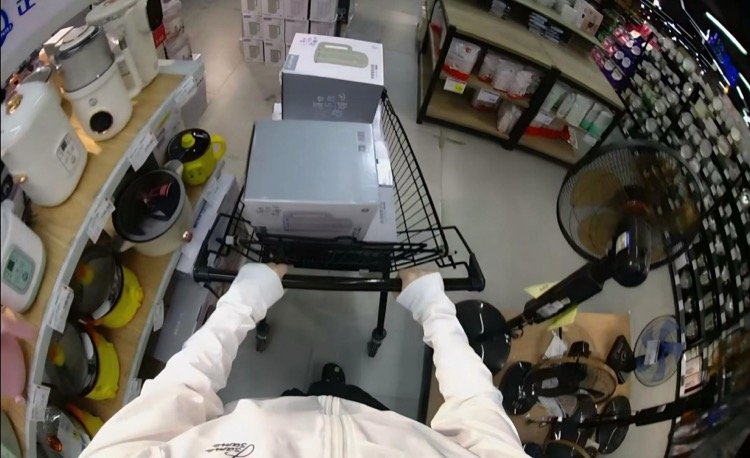
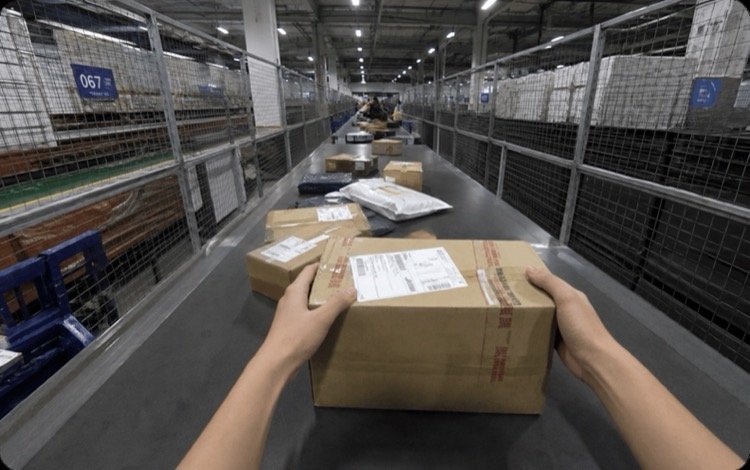
Examples include people assembling components, workers sorting packages, and robots manipulating household objects. Depending on the project, recordings may combine:
-
First-person or external-camera video.
-
Inertial measurement unit (IMU) readings.
-
Camera calibration and pose estimates.
-
Human hand and body movements.
-
Robot states, control commands, and task outcomes.
-
Language instructions and temporal annotations.
Its distinguishing feature is control over the collection protocol—not an automatic guarantee of accuracy.
What Is Web-Scraped Data?
Web-scraped data is material gathered from websites, such as text, images, captions, and videos.
Its main advantage is breadth. However, online content was generally created for communication, entertainment, or documentation rather than a specific training specification.
The categories also overlap. A web video can show genuine physical activity. The relevant distinction is whether the team controls acquisition conditions, metadata, permissions, and task coverage.
Real-World Data Collection vs Web-Scraped Data: Comparison Table
| Dimension | Purpose-collected real-world data | Web-scraped data |
|---|---|---|
| Main advantage | Targeted physical and operational relevance | Broad semantic and visual coverage |
| Collection control | Tasks, sensors, and environments can be specified | Limited by available source material |
| Multimodal alignment | Can be designed into acquisition | Often absent or inconsistent |
| Action supervision | Available when explicitly instrumented | Usually missing from ordinary media |
| Scale | Constrained by collection capacity | Large candidate pools are possible |
| Quality challenges | Calibration errors, operator variation, missing signals | Duplicates, weak captions, irrelevant content |
| Rights management | Agreements can be established upfront | Requires source-specific assessment |
| Cost drivers | Equipment, labor, annotation, quality control | Acquisition, filtering, rights review, processing |
| Typical contribution | Grounding and deployment-specific adaptation | Broad pretraining and representation learning |
Neither source is universally superior. The better choice depends on the information missing from the model.
How Each Data Source Supports Foundation Models
Web Data Builds Broad Semantic Coverage
Web-scale datasets expose models to many objects, concepts, writing styles, and visual contexts.
DataComp illustrates the available scale: its CommonPool contains 12.8 billion candidate image-text pairs. Importantly, DataComp evaluates data-selection approaches while standardizing training procedures, making it useful evidence that dataset composition—not merely volume—deserves systematic attention.
For language and vision-language models, web-derived material can support broad recognition and conceptual associations. However, a caption describing someone opening a drawer does not necessarily reveal the motion, force, or feedback needed to reproduce the action.
Real-World Data Connects Observations With Physical Context
Purpose-collected recordings can preserve details that deployment environments demand: camera movement, occlusion, task order, object variation, and recovery attempts.
For robotics, the strongest supervision may include synchronized observations, robot states, and actions. Human first-person recordings offer a different contribution: they reveal human-centered views and manipulation sequences, but they do not automatically provide robot control labels.
This distinction matters for VLA models. Vision-language-action training requires a defined relationship between what the system sees, what it is asked to do, and the actions it should produce.
Human demonstrations can contribute to that pipeline, but transferring human behavior to robot actions requires additional modeling, instrumentation, or robot demonstrations.
Five Differences That Matter in Deployment
1. Task Relevance Matters More Than Raw Volume
A large general dataset may contain few examples of the exact failure a deployed system encounters.
Consider a warehouse robot handling reflective packaging. Useful coverage might require different materials, lighting conditions, gripping positions, and partial occlusions—not simply more generic package images.
Purpose-collected data can target those gaps. Web-derived data remains useful for broader appearance variation, provided its relevance is verified.
2. Synchronization Determines What Multimodal Signals Mean
Video, motion measurements, and annotations become more useful when their temporal relationships are reliable.
If a grasp label appears after the object has already moved, the training signal can become misleading. Projects should therefore specify timestamp conventions, synchronization tolerances, dropped-frame handling, and calibration records.
Likewise, stereo cameras do not automatically deliver validated three-dimensional measurements. Depth or reconstruction outputs depend on calibration, processing, and scene conditions.
3. Both Sources Contain Bias
Web content reflects what people choose to publish and what collection pipelines retain.
Controlled collection introduces different biases: repeated operators, limited facilities, familiar objects, scripted successes, and consistent camera placement.
I would therefore evaluate diversity through a coverage matrix rather than assume that either source represents the world. Track task, environment, operator, object, viewpoint, and outcome distributions.
4. Permissions Must Be Checked, Not Assumed
Public accessibility should not be treated as proof of unrestricted training rights.
Web-derived projects need source-specific review of licensing, contractual restrictions, privacy, and intended use. Commissioned collection also requires appropriate agreements and controls, especially around identifiable people, confidential processes, and private premises.
The advantage of controlled collection is the opportunity to establish these arrangements before recording—not automatic legal clearance.
5. Cost Should Be Measured After Acceptance
Cheap acquisition can become expensive after deduplication, annotation repair, privacy screening, and rejection of unusable samples.
Controlled collection has more visible operational costs, but accepted samples may match the target specification more closely.
A useful procurement metric is cost per accepted episode:
Total acquisition, processing, review, and rework cost divided by the number of episodes meeting the agreed specification.
Compare projects using equivalent acceptance criteria rather than advertised recording hours.

What Published Robotics Datasets Actually Demonstrate
DROID: Diversity Within an Instrumented Collection System
The 2024 DROID project reports 76,000 demonstration trajectories, approximately 350 hours of interaction data, 564 scenes, and 86 tasks.
Its collection approach combined a shared robot hardware setup with distributed environments. The researchers reported improved policy performance and generalization when training with DROID.
The practical lesson is not that any 350-hour dataset will perform similarly. It is that environmental diversity and consistent instrumentation can coexist—and both deserve attention in collection design.
Open X-Embodiment: Standardization Enables Reuse
Open X-Embodiment brings together more than one million real-robot trajectories spanning 22 robot embodiments.
Its importance extends beyond size. Bringing heterogeneous robot experience into standardized formats makes cross-dataset training and evaluation more practical.
For commercial teams, the implication is straightforward: episode structure, action definitions, coordinate conventions, and metadata can determine whether collected data becomes reusable infrastructure or an isolated archive.
These projects demonstrate the value of structured robot experience. They do not establish a universal performance advantage over web data for every foundation-model objective.
A Practical Framework for Choosing the Right Data Mix
Step 1: Identify the Missing Capability
Define the failure before selecting the source.
-
Weak object vocabulary may justify broader image-text coverage.
-
Poor task sequencing may require annotated demonstrations.
-
Manipulation failures may require robot action and state data.
-
Sensitivity to lighting may require targeted environmental variation.
Different failure modes need different evidence.
Step 2: Specify the Training Unit
Decide whether the model consumes an image-caption pair, video segment, complete episode, or synchronized observation-action sequence.
Then define required fields, units, coordinate systems, annotations, and outcome labels.
An MP4 file is a container, not a complete training specification.
Step 3: Run a Controlled Pilot
Compare a baseline with carefully selected additions:
-
Baseline data only.
-
Baseline plus filtered web-derived data.
-
Baseline plus targeted real-world data.
-
A combined mixture where appropriate.
Keep evaluation conditions comparable. This reveals the marginal value of each addition without assuming a universal mixing ratio.
Step 4: Test on Truly Held-Out Conditions
Separate evaluation by meaningful deployment factors, such as site, operator, object instance, or recording session.
Randomly splitting neighboring frames can make evaluation misleading because training and test examples remain highly similar.
For action models, measure task completion, recovery behavior, and failure severity—not only offline prediction accuracy.
Step 5: Expand Where Evidence Shows Improvement
Increase collection only after the pilot identifies useful coverage gaps.
The best next thousand episodes may be carefully selected failures and variations, rather than another thousand repetitions of an already-mastered task.
Where Simulation Fits Into a Hybrid Data Strategy
Simulation is a third source, not a replacement term for real-world collection.
It can support repeatable scenario generation and controlled variation. However, visual appearance, contact behavior, sensor characteristics, and object dynamics may differ from deployment conditions.
A practical workflow combines:
-
Broad data for semantic coverage.
-
Targeted real-world recordings for physical relevance.
-
Simulation for selected variations and experiments.
-
Real-environment evaluation to check transfer.
For world-model development, match the supervision to the intended prediction problem. Predicting future video and predicting action-conditioned physical outcomes are related but distinct objectives.
Avoid treating visually convincing simulation as evidence of deployment readiness.
How Virdyn Supports Purpose-Built Embodied AI Data
Virdyn, through its VDEgo offering, positions its services around real-world multimodal data collection, processing, and delivery for embodied AI and computer vision.
According to the supplied company brief, its VDEgo-C2 first-person stereo camera system supports human activity capture, alongside capabilities including IMU synchronization, timestamps, pose tracking, local storage, and wireless control.
These are company-provided descriptions, not independently verified performance measurements. Buyers should validate project-specific accuracy, supported configurations, and acceptance criteria during a pilot.
From Collection Requirements to Dataset Delivery
Virdyn’s stated workflow covers requirements analysis, scene design, task planning, first-person collection, cleaning, annotation, quality inspection, and delivery.
Its described offering includes off-the-shelf datasets, custom datasets, industry-specific collection, and simulation-supported production.
Potential applications include manufacturing, logistics, service robotics, retail, and laboratory workflows.
Deliverables may use MP4, AVI, CSV, JSON, or PLY. However, training readiness also requires agreed schemas, synchronized relationships, calibration information where applicable, and clear documentation of missing or derived signals.
What to Request Before Commissioning Collection
Ask for a representative sample and verify:
-
Sensor streams and synchronization evidence.
-
Task instructions and annotation definitions.
-
Scene, operator, and object coverage.
-
Consent, access, and retention arrangements.
-
Quality thresholds and rejection procedures.
-
Compatibility with the intended training pipeline.
For robot-control projects, explicitly identify which action labels are captured, inferred, or unavailable.
Build Around the Capability You Need
Web-scraped data and real-world data collection solve different parts of foundation-model development. Broad coverage helps models recognize and interpret; targeted physical experience helps address deployment-specific gaps.
For an embodied AI project, send Virdyn your target tasks, operating environments, required sensor streams, and evaluation criteria. Request a sample episode, proposed schema, and measurable pilot before committing to full-scale production.
Frequently Asked Questions
Is real-world data always better than web-scraped data?
No. Real-world collection offers greater task and acquisition control. Web-derived data offers broad coverage. The better source depends on the learning objective and evaluation results.
Can web-scraped videos train embodied AI models?
They can contribute visual and behavioral information. However, ordinary videos usually lack calibrated sensors, robot states, and executable action labels, so additional processing or supervision may be necessary.
Is egocentric video equivalent to robot demonstration data?
No. Egocentric video records a first-person viewpoint. Robot demonstrations can additionally record robot-specific states and commands. Transferring between them requires addressing differences in embodiment and action representation.
How much real-world training data is enough?
There is no universal threshold. Required volume depends on task complexity, environmental variation, existing model capabilities, label quality, and the performance target. Use pilot learning curves and held-out evaluations.
Can synthetic data replace real-world collection?
Not reliably as a blanket strategy. Its usefulness depends on the task and simulation fidelity. Validate improvements in real environments before reducing physical collection.
What should a custom dataset specification include?
Include task coverage, collection conditions, modalities, timestamp rules, annotation schemas, rights requirements, delivery structure, quality thresholds, and acceptance tests.
References
1. Gadre, S. Y., et al. — DataComp: In Search of the Next Generation of Multimodal Datasets. Project website and benchmark documentation. Source for the 12.8-billion-pair candidate pool and standardized data-selection evaluation framework.
2. Khazatsky, A., et al. — DROID: A Large-Scale In-the-Wild Robot Manipulation Dataset. 2024. Project website describing collection scale, hardware, and reported policy-learning results.
3. Khazatsky, A., et al. — DROID: A Large-Scale In-the-Wild Robot Manipulation Dataset. Research paper supporting details on synchronized streams, calibration, collection diversity, and dataset composition.
4. Open X-Embodiment Collaboration — Open X-Embodiment: Robotic Learning Datasets and RT-X Models. Project website. Source for more than one million trajectories across 22 robot embodiments and cross-embodiment learning research.
5. Open X-Embodiment Repository — Dataset Documentation. Documentation describing episode organization and standardized downstream consumption.
6. A Common Pool of Privacy Problems: Legal and Technical Lessons from a Large-Scale Web-Scraped Machine Learning Dataset. 2025. Context for privacy and governance concerns in large-scale web-derived datasets; not a substitute for jurisdiction-specific legal advice.
Hot Tags: AI Data Collection Services, AI Training Data, Multimodal Datasets, Custom Dataset Development, Egocentric Data Collection, Embodied AI, Robotics Training Data, AI Data Annotation Services, Synthetic Data Generation, Foundation Model Training
SHARE